The digital debris of Evelyn Reed’s public life cascaded across Maya’s monitors: quarterly filings, LinkedIn endorsements, obscure blog posts from industry conferences, property records, even redacted campaign finance donations. Maya’s custom scraping tools, a sophisticated cocktail of open-source intelligence and proprietary algorithms, chewed through the raw data, cross-referencing, pattern-matching, and highlighting anomalies. She wasn’t looking for a smoking gun; she was looking for a shimmer, a displacement in the calm surface of an otherwise meticulously curated public persona.
The first pass yielded nothing overt. Reed was a model corporate citizen on paper: ambitious, successful, financially savvy, but within expected parameters for a strategist of her caliber. No sudden, unexplained windfalls. No obvious offshore accounts. But Maya knew better than to trust the surface. The devil, as ever, was in the details, specifically in the subtle shifts that indicated a deeper, more carefully constructed obfuscation.
Her algorithm shifted focus, narrowing its aperture to the eight-week window coinciding with the zero-day’s infiltration and Finch’s strategic maneuvers. It flagged a series of smaller, perfectly legal-looking transactions – investments in obscure tech startups, a diversification of Reed’s personal portfolio into a nascent industry few were tracking. Harmless on their own. But then the cross-referencing hit. One of these startups, ‘Aether Dynamics,’ had recently secured a significant seed round from a venture capital firm known for its aggressive, high-risk investments, a firm with a surprising number of past board members who had, at various points, served on advisory boards alongside Finch.
The connection was tenuous, circumstantial. Aether Dynamics itself was unremarkable, specializing in data analytics for emerging markets. Yet, Maya felt the familiar prickle of intuition. The divestiture of OmniCorp’s pharmaceutical research division, pushed by Finch and Reed, had freed up capital. That capital, reinvested into a new, complex financial instrument, had a specific risk profile. The exfiltrated data, Maya was increasingly certain, was not just for general market intelligence; it was providing a highly granular, almost predictive advantage for navigating those very risks.
What if the zero-day wasn’t merely stealing data to inform these strategic decisions, but actively shaping the market for them? What if Aether Dynamics, or other seemingly unrelated entities, were part of a larger, more intricate web, using OmniCorp’s own intelligence against itself?
Maya initiated a deep packet inspection of all network traffic originating from or destined for Finch’s and now Reed’s known devices within the eight-week window. This was a resource-intensive operation, requiring a dedicated slice of processing power from OmniCorp’s most powerful forensic server, but the risk was too high for anything less. She bypassed standard monitoring protocols, creating a silent, invisible tap directly into the network backbone. The data flow was immense, a torrent of encrypted communications, routine corporate chatter, and, buried within it, the faint, persistent whisper of the zero-day.
She wasn’t looking for the exploit itself; that was already quarantined. She was looking for its echoes, the communication patterns it facilitated, the specific data it packaged and sent. The original analysis had focused on the what and where. Now, Maya was hunting the why, and the to whom.
The initial results of the packet inspection began to trickle in, painting a more disturbing picture. Over the past six weeks, a significant volume of highly granular financial projections related to OmniCorp’s pharmaceutical research division, alongside proprietary market sentiment analysis for emerging biotech, had been routinely bundled and routed through a series of anonymous proxies, ultimately terminating at a server farm in a jurisdiction known for its lax data privacy laws. Not the shadow server connected to Finch, but a separate, equally clandestine destination.
This data was exactly the kind that would allow an outside entity to accurately value the pharmaceutical division before its divestiture, or to strategically position themselves to benefit from the subsequent investment into the complex financial instrument. It provided an unfair, almost prescient advantage.
And then, a pattern emerged in the metadata of these exfiltrated bundles. A specific, proprietary compression algorithm that Maya recognized – one developed in-house by OmniCorp’s former advanced analytics team, a team that had been disbanded after a controversial budget cut two years prior. A team, she recalled, whose project lead had been none other than Evelyn Reed.
The pieces began to lock into place with a chilling precision. Finch provided the access, the high-level corporate leverage. Reed provided the specific technical expertise to target and package the most valuable data for a specific strategic outcome. And the zero-day? It was the invisible courier, delivering OmniCorp’s own future into hostile hands. The 72-hour countdown wasn’t just about stopping a breach; it was about preventing the complete, surgical dismantling of the company from within.
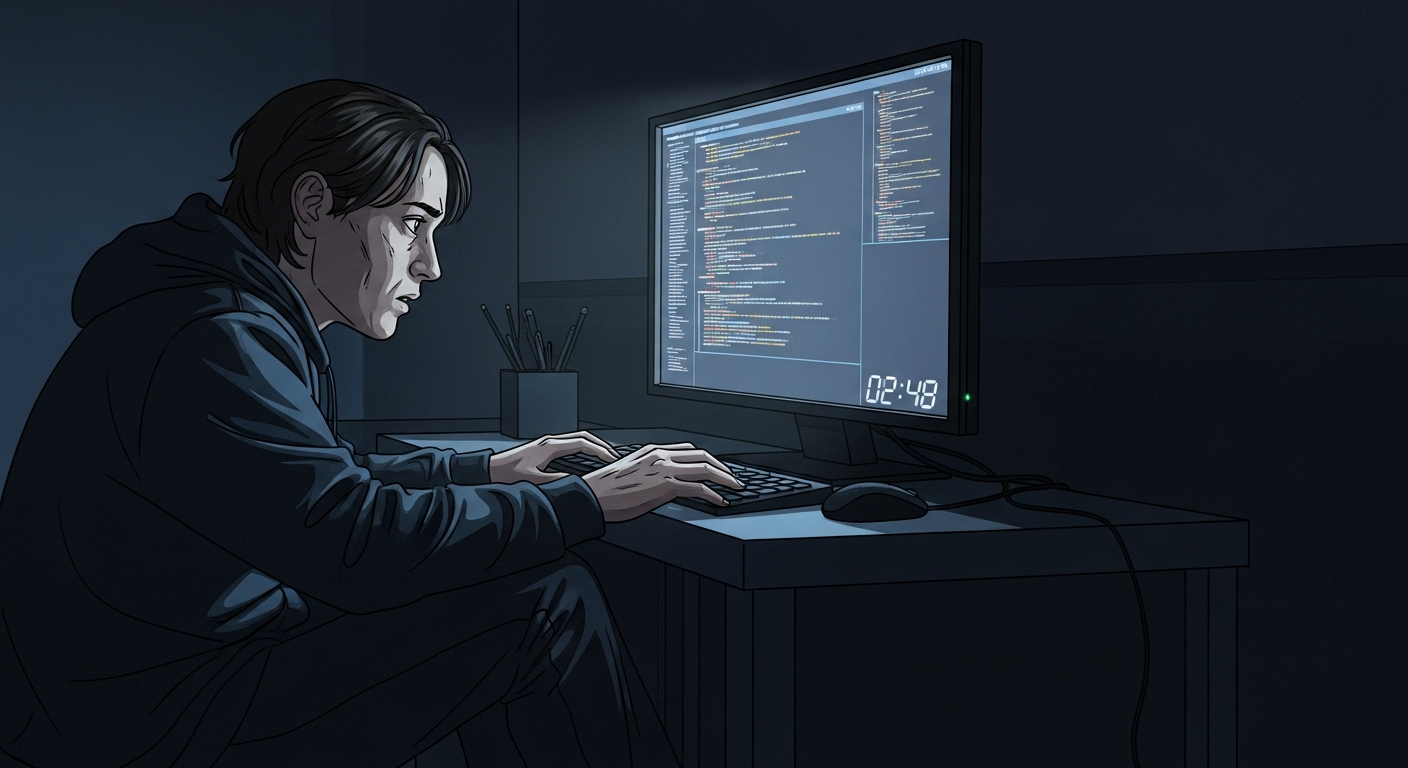
The blinking cursor mocked Maya. 2:17 AM. Her fourth cup of lukewarm coffee sat forgotten on the edge of the desk, a testament to good intentions and diminishing returns. Outside, the pre-dawn Manhattan skyline was a jagged silhouette against a bruise-colored sky. Inside, her office at OmniCorp was a controlled chaos of monitors displaying cascading lines of code, network traffic visualizations, and the ever-present, nagging red alerts. The air itself seemed to vibrate with the frantic energy of a system under siege.
AI-generated illustration — pro style
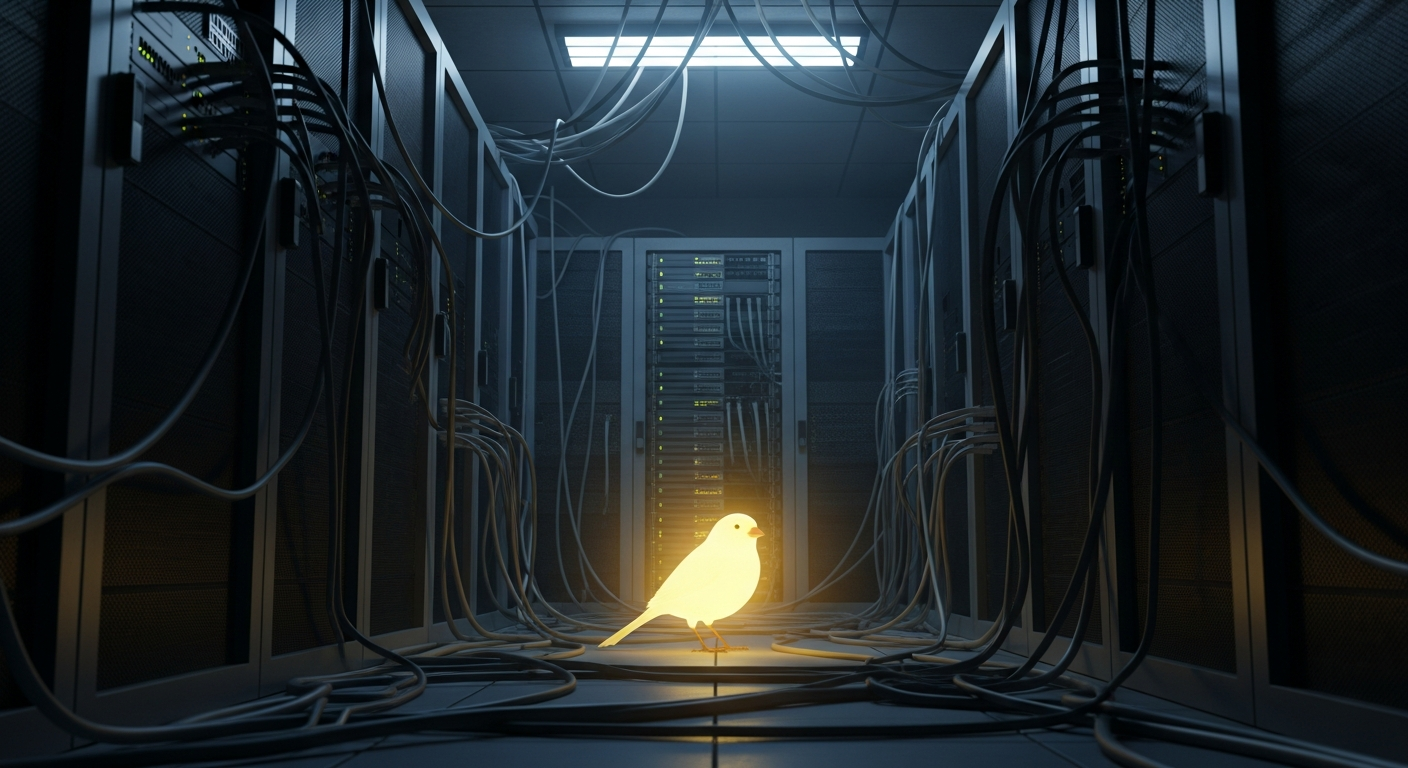
Maya Sterling, CISO of OmniCorp, a Fortune 500 behemoth with tentacles in everything from pharmaceuticals to finance, wasn’t supposed to be here. Not now. She was supposed to be home, nestled between Egyptian cotton sheets, dreaming of weekend hikes in the Adirondacks. Instead, she was neck-deep in the digital entrails of her company’s network, chasing a phantom – a digital canary failing to sing, its subtle silence a deafening alarm.
It started subtly. A barely perceptible dip in system performance during peak hours. Anomalous data packets flickering on the periphery of the intrusion detection system. Just whispers, really. But Maya had learned to listen to the whispers. They were often the heralds of a storm, the faint tremors before the earthquake.
She’d pulled her team in, a motley crew of cybersecurity veterans and fresh-faced code slingers, and they’d started digging. Days blurred into nights as they peeled back layers of encryption, dissected network logs, and ran countless vulnerability scans. They found nothing concrete. Just more whispers. Louder now, more insistent, like the rising whine of a server fan pushed to its limit.
Then, last night, a break. Kevin, the youngest member of the team, a kid barely old enough to legally drink but with an uncanny ability to sniff out malicious code, flagged a suspicious file transfer originating from a low-level server in the accounting department. A seemingly innocuous spreadsheet, disguised as a budget report. The digital equivalent of a poisoned apple, meticulously crafted to appear harmless.
But Kevin, bless his caffeine-addled heart, had noticed the file’s hidden metadata. A timestamp that predated the server’s last reboot. An impossible anomaly. A glitch in the matrix, a thread out of place.
Maya had isolated the server, quarantined the file, and run a battery of forensic analyses. The results chilled her to the bone. The spreadsheet contained a zero-day exploit, a piece of malicious code so new, so sophisticated, that it bypassed all of OmniCorp’s security defenses. A ghost in the machine, undetectable by conventional means.
It was a weapon, surgically designed to penetrate OmniCorp’s core systems and exfiltrate sensitive data. And it was already in production, silently replicating, infecting, burrowing deeper into the network’s arteries.
She replayed the network traffic capture, focusing on the originating server. The spreadsheet had been accessed by a handful of users in accounting. Routine. But then, a connection to a shadow server, a server that shouldn’t exist, buried deep within the company’s infrastructure. A server that masked its location, bouncing through a labyrinth of proxy servers and encrypted tunnels. A digital ghost ship, sailing under a false flag.
A server designed to be invisible.
Maya traced the connection back, her fingers flying across the keyboard, bypassing firewalls and intrusion detection systems with practiced ease. The trail led her to a privileged account, an account with access to OmniCorp’s most sensitive data: financial records, intellectual property, trade secrets. The keys to the kingdom.
AI-generated illustration — pro style
The account belonged to Arthur Finch, CFO of OmniCorp.
Her breath caught in her throat. Arthur Finch? A man who golfed with the CEO, sat on the board of directors, and had been with the company for over twenty years? The implications slammed into her like a rogue wave, threatening to drag her under. This wasn’t just a data breach. This was an inside job. A betrayal of epic proportions, orchestrated from the highest echelons of power.
She leaned back in her chair, the implications swirling in her mind like a toxic cocktail, each sip more bitter than the last. Why? What was Finch after? And who else was involved? She had so many questions, and so little time to find the answers.
The blinking cursor on the screen seemed to mock her urgency, a relentless reminder of the ticking clock. She glanced at the time displayed in the lower right hand corner. 2:23 AM. The exploit was active. The infection was spreading. She estimated she had 72 hours, tops, before the damage became irreversible. Before OmniCorp bled dry, a victim of its own hubris.
Maya Sterling had a choice to make. Expose Finch and risk tearing the company apart from the inside? Or try to contain the damage, silently, and risk being complicit in a catastrophic crime? The weight of that decision settled upon her shoulders, crushing her with its immensity.
She reached for her phone. The first call was never the easiest.
Her thumb hovered over a contact, not the CEO, not HR, not even her direct head of IT infrastructure. It was Alex, her lead forensic analyst, a woman whose calm under pressure was legendary, and whose loyalty was unquestionable. The encrypted line connected after two rings.
AI-generated illustration — pro style
“Alex, it’s Maya,” she said, her voice a low murmur, barely audible even in the silent office. “I need you. Now. My office, Level 14. Come alone. No one sees you. Not even security. Use the old freight elevator, service entrance B. And bring your ghost kit.”
A beat of silence on the other end, then a sharp, clear voice, stripped of any pretense of sleep. “Understood. ETA fifteen.”
“And Alex,” Maya added, her voice dropping another register, “this doesn’t exist. To anyone. Not a whisper. We’re going dark.”
“Dark it is, boss.”
Maya disconnected, the cold plastic of the phone a stark contrast to the churning heat in her gut. She hadn’t exposed Finch. Not yet. The initial impulse, a primal scream for justice, had been tempered by the cold, hard calculus of corporate survival. To accuse the CFO, a man with twenty years of institutional knowledge and connections, without irrefutable, unassailable proof, would detonate OmniCorp from the inside. The stock would plummet, investigations would begin, and the company, already vulnerable, would be crippled. A public scandal of this magnitude could be more damaging than the data breach itself.
No, she needed more. She needed every scrap of data, every digital crumb, to build an ironclad case. She needed to understand the full scope of the exploit, what data it targeted, where it was going, and most importantly, why. Only then could she decide the least destructive path forward, a surgical strike rather than a nuclear option.
She pushed away from her desk, the ergonomic chair groaning in protest. Her office, usually a haven of quiet contemplation, now felt like a war room. She walked to the wall-mounted screen, pulling up a network topology map. A pulsating red dot marked the shadow server, a malignant tumor in the corporate body. It pulsed with activity, a silent exfiltration, an invisible siphon.
She began compiling a preliminary data package, encrypting it on a secured drive. Access logs, network captures, forensic reports on the zero-day’s capabilities. Everything she had, distilled into an impenetrable fortress of information. Alex would need to hit the ground running. They couldn’t afford a single wasted minute of the dwindling 72 hours.
Her mind raced, connecting the dots. Finch’s account. The spreadsheet. The shadow server. The sophisticated zero-day. This wasn’t a random act of corporate espionage. This was targeted, precise, and deeply personal. It spoke of a calculated long game, meticulously planned and executed.
What kind of data was Finch after? Financial records, certainly, given his position. But the exploit’s design suggested a broader, more invasive reach—intellectual property, strategic plans, perhaps even employee data for leverage. OmniCorp’s pharmaceutical division alone held patents worth billions. Its financial arm managed vast portfolios. The potential for damage was staggering.
She pulled on a light jacket, the chill in the office mirroring the one seeping into her bones. She moved with a silent efficiency, her senses heightened. Every shadow seemed to hold a secret, every creak of the building an unseen observer. The paranoia was a side effect of the job, but tonight, it felt justified. If Finch was indeed involved, he would have allies, eyes and ears everywhere.
A soft thump from the direction of the old freight elevator. Alex. Punctual as always. Maya took a deep breath, steeling herself. The fight had just begun, and it was going to be a long, brutal night.
The old freight elevator, rarely used outside of late-night equipment deliveries, groaned again as its ancient mechanics whirred to a stop. The metal grate rattled open, revealing Alex’s lean silhouette. He moved with the quiet efficiency of a phantom, his eyes, dark and intelligent, scanning the dimly lit corridor before settling on Maya. He was dressed in his usual uniform of faded jeans and a dark hoodie, his laptop bag slung casually over one shoulder, a contrast to the corporate polish of OmniCorp.
AI-generated illustration — pro style
“Boss,” he murmured, his voice a low rasp that didn’t quite cut through the building’s ambient hum.
“Alex. Thanks for coming.” Maya gestured him into her office, closing the heavy oak door behind him with a soft click that resonated with finality. She flipped a switch, activating the white noise generator she kept for sensitive conversations. The low hum, almost imperceptible, was enough to defeat any casual eavesdropping device.
“What’s the situation?” Alex’s tone was clipped, professional, devoid of unnecessary preamble. He dropped his bag by the guest chair, pulling out his own secured tablet and a pair of earbuds. He knew the drill.
Maya walked to her desk, retrieving the encrypted drive. “It’s worse than we thought, Alex. Much worse.” She handed him the drive. “The zero-day. It’s replicating, burrowing deep. We’ve got a shadow server, live and exfiltrating data.”
Alex’s fingers were already plugging the drive into his tablet, the screen flickering to life with a complex decryption routine. “Payload?” he asked, his eyes glued to the progress bar.
“We’re still analyzing the full scope, but it’s sophisticated. Bypassed everything. Undetectable by conventional means. And the source…” Maya paused, her gaze locking with his. The name hung in the air, a poisonous word waiting to be spoken. “Arthur Finch.”
Alex froze. His head snapped up, the tablet momentarily forgotten. His usual poker face cracked, revealing a flicker of disbelief, quickly replaced by a grim understanding. “Finch? The CFO?”
Maya nodded, the action heavy with the weight of confirmation. “His privileged account. The spreadsheet was accessed through it. The connection to the shadow server was made using it.”
“Jesus,” Alex breathed, the expletive laced with genuine shock. Finch was an institution, a corporate elder. An insider threat of this magnitude wasn’t just a breach; it was an existential crisis. “Are you certain?”
“Irrefutable. Kevin found the metadata anomaly, traced the file transfer. I followed the digital breadcrumbs to the shadow server, and then back to Finch’s account. The logs don’t lie. Everything points to him.” Maya leaned against her desk, her arms crossed, the chill seeping into her bones once more. “This isn’t some phishing scam gone wrong. This is targeted, planned, and deeply malicious. A calculated long game.”
Alex returned his attention to the tablet, the decryption complete. He began scrolling through the preliminary data package Maya had compiled – access logs, network captures, forensic reports. His brow furrowed deeper with each passing line. “A zero-day, designed to exfiltrate sensitive data… linked to the CFO’s account and a shadow server. The motive is the missing piece.”
“Precisely,” Maya affirmed. “Financial records, intellectual property, trade secrets. OmniCorp’s most valuable assets. Given Finch’s position, finance is an obvious target, but the exploit’s design suggests a broader reach. I need you to confirm the specific data types being siphoned, the full capabilities of this zero-day, and any potential command-and-control infrastructure beyond the shadow server.”
“Understood.” Alex’s fingers danced across his tablet, opening new windows, initiating scans on the network segments Maya had isolated for analysis. He was already in his element, a digital bloodhound on the scent. “We need to understand the exit strategy. Where is this data going? Is it being sold, held for ransom, or is there a specific corporate saboteur involved?”
“All possibilities are on the table,” Maya said. “But for now, extreme discretion. Finch has eyes and ears everywhere. We operate in the dark, Alex. No one, and I mean no one, gets wind of this. Not my team, not the CEO, not the board. Not until we have an ironclad case and a strategy to contain the fallout.”
Alex nodded, his gaze unwavering. “Sealed tight.” He pulled out his earbuds, plugging them in. The faint murmur of a coded stream began, a private channel only he could access. “Seventy-two hours, you said?”
“Seventy-one now,” Maya corrected, glancing at the clock on her wall. The digital red numbers seemed to glow with urgency. “And counting.”
The silence in the room, broken only by the hum of the white noise generator and the faint clicking of Alex’s tablet, was heavy with the weight of their grim task. The long, brutal night had indeed begun.
Maya pushed off her desk, the cold marble a stark reminder of the chill that had settled deep within her. Her gaze swept over her office, a space usually a sanctuary of focused work, now feeling like a high-stakes war room. She walked to the window, the vast panorama of Manhattan’s nocturnal skyline spread before her – a glittering tapestry of commerce and ambition. OmniCorp’s own tower, a gleaming monolith among them, seemed to mock her with its silent grandeur. Below, millions of lives continued, blissfully unaware of the digital poison coursing through the veins of one of their most powerful institutions.
AI-generated illustration — pro style
Finch. The name echoed in her mind, a discordant note in the symphony of her corporate life. Arthur Finch, the man who’d once mentored her through a particularly aggressive budget review, whose dry wit could cut through boardroom tension, whose reputation was as solid as OmniCorp’s foundations. How deep did the rot go? Was he merely a pawn, a coerced asset, or the architect of this corporate assassination? His position, his access, his two decades of unwavering loyalty – it all made him an impossible suspect, yet the evidence was undeniable.
She turned from the window, pulling her chair to the desk, but not sitting. Instead, she leaned over the surface, her fingers tapping a rhythm against the smooth wood. She needed a clear head, a strategic mind unclouded by the visceral punch of betrayal. Finch wasn’t just exfiltrating data; he was dismantling trust, piece by digital piece. The zero-day, designed with such insidious precision, spoke of a level of sophistication that went beyond a single individual. This was an operation, a network of complicity.
“Alex,” Maya’s voice was a low murmur, barely audible over the hum. Alex paused, his fingers hovering over the tablet, and pulled out one earbud. “The hidden server. What did we get from its initial scan? Any unusual process IDs, outbound connections beyond the data exfiltration stream, or indicators of a remote access Trojan?”
“Clean, mostly,” Alex replied, his eyes still on the screen, a stream of code scrolling rapidly. “That’s the problem. It’s too clean. Like it was wiped or designed to leave minimal footprint. The exfiltration stream itself is encrypted, bouncing through a series of offshore proxies we’re still mapping. But I did find one peculiar detail.” He tapped a section of the code. “A dormant listening port. High-numbered, disguised as a standard service, but not currently active. It’s a backdoor, Maya. A potential entry point for external command and control, or for someone else to connect in.”
Maya’s jaw tightened. “Dormant. Waiting for activation.” That confirmed her suspicion of a wider network. This wasn’t just about data leaving; it was about potential instructions coming in, or even a different kind of payload being deployed. “Prioritize tracking those proxies. And see if you can establish a pattern to Finch’s access. Times, specific data accessed, any other anomalies that stand out from his usual privileged activity.”
Alex nodded, already absorbed in the task. The faint murmur of his secure channel resumed.
Maya’s eyes drifted to her desktop computer, its screen dark. While Alex delved into the digital forensics, she needed to think about the human element. The boardroom. Finch’s colleagues. His relationships. She moved to a locked cabinet beside her desk, retrieving a small, inconspicuous USB drive – a personal forensic toolkit, untraceable to OmniCorp’s network, designed for deep, covert dives into local systems without triggering alarms.
Inserting the drive into her laptop, she bypassed the usual login protocols, accessing a ghost instance of the system. She wouldn’t touch OmniCorp’s live network directly for what she was about to do. Instead, she accessed a local, encrypted backup of all board meeting minutes from the last two years, along with internal HR records for executive staff. A low hum emanated from her laptop as it initiated a series of keyword searches: acquisition, divestiture, proxy vote, hostile takeover, merger, competitor, stock performance. She also ran a cross-reference for any unusual or repeated interactions between Finch and other board members, any shift in alliances or voting patterns.
The zero-day had been in production for weeks, silently replicating and burrowing. That meant weeks of opportunities for Finch to subtly influence decisions, to lay groundwork, to compromise more than just data. The stakes were no longer just financial; they were structural. OmniCorp itself was under attack, from the inside out, and the clock was ticking louder with every passing second.
The laptop screen, bathed in a cool, neutral light, displayed a dense mosaic of text and dates. Maya’s initial keyword searches yielded a deluge of information – standard corporate maneuvering, the ebb and flow of a Fortune 500’s strategic dance. Acquisitions discussed, divestitures debated, quarterly earnings analyzed to the point of exhaustion. Finch’s name appeared frequently, as expected for a CFO, often alongside CEO Robert Maxwell or Evelyn Reed, the Head of Corporate Strategy. Nothing immediately screamed conspiracy.
AI-generated illustration — pro style
But then, the cross-reference began to layer patterns. She narrowed the timeline to the last eight weeks, aligning with the estimated deployment window of the zero-day exploit. Here, a subtle divergence began to emerge. Finch’s voting record, once reliably conservative and aligned with Maxwell on major strategic initiatives, showed a distinct, almost imperceptible shift. Not a full defection, but a consistent leaning on specific matters of significant capital allocation or asset restructuring.
Specifically, Maya found three instances where Finch, against the advice of internal analysts and even Maxwell’s initial inclination, had championed or supported a particular divestiture – a non-core asset sale of OmniCorp’s smaller pharmaceutical research division, a move that had ultimately gone through. The official reasoning had been ‘streamlining and refocusing on core competencies,’ but the timing now felt… convenient. The proceeds from the sale had been reinvested into a new, complex financial instrument, a structured product pitched by Finch himself, promising high returns but with equally high, opaque risk.
Her algorithm highlighted a peculiar communication pattern: an unusual number of private, encrypted messages and unscheduled one-on-one meetings between Finch and Evelyn Reed, often immediately before or after these critical votes. Reed, a brilliant but notoriously ambitious strategist, had been a strong advocate for the divestiture and the subsequent investment. Individually, these interactions were unremarkable. Together, overlaid with Finch’s altered voting and the ongoing data exfiltration, they formed a faint but disturbing constellation.
The digital canary had sung a silent song of data leaving the network. Now, Maya was hearing a different kind of silence – the unspoken collaboration, the carefully orchestrated shifts in corporate strategy that benefited… whom? Not OmniCorp, not directly, at least not in the long term, if her gut feeling was correct. The zero-day wasn’t just stealing data; it was facilitating a deeper agenda, using the exfiltrated information to inform or accelerate these strategic maneuvers, to ensure their success, or perhaps to destabilize OmniCorp for an eventual hostile takeover.
Her fingers flew across the keyboard, initiating a deeper forensic dive into Reed’s publicly available financials and any undisclosed conflicts of interest from the same eight-week period. The personal toolkit bypassed the standard firewalls of public databases, scraping news articles, financial disclosures, and social media for any anomalies – any sudden influx of wealth, any new investments, any connections to shell corporations or offshore entities. This was the human element, the messy, unpredictable variable that digital forensics alone couldn’t capture. If Finch was a key, Reed might be the lock, or another tumblercaught in the same mechanism.
The clock was indeed ticking. Not just for data exfiltration, but for the fundamental integrity of OmniCorp itself. The zero-day was a digital weapon, but it was being wielded by human hands, driven by human ambition. And Maya was only just beginning to map the full extent of their reach.