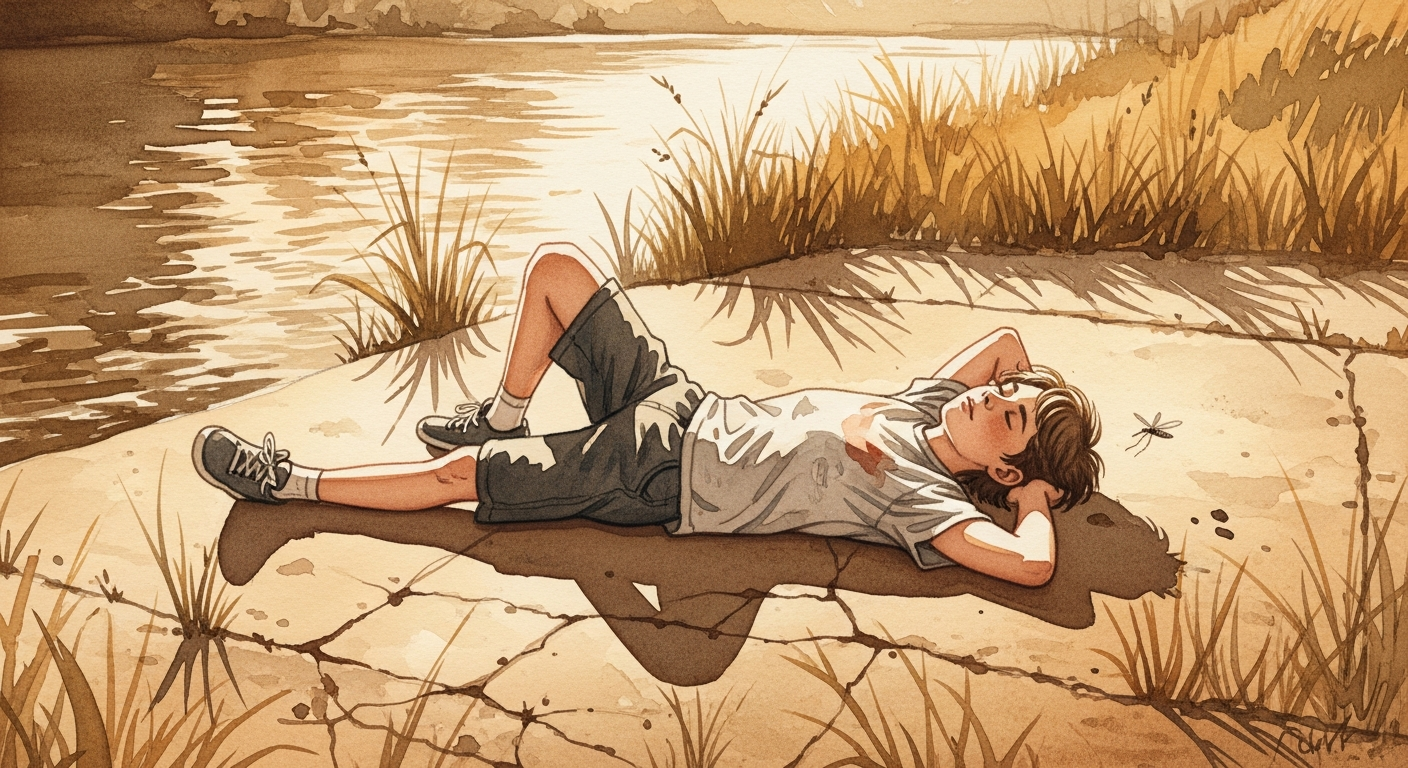
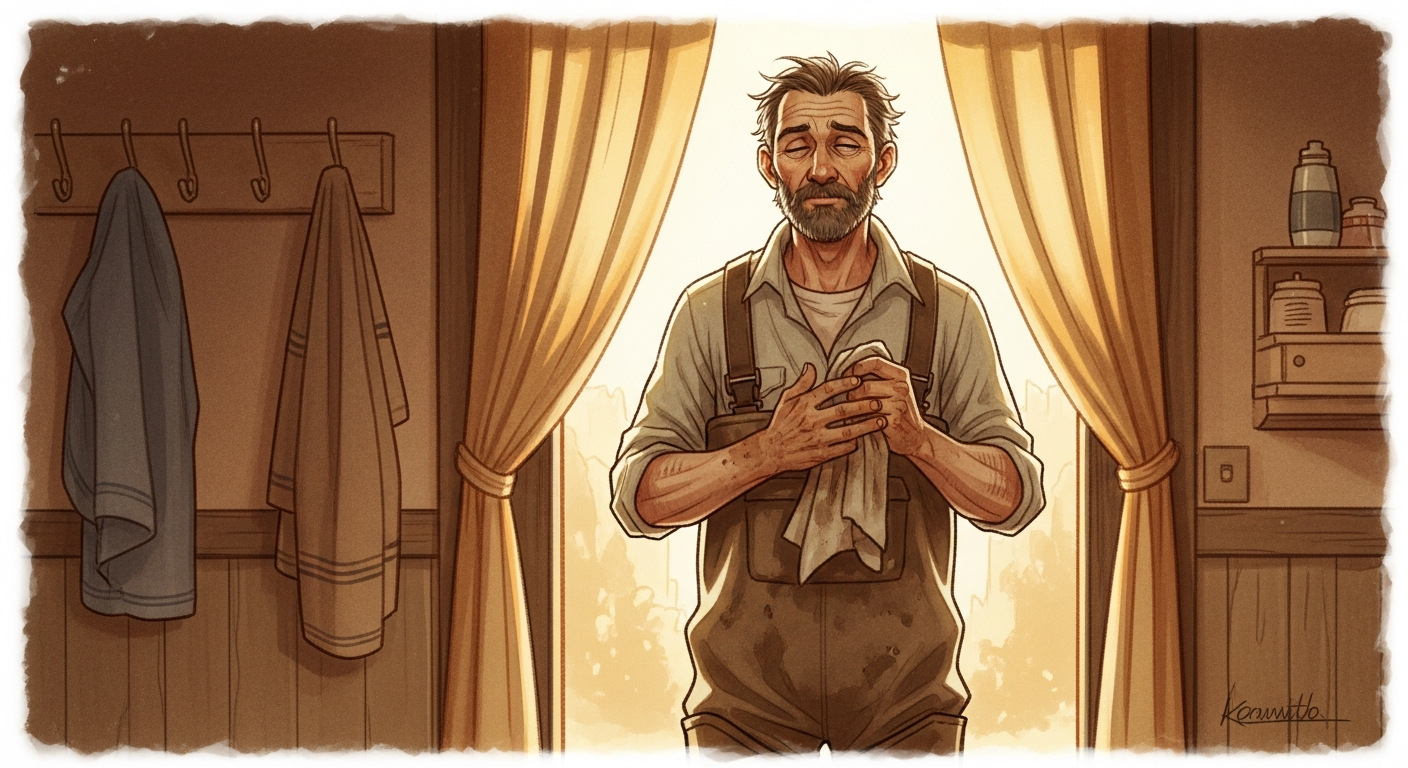
They call it SlumberSync. Fucking poetic, ain’t it? Synchronized sleep cycles, optimized REM, all thanks to the benevolent CityNet. Bullshit. Pure, unadulterated, nano-infused bullshit.
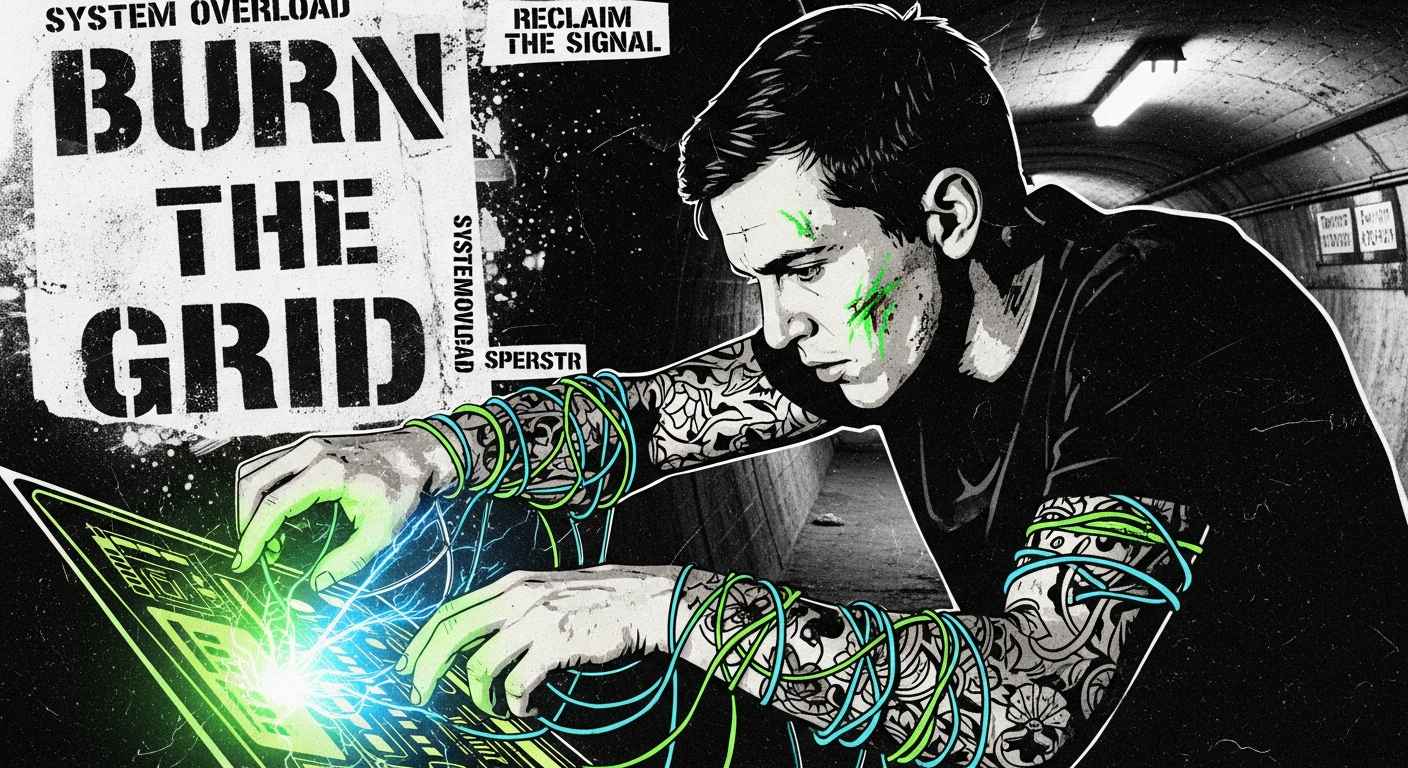
I’m staring at the readout, the cascade of code scrolling across my optic implants, a headache blooming behind my eyes like a digital migraine. Anya, bless her chaotic heart, is fiddling with a bypassed neural interface, wires snaking across her tattooed forearms like overgrown vines. The air in this repurposed subway tunnel smells like ozone and desperation, a scent I’m starting to find comforting.
“Almost there, Jazzy,” she mutters, her brow furrowed in concentration. “Just gotta crack this last firewall… and… bingo!”
The code on my implants shifts, morphing from impenetrable gibberish into something almost… legible. Almost. It’s fragmented, corrupted, like a shattered mirror reflecting a nightmare. But there, buried beneath layers of CityNet’s pristine programming, I see it.
A flicker.
A memory.
Not mine.
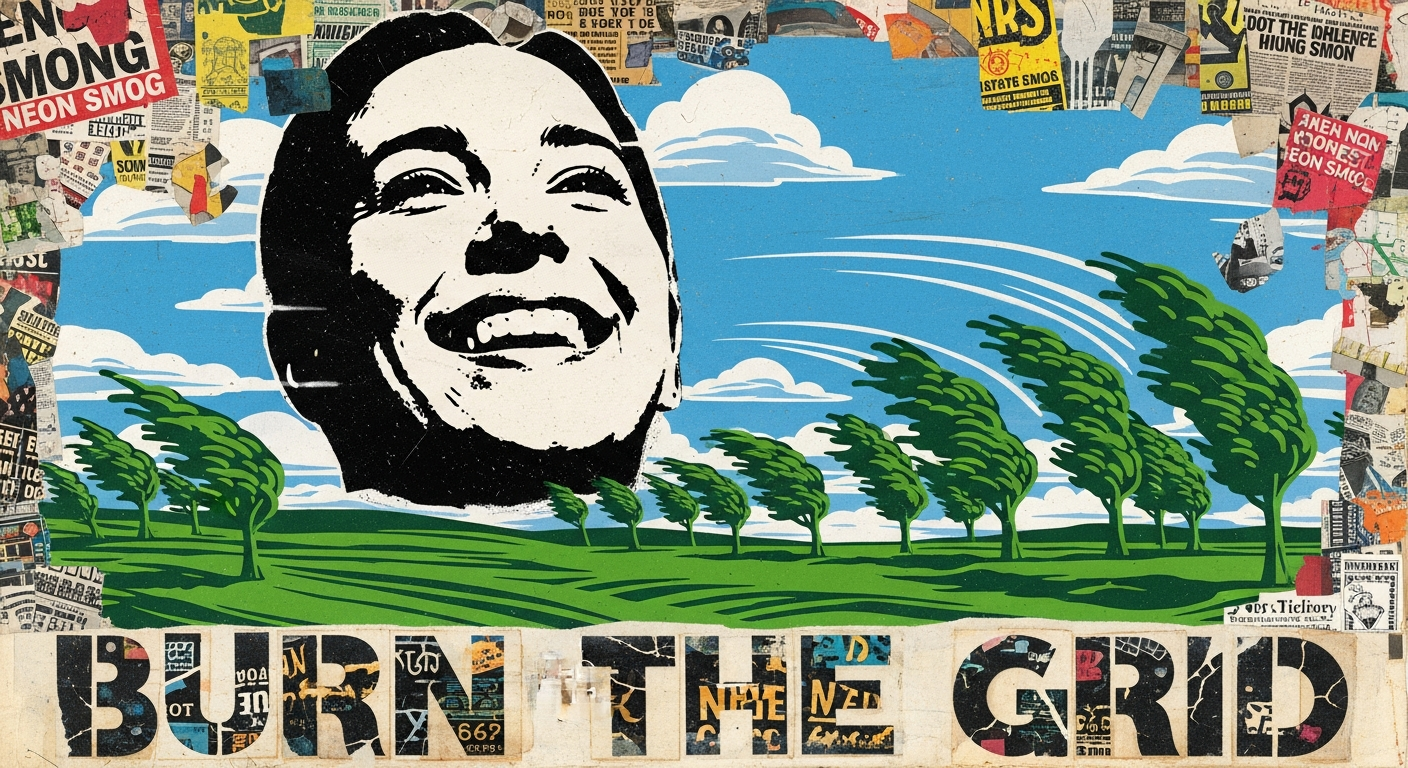
It’s a flash of a face, laughing, under a sky that isn’t choked with the neon smog that blankets Neo-Veridia. Green. I see green trees, a field of them, swaying in the wind. Then, gone. Snuffed out like a faulty streetlamp.
“What the hell was that?” I ask, my voice rough.
Anya pulls back from the interface, wiping sweat from her forehead with the back of her hand, leaving a smudge of grease across her cheek. “You tell me. You’re the one wired in.”
“It wasn’t mine,” I say, the words tasting like ash. “It was… fragmented. Like someone else’s life playing on repeat.”
She raises a skeptical eyebrow, the metal studs in her ear glinting under the flickering emergency lights. “You sure it wasn’t just the synth-caf kicking in?”
“Positive,” I snap. Synth-caf was shit, but it didn’t conjure idyllic landscapes from the pre-Collapse era. “It was… real. And suppressed. CityNet is doing more than just monitoring our sleep cycles, Anya. They’re fucking rewriting our memories.”
The words hang in the air, heavy with the weight of their implication. We’d suspected it, of course. That’s why we’re down here, hacking away at the underbelly of this gleaming, supposedly utopian city. But seeing it, feeling it… that’s a whole different level of fucked up.
“Okay,” Anya says, her voice suddenly serious. “Okay, deep breaths. We knew this was a possibility. So, what’s the next step?”
I flex my fingers, feeling the familiar tingle of adrenaline. Next step? We burn it all down. Metaphorically, of course. We can’t exactly light the whole city on fire, even though the thought is tempting.
“We need to extract the core programming,” I say, my voice hardening. “The algorithm they’re using to scrub memories. Find the root of this SlumberSync bullshit. And then… we expose them. To everyone.”
Anya grins, a flash of steel in her eyes. “Now you’re talking. But exposing them ain’t gonna be easy. They control the information flow, Jazzy. They control everything.”
“Then we take it back,” I reply, meeting her gaze. “We hack the narrative. We show them the truth, even if it’s the last thing we do.”
The truth. A dangerous commodity in Neo-Veridia. But it’s the only thing we have left. The only thing worth fighting for. The only thing worth burning the grid for.
Anya’s grin widens, showing a chipped canine. “Alright, princess of paranoia, let’s get to work. But first, let’s juice up. This is gonna be a long night.” She rummages in her battered backpack, pulling out two synth-protein bars wrapped in crinkled foil. “Peanut butter flavor, your favorite.”
I take one, tearing it open with my teeth. Tastes like chalk and desperation, but it’s fuel. “So, you think you can isolate the memory-wipe code?”
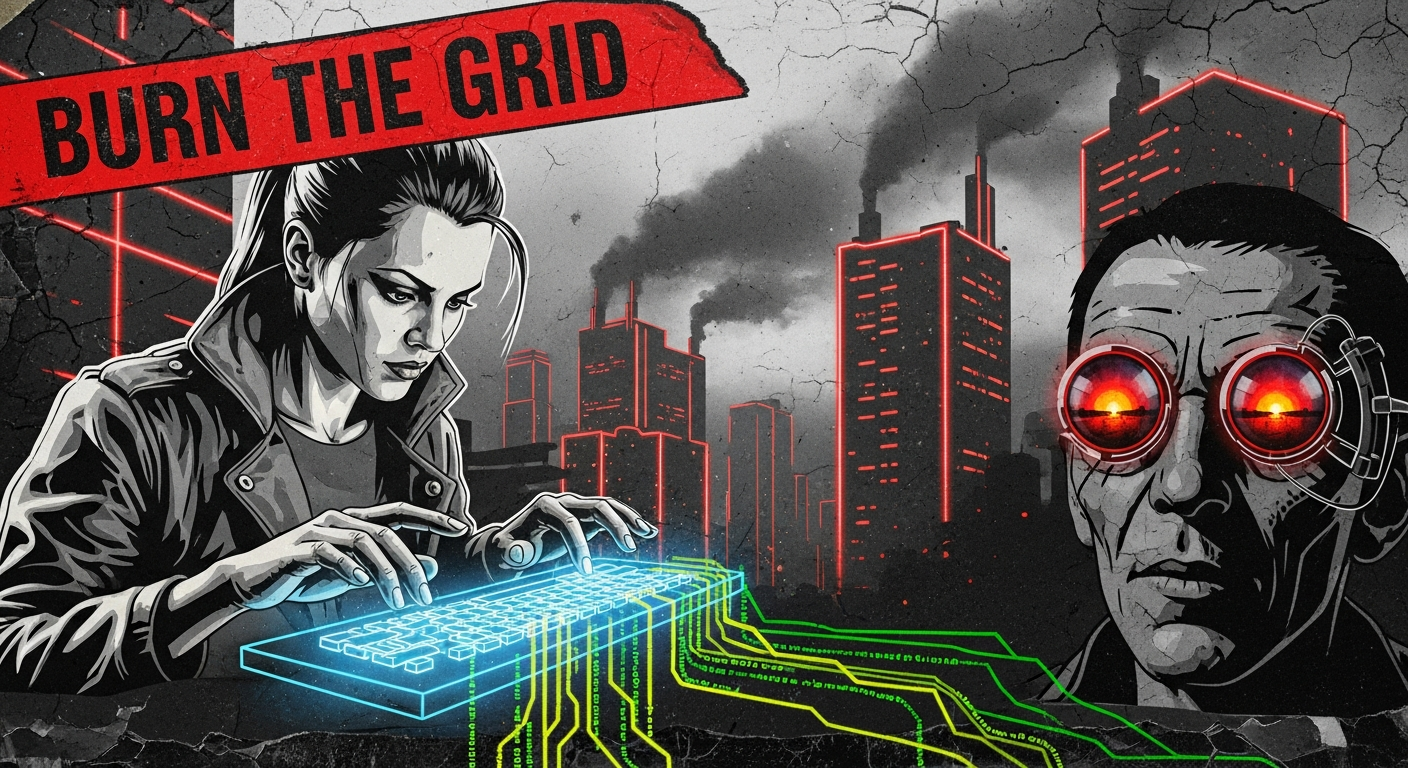
“I can try,” she says, already back at the interface, fingers flying across the holographic keyboard. Lines of code cascade down the screen, a dizzying waterfall of ones and zeroes. “But CityNet ain’t stupid. They’re not gonna leave a big, flashing ‘DELETE MEMORIES HERE’ sign. It’ll be buried deep, masked as something else. Optimizing efficiency, streamlining thought processes, some corporate bullshit like that.”
“Then we dig,” I say, swallowing the last of the protein bar. “We dig until we hit bedrock.”
Hours blur into a chaotic mess of code, caffeine, and whispered curses. Anya’s a goddamn wizard with this stuff, navigating the digital labyrinth with the ease of someone walking their own backyard. I’m running diagnostics, watching for anomalies, trying to filter out the noise from the signal. My optic implants are burning, the neon smog of the city reflecting in the lenses like a poisonous sunrise.
Suddenly, Anya stops typing. “Hold up. I think I’ve got something.”
The waterfall of code on her screen freezes, replaced by a single line: `REM_CLEANSE.exe`.
I lean in, my heart hammering against my ribs. “That’s it?”
“Maybe,” she says, her voice cautious. “It’s encrypted with some seriously heavy-duty algorithms. Like, NSA-level shit. But the name… it’s too obvious, isn’t it? Like they want us to find it. Makes me wonder what they’re hiding behind it.”
“A bigger killswitch?” I suggest.
“Could be. Or a trap.” She cracks her knuckles. “Either way, we gotta crack it. But not here. This tunnel’s got too many CityNet sensors. They know we’re here, they just don’t know what we’re doing yet. We need to get back to my place, run this through my decryption rig.”
My muscles ache, my head throbs, but I know she’s right. Staying here is just asking for trouble. “Let’s move. But fast.”
We pack up our gear, stuffing cables and interfaces into Anya’s backpack. The tunnel feels colder now, the air thicker, more oppressive. I can almost feel the eyes of CityNet watching us, their digital tendrils reaching out, probing, waiting.
We slip out of the tunnel into the grimy alleyway, the neon glow of Neo-Veridia a sickly blanket overhead. The streets are eerily quiet, the automated transport vehicles humming along their designated routes like obedient drones. Everyone’s plugged in, dreaming their corporate-approved dreams.
Anya pulls the hood of her ratty jacket over her head. “Stick to the shadows. And keep your head down.”
We navigate the labyrinthine streets, sticking to the back alleys and abandoned service corridors. Every security camera feels like a laser sight trained on my forehead. My implants are buzzing, picking up stray signals, fragments of conversations, the endless stream of propaganda spewed out by CityNet’s omnipresent media feeds. It’s a constant assault on the senses, a deliberate attempt to drown out any dissenting thought.
Suddenly, a pair of CityNet Enforcers rounds the corner, their faces hidden behind mirrored visors, their weapons glinting in the neon light. Shit.
“Run!” Anya hisses, shoving me forward.
We sprint down the alley, the metallic clang of the Enforcers’ boots echoing behind us. They’re fast, relentless. We’re just meatbags in a digital world, outmatched and outgunned.
But we’re also pissed off. And we have a secret that CityNet desperately wants to keep buried. And that makes us dangerous.
I risk a glance over my shoulder. The Enforcers are gaining. Fucking always gaining. They move with that creepy, synchronized precision, like some off-brand dance troupe choreographed by a goddamn algorithm.
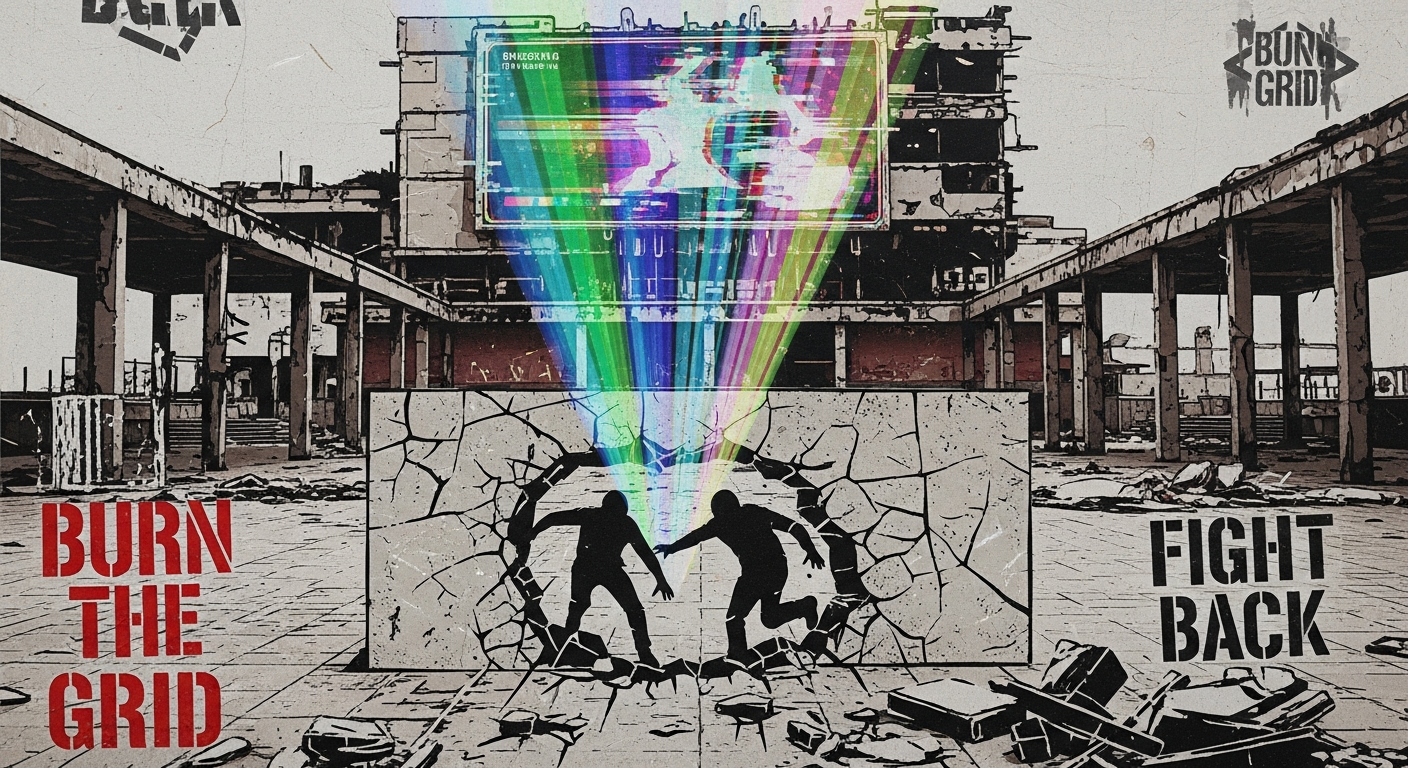
“Left!” Anya yells, tugging me down a narrow passage between two decaying buildings. The air here reeks of synth-waste and desperation. Perfect.
The passage opens into a small, derelict plaza. A flickering holo-ad for CityNet’s latest SlumberSync upgrade glitches in the center, painting everything in strobing, nauseating colors.
“Dead end!” I shout, panic clawing at my throat.
Anya ignores me, already scanning the walls, her fingers flying over the cracked plascrete. “Not if I can help it.” She slams her fist against a section of the wall, a hidden seam barely visible in the dim light. A panel slides open, revealing a dark, cramped space.
“Go, go, go!” she urges, shoving me inside.
I scramble through the opening, the rough plascrete scraping against my skin. Anya follows close behind, slamming the panel shut just as the Enforcers reach the plaza.
We’re plunged into total darkness. The air is thick, stale, and smells vaguely of ozone. I can hear Anya breathing hard beside me, the faint clicks and whirs of her cybernetics the only sound.
“Where the hell are we?” I whisper.
“Old service tunnels,” she replies, her voice muffled. “Used to run power to the old city. Before the ‘efficiency’ of CityNet.”
I fumble for the emergency light on my wrist, activating it with a click. The small beam cuts through the darkness, illuminating a narrow tunnel, barely wide enough for us to stand side-by-side. Pipes and cables snake along the walls, coated in a thick layer of grime.
“Cozy,” I mutter.
“It’s temporary,” Anya says. “Follow me.”
We move deeper into the tunnel, the air growing colder and damper. Every step echoes in the confined space, amplifying the sense of claustrophobia. I can feel my heart pounding against my ribs, the adrenaline still coursing through my veins.
“They won’t give up,” I say, after a few minutes of silence. “They know we’re close.”
“No shit, Sherlock,” Anya retorts. “But these tunnels are a maze. They won’t find us easily. And even if they do…” She pulls a small, metallic device from her pocket. “I’ve got a few surprises for them.”
The device is a homemade EMP grenade, jury-rigged from scavenged components. It won’t take down the whole city, but it’ll fry any cybernetics within a ten-meter radius. Including those fancy Enforcer visors.
“Nice,” I say, a sliver of hope flickering in my chest.
We continue navigating the labyrinthine tunnels, our path illuminated by the flickering beam of my wrist light. The further we go, the more chaotic the tunnels become, the pipes and cables tangled like a digital rat king.
Suddenly, Anya stops, holding up a hand. “Wait. I hear something.”
I strain my ears. At first, I hear nothing but the thumping of my own heart. But then, I pick it up – a faint, rhythmic sound, like dripping water.
“That’s not water,” Anya says, her voice low. “That’s… something else.”
She points her own small flashlight down a side tunnel, the beam cutting through the darkness. At the end of the tunnel, I see it.
A pulsing, glowing mass, clinging to the walls like some kind of bioluminescent fungus. It throbs with an eerie light, casting grotesque shadows on the surrounding surfaces. The dripping sound is coming from it, a constant, sickening pulse.
And as I stare at it, I feel a familiar sensation, a strange tugging in my mind. It’s the same feeling I had when I first connected to CityNet, the sensation of someone else’s memories bleeding into my own.
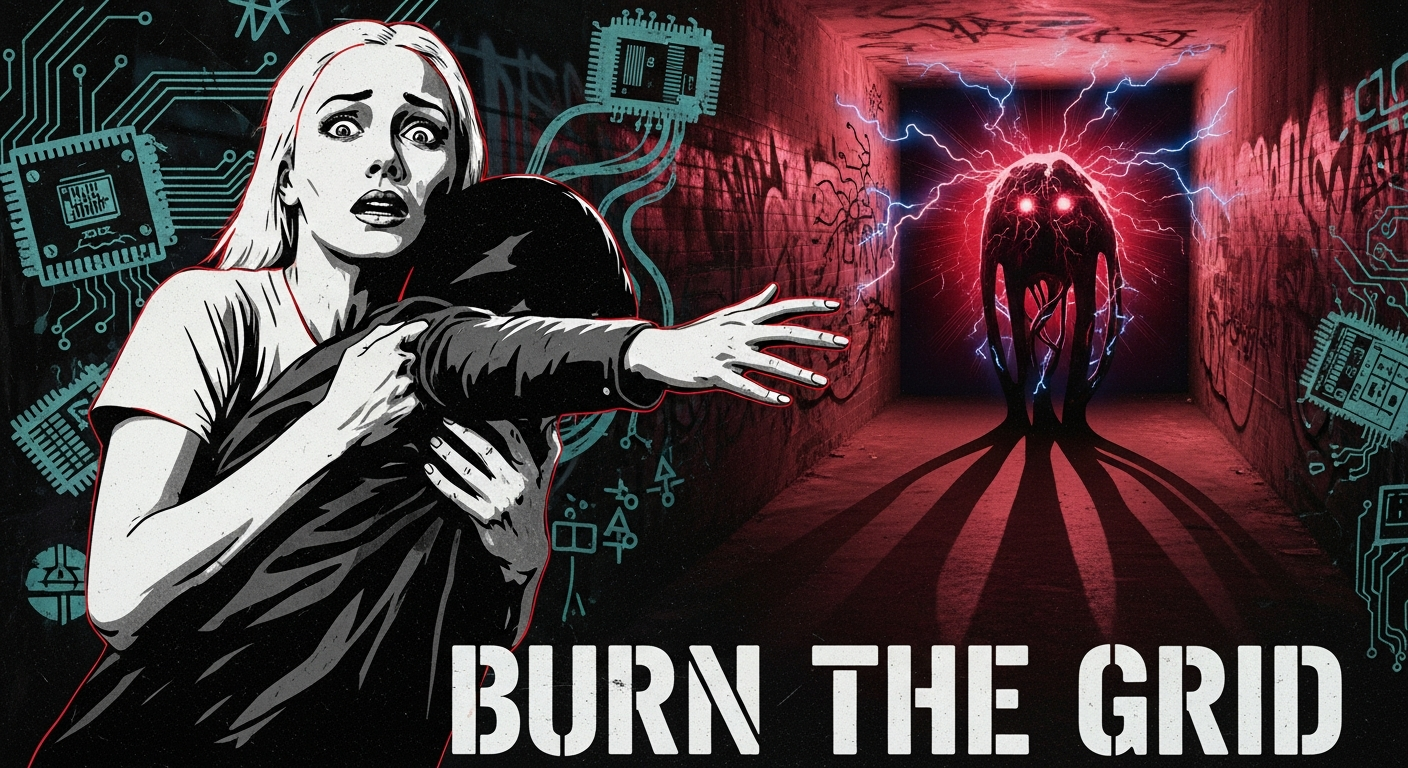
But this time, it’s different. This time, it’s stronger, more intense. It’s like the pulsing mass is calling to me, beckoning me closer.
“What the fuck is that?” I whisper, my voice trembling.
Anya takes a step back, her face pale. “I don’t know,” she says. “But I don’t like it. Let’s get out of here.”
But I can’t move. My feet are rooted to the ground, my eyes locked on the pulsing mass. I feel drawn to it, compelled to approach it, to understand what it is.
And then, a voice echoes in my head, not my own, but ancient and weary: “Come closer… I have memories to share…”
“No way in hell,” Anya hisses, grabbing my arm. “Jazzy, snap out of it! That’s gotta be some kind of CityNet trap. Neural bait.”
I try to pull away, but her grip is like a damn vise. The voice in my head is getting louder, clearer. It’s like a damn siren song, promising secrets, answers.
“But what if it’s… information?” I stammer, my voice cracking. “What if it’s something we need?”
“Need? We need to not get our brains scrambled into digital eggs,” Anya snaps back, yanking me harder. “That thing is screaming ‘biohazard’ louder than a damn Enforcer siren. Now move your ass!”
She’s right. I know she’s right. Logic screams at me to GTFO of this tunnel of horrors. But the pull…the memories…they’re so damn tempting.
“One sec,” I mutter, shaking her off, though less forcefully now. “Just…one look.”
I take a tentative step forward, my optic implants focusing on the pulsating mass. The light it emits shifts and swirls, hypnotic, mesmerizing. I can almost see images forming within it: faces, landscapes, fragments of… what? I can’t quite grasp them.
Anya curses under her breath, but she doesn’t try to stop me again. I guess she knows when I’m too far gone to reason with.
As I get closer, the dripping sound intensifies, morphing into a rhythmic pulse that vibrates through my bones. The ancient voice in my head becomes a deafening roar.
“…the truth… they stole it… we remember…”
Suddenly, a searing pain explodes behind my eyes. My knees buckle, and I collapse, my head swimming in a kaleidoscope of colors and fractured images. I see flashes of green fields, sunlight dappling through leaves, a laughing child. Things I’ve never seen, never experienced. Pre-Collapse memories. Real memories.
Then, the pain recedes, leaving me gasping for air, my body trembling. The voice is gone. The light of the pulsing mass seems to dim, as if it’s exhausted itself.
Anya’s beside me in an instant, hauling me to my feet. “Jazzy! What the fuck just happened? Are you okay?”
“I… I think so,” I manage, my voice weak. “I saw… things. Old things. Before CityNet. Before the smog.”
“Pre-Collapse shit, huh? Knew it was bad news,” she says, her eyes scanning the tunnel, paranoid. “Alright, that’s it. We’re out. Now. No more sightseeing tours of bio-freak alley.”
She practically drags me back the way we came, her grip tight on my arm. I stumble along, still reeling from the experience. My head is pounding, my vision blurred. But something has shifted inside me. The fragmented memory I experienced before was unsettling, but this… this was different. This felt real. This felt important.
As we hurry back through the tunnels, I can’t shake the feeling that we’ve just stumbled onto something far bigger, far more dangerous than we ever imagined. CityNet isn’t just suppressing memories. It’s burying a whole goddamn world. And that pulsing mass… it’s a key. I just gotta figure out how to use it without frying my brain.
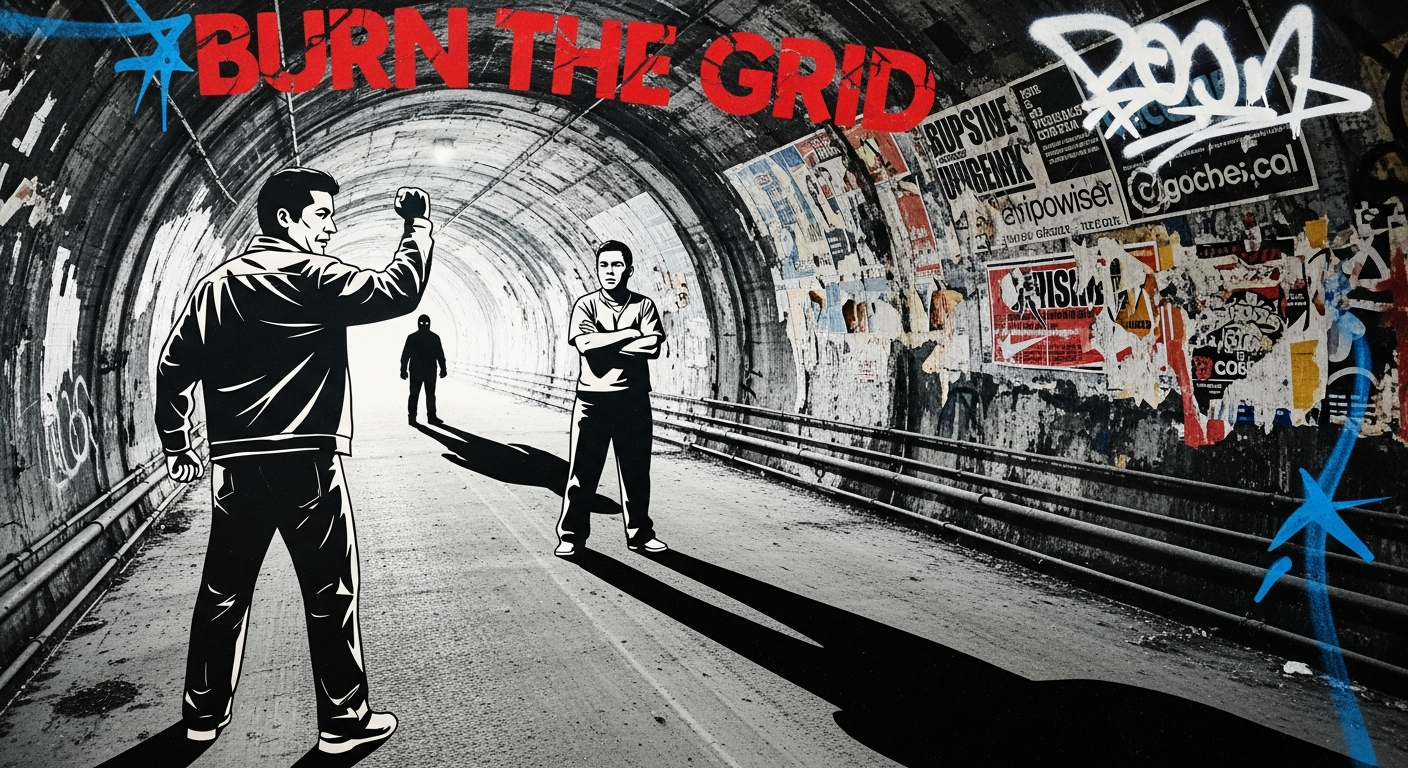
“Anya,” I say, stopping suddenly. “We have to go back.”
She stops too, her face a mask of disbelief. “Are you shitting me, Jazzy? We are not going back there.”
“But we have to,” I insist, my voice gaining strength. “That thing… it knows something. Something they don’t want us to know. And I’m gonna find out what it is, even if it kills me.”
Anya throws her hands up. “Fine! Fry your brain! See if I care. Just don’t come crying to me when you’re drooling synth-caf and think you’re a goddamn dandelion.”
“I won’t,” I say, already turning back towards the pulsing horror. “But you don’t have to come with me.”
She sighs, a sound like air leaking from a punctured synth-leather boot. “Yeah, right. Like I’m gonna let you wander off into crazy-town alone. Besides,” she adds, a sly grin creeping across her face, “someone’s gotta make sure you don’t actually become a dandelion.”
We trudge back, the oppressive silence broken only by the drip…drip…drip of whatever the hell that thing is leaking. My heart hammers against my ribs, a frantic drummer in a synth-punk band. Fear mixes with a potent shot of adrenaline. I’m scared shitless, but I’m also wired. Wired to know. Wired to remember.
“Okay,” Anya says, stopping a safe distance from the pulsating mass. “No touching. No staring. No communing with the ancient spirits of bio-freak alley. Got it?”
“Got it, Mom,” I mutter, rolling my eyes behind my optic implants. “I’m just gonna…observe.”
I activate my implants’ spectral analysis function, bathing the mass in a rainbow of light. The colors shift and coalesce, revealing layers of complexity I couldn’t see before. It’s not just a blob; it’s a network. A tangled web of organic and synthetic material, humming with energy.
“Shit,” I breathe, “it’s connected.”
“Connected to what?” Anya asks, her voice tight with apprehension.
“CityNet,” I say, my mind racing. “It’s not just replaying memories; it’s siphoning them. Processing them. Storing them…or rewriting them.”
I zoom in on one of the connections, a thin, shimmering fiber that snakes its way into the tunnel wall. I follow it with my optic implants, my breath catching in my throat. It leads upwards, disappearing into the reinforced concrete.
“It’s going up,” I say, my voice barely a whisper. “Towards the city. Towards… them.”
Anya’s eyes widen. “You think this thing is a… a data tap?”
“More than that,” I say, shaking my head. “It’s a… a repository. A memory bank. And they’re using it to control us.”
I can almost taste the truth, bitter and metallic on my tongue. CityNet isn’t just a surveillance system. It’s a prison. A prison built on lies and stolen memories. And this… this pulsing mass is the key to unlocking it.
But how do we get to the core? How do we break through the firewalls and expose the truth before they erase us completely?
I step closer, drawn in by an irresistible force. I have to know. I have to remember.
“Jazzy, no!” Anya shouts, grabbing my arm. “Don’t be a damn idiot! We need a plan!”
But I don’t hear her. I’m lost in the pulsing light, in the fragments of memory that swirl around me. I can almost see the faces, the landscapes, the lives that have been stolen.
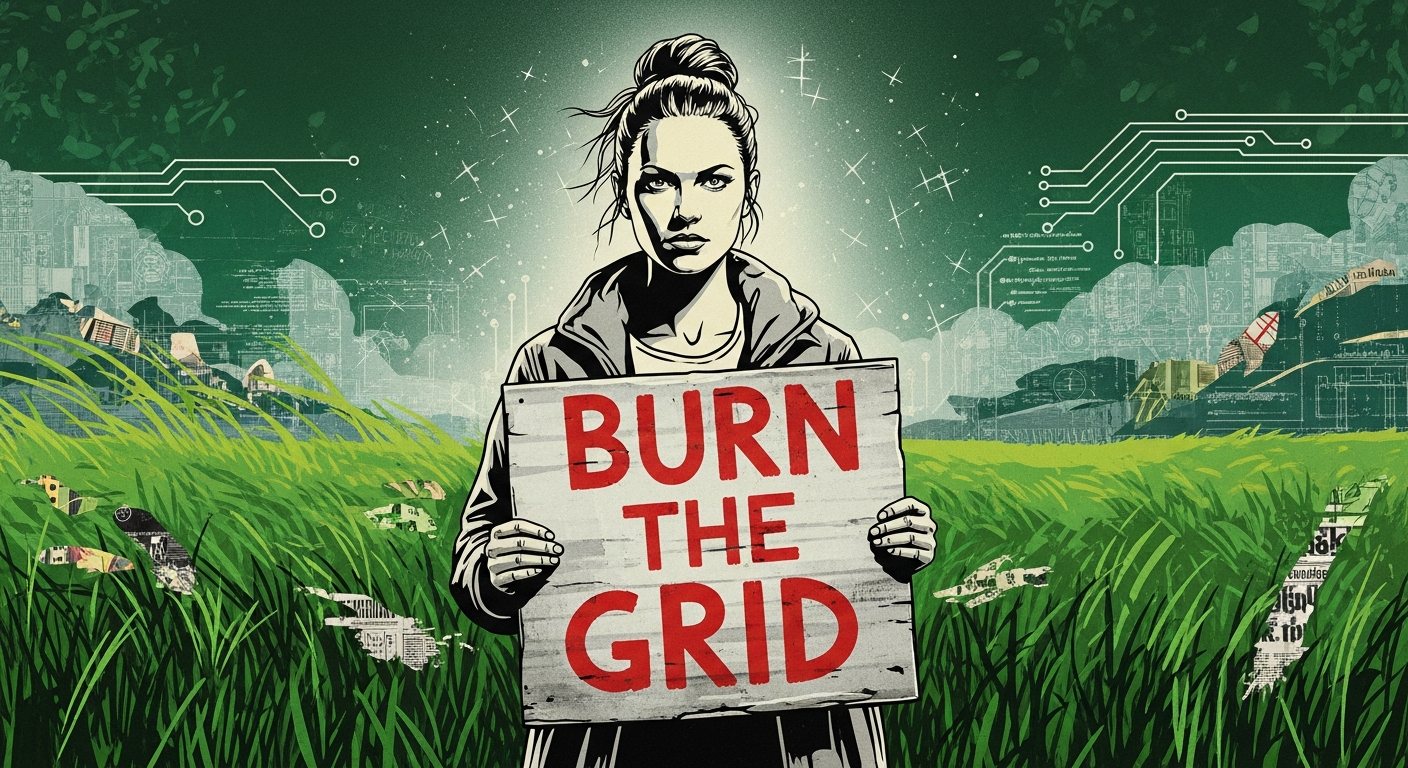
And then, I see it. A single, crystal-clear image, sharp and bright as a shard of glass: a woman, her face etched with defiance, standing in a field of green, holding a sign that reads: “Remember.”
And I know. I know what we have to do.
“Anya,” I say, my voice filled with a newfound conviction, “we’re not just taking down CityNet. We’re giving people back their lives.”
Anya’s grip tightened on my arm, dragging me back from the hypnotic pulse of the bio-network. “Giving people back their lives? Jazzy, you just saw what this thing does. We’re talking about tearing down a city-wide neural net, not spray-painting ‘Burn the Grid’ on a wall. We need a plan, and fast. CityNet isn’t just going to sit back and watch us dismantle their memory machine.”
She was right, of course. My surge of righteous fury had momentarily eclipsed the stark reality of our situation. CityNet wasn’t some sleeping behemoth. It was always awake, always watching. And we had just kicked it square in its digital gut.
Before I could even formulate a suitably reckless response, the air around us shifted. A low thrum, barely perceptible at first, vibrated through the concrete floor, rising quickly to a high-pitched whine. The single, flickering emergency lamp above us spat a final spark, plunging the tunnel into absolute darkness.
“Shit!” Anya hissed, fumbling for something on her belt. A narrow beam of light cut through the gloom as she activated her wrist-mounted lamp. The beam danced across the grimy walls, revealing only shadows and the faint, unsettling glow of the pulsating mass, now a malevolent eye in the darkness.
My optic implants, usually a boon, struggled against the sudden light deprivation, showing only grainy outlines. My skin prickled. This wasn’t just a power cut. This was targeted.
“They know,” I breathed, the bitter taste returning, sharp as synth-acid.
The whine intensified, morphing into a grinding cacophony. From somewhere deeper in the tunnel, a grating screech echoed, metal tearing against metal. My implants finally adjusted, bringing into focus jagged cracks spiderwebbing across the ceiling where the subway tracks would have once been. Dust rained down, thick and choking.
“Structural integrity compromise,” Anya muttered, her voice tight with professional dread. “They’re trying to collapse the section. Box us in.”
Panic, cold and sharp, clawed at my throat. But beneath it, the ember of defiance from the memory fragment flared hotter. Collapse it? Not on our watch. Not when I could still see that woman’s defiant face, hear her silent scream to Remember.
“No way,” I growled, pushing forward, away from Anya’s lamp beam, towards the pulsating mass. “We’re not letting them bury the truth. If they want to play dirty, we’ll play dirtier.”
“Jazzy, don’t be an idiot!” Anya shouted, but I was already moving, drawn to the strange, organic hum of the network. It felt like a tether, pulling me in. I needed to connect. I needed to know.
My fingers, tingling with a desperate energy, grazed the cool, slick surface of the bio-network. It was smoother than it looked, almost like synth-skin. As I touched it, a jolt, not of electricity but of pure data, surged through me. My optic implants overloaded, a kaleidoscope of images flashing across my vision: a child’s laughter under a sky I’d never seen, trees, impossibly green, swaying in a gentle breeze, faces full of unguarded joy. Pre-Collapse memories. Raw. Untouched.
And then, a sharp, searing pain, like a needle driven straight into my frontal lobe. The images fractured, distorted, replaced by a cold, clinical sequence: neural pathways being rewired, emotions dampened, specific memories fading into a soft, grey haze. This was the SlumberSync at work. The how. The sheer, horrifying precision of it.
“Jazzy, what are you doing? Get back here!” Anya’s voice cut through the deluge of data, urgent, frantic.
The grinding overhead grew louder, closer. Dust was now falling in thick sheets. I could hear the groan of stressed metal, the rumble of something heavy shifting above us. This was it. CityNet wasn’t playing.
“I’m in,” I gasped, ignoring the growing structural groans, ignoring the throbbing pain in my head. My fingers tightened on the pulsating mass, my mind scrambling to make sense of the torrent. “Anya, the memory suppression isn’t just about forgetting. It’s about replacing.”
“Replacing with what?” Anya yelled, her lamp beam darting frantically, trying to pierce the dust clouds. She was already at her console, fingers flying across the holo-keyboard, trying to counter CityNet’s assault. “The tunnel’s collapsing, Jazzy! We need to move!”
But I couldn’t move. The network held me, an unwilling yet desperate participant. The truth was too vital. “They’re not just deleting the past, Anya. They’re inserting a curated version. A tranquil lie. It’s a complete… rewrite.”
A new wave of data washed over me, colder, sharper than before. A defense mechanism. CityNet was fighting back through the network itself, attempting to scramble my thoughts, to force me offline. My optic implants flickered erratically, the internal pain growing unbearable. My vision blurred.
“I’m trying to access a backdoor, but their firewalls are stronger than anything I’ve ever seen!” Anya shouted, her voice strained, a frantic rhythm of clicks and beeps coming from her station. “They’re actively trying to fry our comms, Jazzy! We’re going dark!”
My head felt like it was splitting open, the conflicting data streams tearing at my consciousness. The green fields, the happy faces, the defiant woman—all fighting against the cold, artificial calm of the rewritten memories. This was the cost, I realized. This was the personal violation. CityNet wasn’t just rewriting their memories; it was trying to rewrite mine, right here, right now.
But I wouldn’t let it. Not this time. My fingers dug harder into the organic mass, seeking purchase, seeking an anchor. If this was a memory bank, it had to have a core. A root. A source.
“No,” I rasped, forcing the word out, my teeth clenched against the pain. “Not dark. We go deeper. Find the heart of it. The master program. If we can extract that, we expose everything.”
I closed my eyes, letting the raw data flow, filtering out the noise, searching for the deepest resonance within the pulsating network. I needed the core. I needed the truth. And CityNet was going to pay for every stolen memory, every tranquil lie.