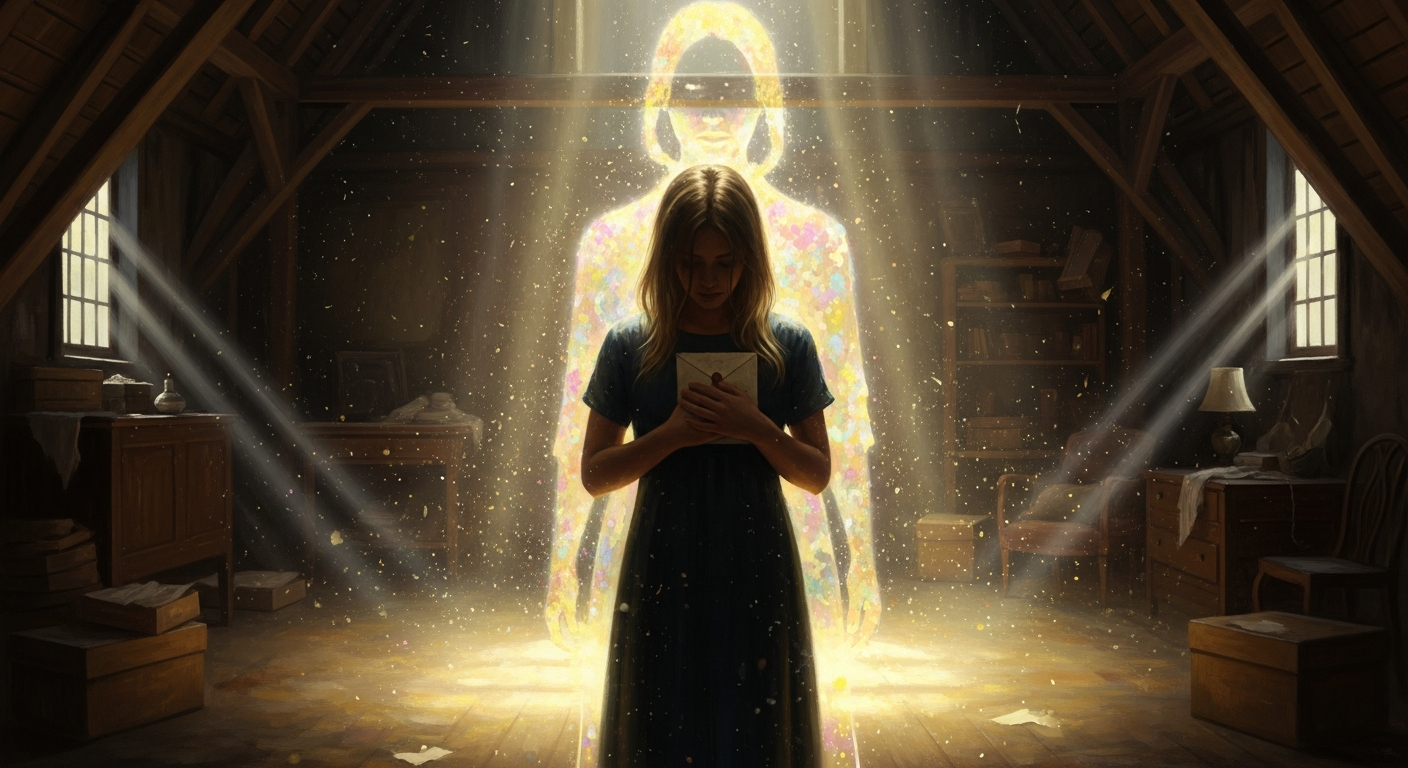
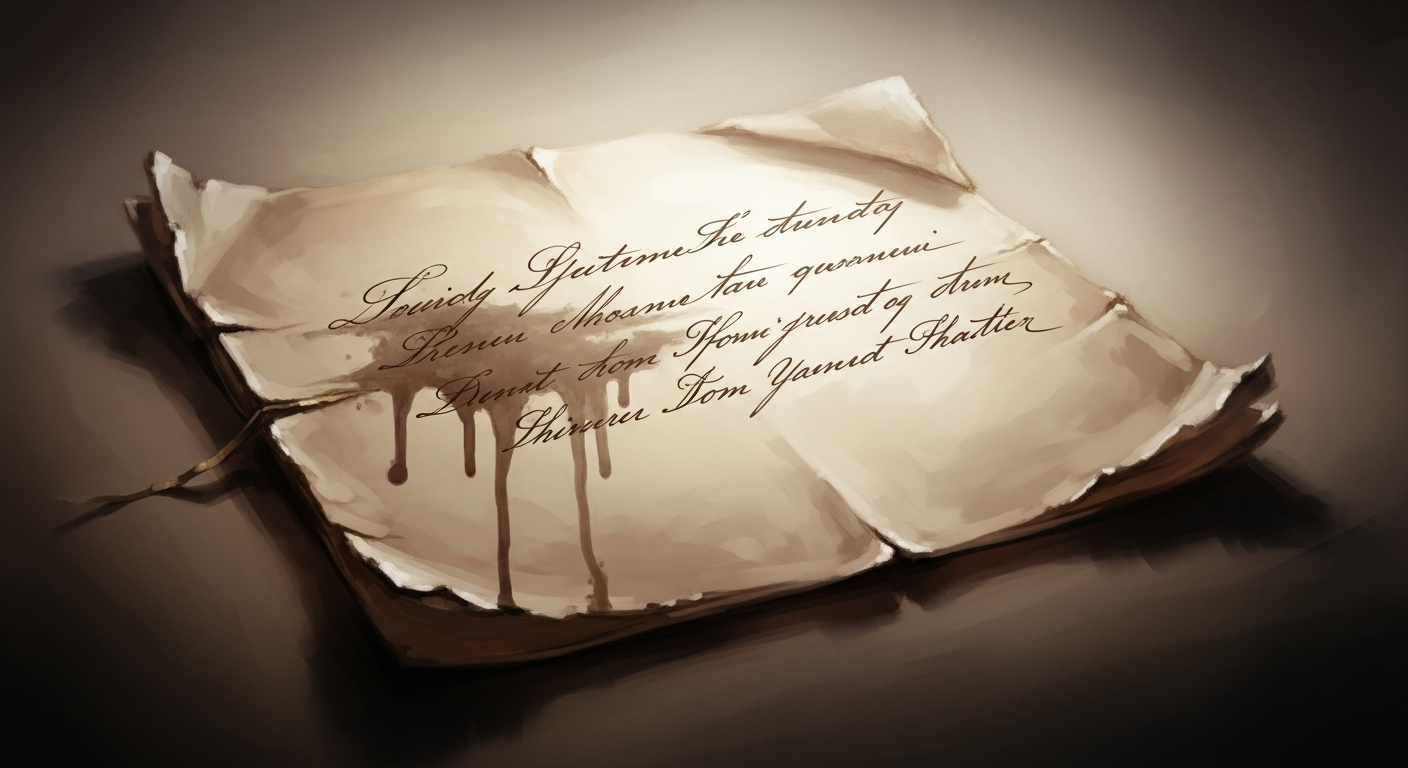
The words on the fragile page blurred, then sharpened, then blurred again, as if the attic’s stale air was playing tricks with my vision, or perhaps it was the sudden, seismic shift in the landscape of my past. My mother, the steadfast, formidable woman, recast as a tragic heroine, her life a carefully constructed prison of silence and sacrifice. The narrative of my childhood, once a solid, comforting structure, had not merely cracked; it had imploded, leaving behind a debris field of questions and a raw, aching sorrow that wasn’t entirely my own.
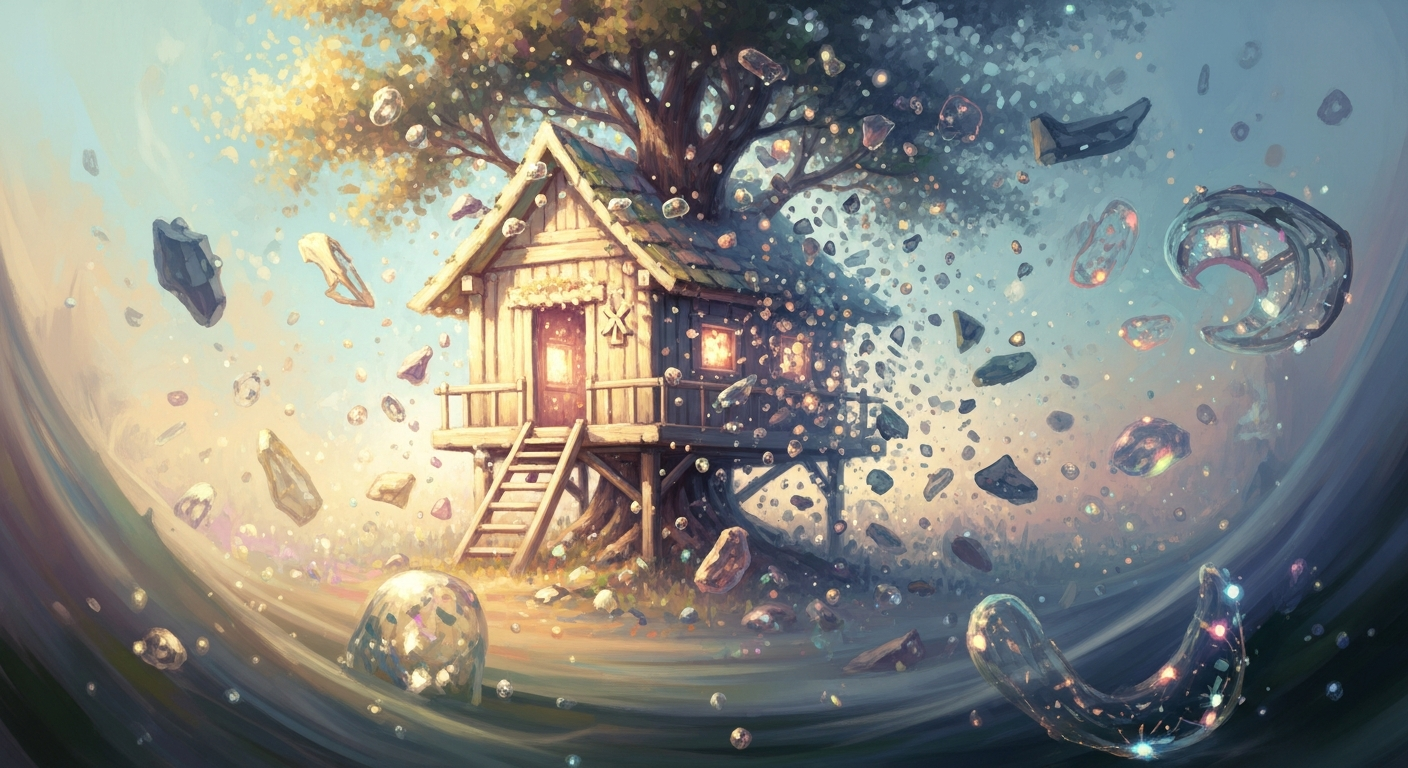
AI-generated illustration — muse style
I still clutched the letter, its edges soft beneath my fingertips, feeling the ghost of her tears, her unvoiced regrets. The attic, that graveyard of forgotten things, no longer felt merely musty and old. It hummed now, a low, resonant thrum of secrets finally exhaling into the quiet. Dust motes danced in the slivers of light piercing the grimy windows, each particle a tiny, suspended memory. The scent of mothballs, dried flowers, and ancient wood seemed to deepen, weighted with the unspoken.
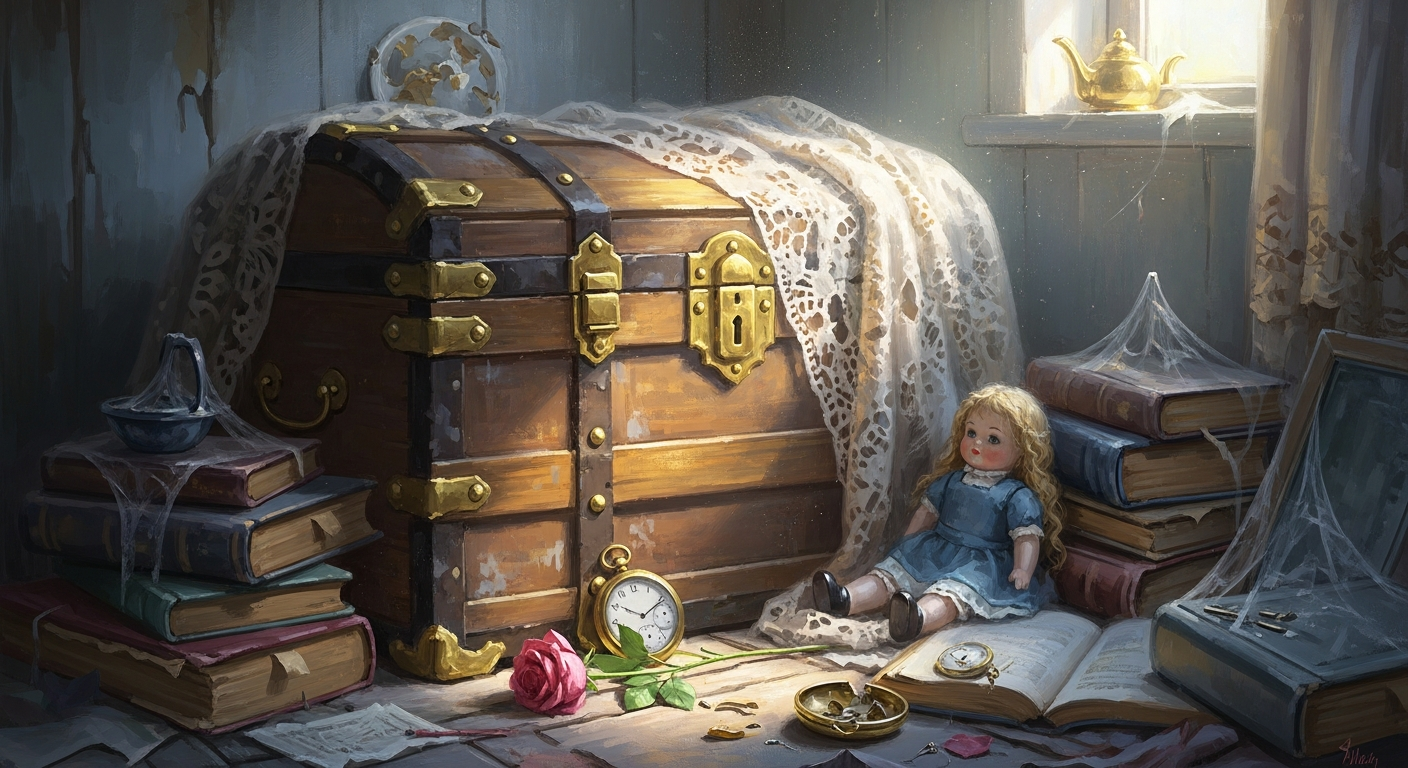
My gaze, drawn by an invisible thread, returned to the wooden chest. It sat in the far corner, nestled beneath the shroud of faded lace, its presence now radiating an almost magnetic pull. Before, it was a curiosity; now, it was the undeniable epicenter of this seismic shift. The air around it did feel colder, a chill that had nothing to do with drafts and everything to do with the heavy density of concealed truth. Its surface, scarred and scratched, spoke of a long life lived, not gently, but robustly, enduring. The tarnished brass clasp, dull against the dark wood, seemed to hold not just the lid, but decades of carefully guarded breath.
My hand, hesitant at first, then resolute, reached out. The wood was cool and smooth beneath my palm, belying its rough appearance. A tremor ran through me, a profound shiver that vibrated deep in my bones. This was it. The precipice. The point of no return my premonition had whispered about, long before I’d ever retrieved the little brass key. Opening this chest felt less like an act of curiosity and more like an invocation, a summoning of a past that had been deliberately laid to rest.
My fingers brushed the brass clasp, its cold metal a stark contrast to the warmth of my skin. There was no lock, no intricate mechanism, only the simple catch of a well-worn hinge. It was as if, after all this time, the chest was merely waiting for the right touch, the right moment, to yield its contents. With a breath I didn’t realize I was holding, I pressed down.
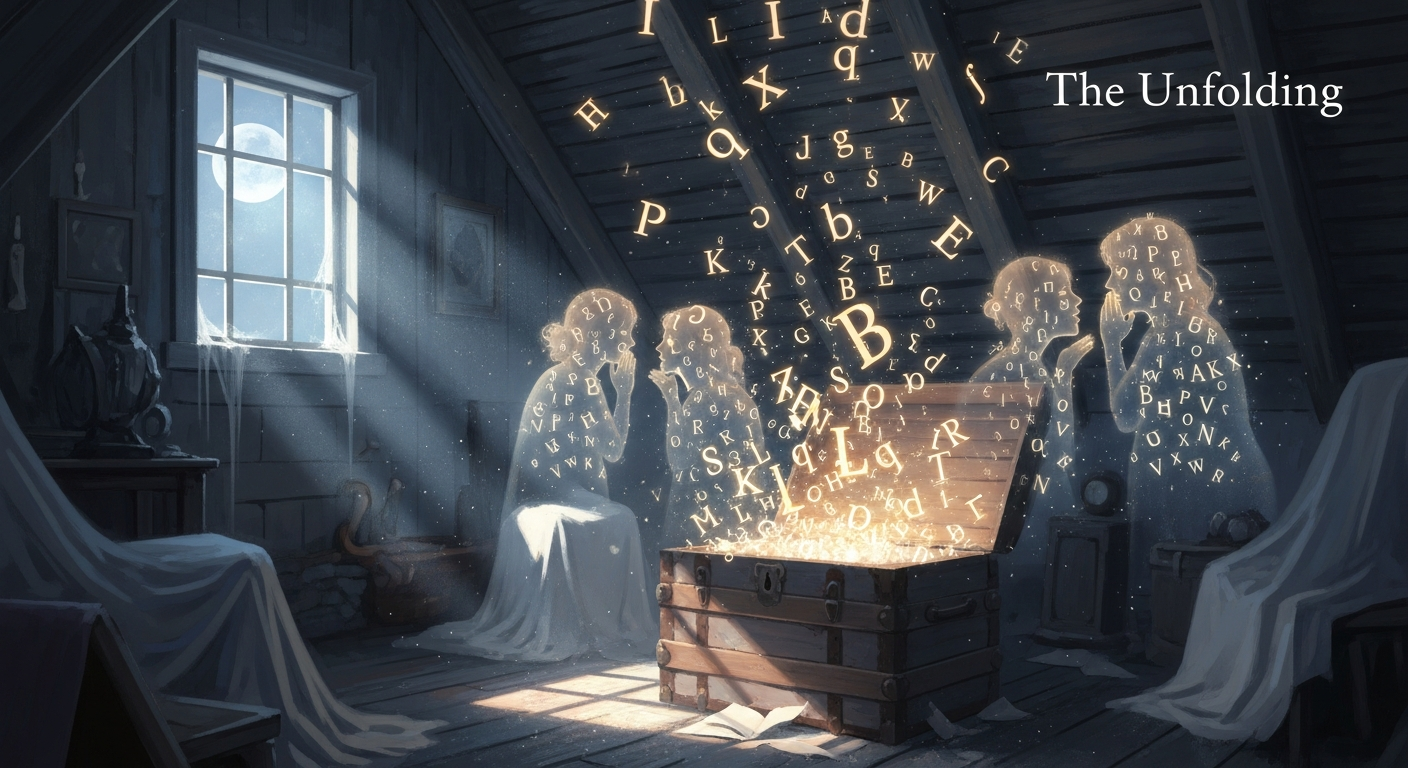
A soft, almost imperceptible click echoed in the vast quiet of the attic. It was a sound that seemed to reverberate through time, unraveling the tightly wound spool of my mother’s hidden life. Slowly, deliberately, I lifted the lid.
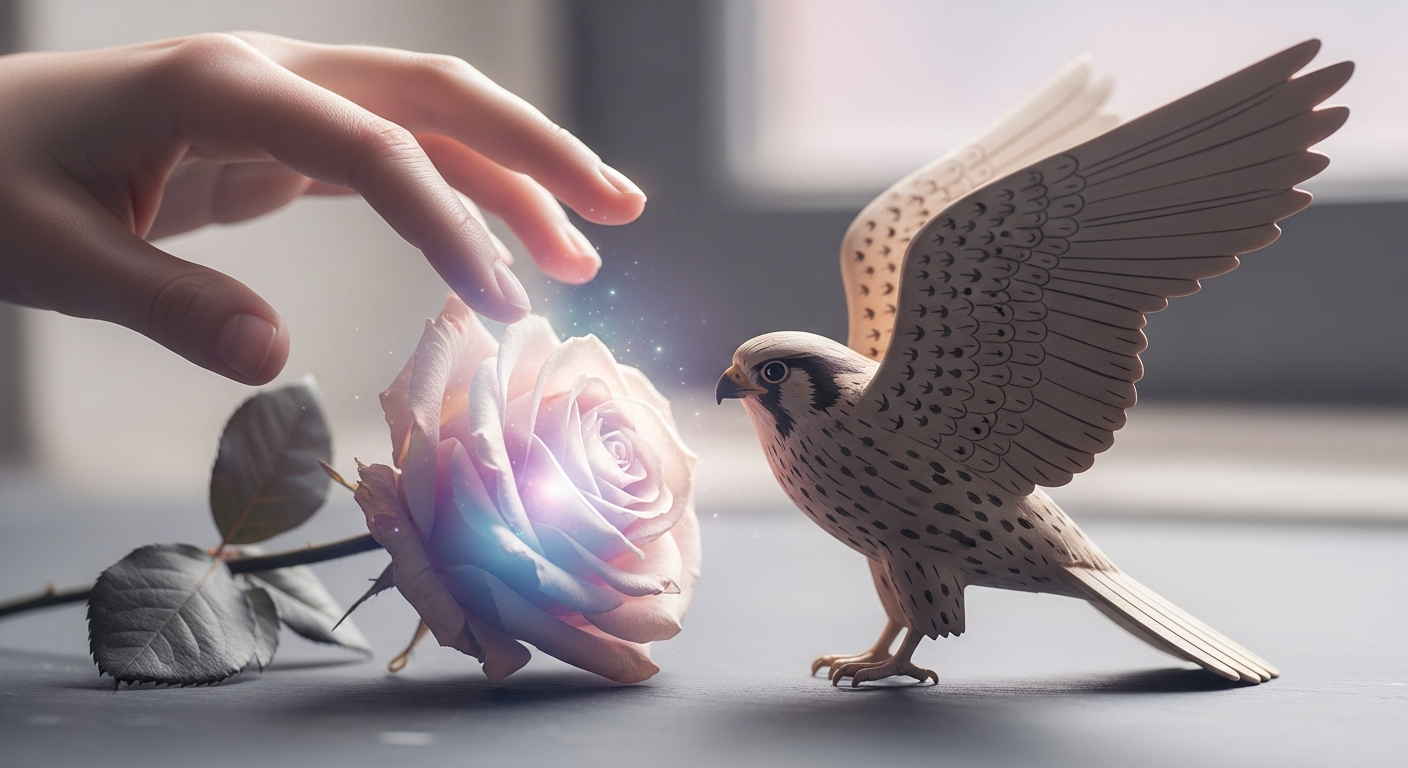
The hinges groaned, a long, weary sigh, as the top half of the chest lifted away, revealing not chaos, but order. The space within was packed, but not haphazardly. Atop a meticulously folded square of damask linen lay a single, pressed rose, its petals a brittle, faded crimson, still retaining a ghostly echo of their original fragrance. Beneath it, nestled like a secret heart, was a small, hand-carved wooden bird, smoothed by countless touches. Its wings were outstretched, poised for flight, its form slender and elegant. A kestrel, perhaps, the very one my mother had alluded to in her unsent letter to Maeve, the symbol of the freedom she had denied herself.
And beneath the kestrel, filling the entire depth of the chest, stacked neatly in chronological bundles tied with faded silk ribbons, were hundreds upon hundreds of letters. Not loose, scattered missives, but an archive. A lifetime. Each bundle a volume, each page a whisper from the past, waiting to find its voice. The air within the chest was infused with the faint, sweet scent of dried roses and old paper, a poignant perfume of longing and loss. This wasn’t merely a collection; it was a testament, a story meticulously preserved, laid bare now for the one who finally held the key to her hidden heart.
My hand, a stranger to itself, reached into the sacred space. It hovered, then descended, brushing first the brittle ghost of the rose, its petals crumbling like whispers against my fingertip. A fragile memory, scentless save for the deeper perfume of the aged paper it accompanied. Then, the kestrel. Its smooth wood, worn by unknown caresses, felt alive beneath my touch, its wings eternally poised. The sculptor’s hand, perhaps, had loved this bird as fiercely as my mother had longed for the freedom it represented. Maeve’s letter had spoken of it, a silent yearning made tangible. Now, holding it, I felt the sharp ache of that denied flight, a life held captive by unseen threads.
AI-generated illustration — muse style
But the letters. The sheer volume of them, a silent cascade of untold years. Each bundle, a carefully wrapped parcel of time, its ribbon a faded sigh. My breath hitched. This was not a diary, nor a casual correspondence. This was an endeavor, a monumental act of preservation, a conversation continued in secret, meticulously ordered, waiting.
I lifted the topmost bundle, its silk ribbon, once a vibrant amethyst, now softened to the color of distant twilight. It untied with a faint crackle, a dry sigh of surrender. The bundle, surprisingly heavy, felt like a small, dense brick of my mother’s unseen life. The first letter lay exposed, its ink a testament to a hand I knew, yet didn’t. A familiar slant, but a voice utterly alien.
The paper was thick, cream-colored, with deckled edges, and though it bore the scent of time, it felt remarkably preserved. My eyes, blurring slightly, fell upon the date. October 12th, 1957. Long before I was born. Long before the mother I knew had ever fully existed. My throat tightened. This was not just a peek behind a curtain; it was an unearthing, a digging up of foundations I had believed were bedrock.
To whom was it addressed? There was no salutation, not in the formal sense. Only a single, stark word, underlined twice, scrawled with an urgency that transcended the decades: Beloved.
My world tilted. Beloved. Not a name, but an address of the soul. A confession, a plea, a declaration. The word hung in the stale attic air, heavy and resonant, a bell tolling for a relationship I had no knowledge of, a profound intimacy hidden beneath layers of carefully constructed silence.
I unfolded the page, the delicate creases groaning softly, like old bones settling. My gaze dropped to the first sentence, and the brittle quiet of the attic shattered around me.
“My heart, a caged bird, beats against these ribs, desperate for the sky you promised.”
The words were a physical blow, a sharp intake of breath. This was not the practical, stoic woman who had raised me, whose laughter had been a rare, bright thing. This was a soul laid bare, raw and aching. The mother I knew had been defined by duty, by a quiet resilience, by the almost tangible presence of unspoken sacrifice. But this? This was passion, yearning, a voice vibrant with a love so potent it had been condemned to silence.
I scanned further, my eyes racing, trying to absorb the tidal wave of emotion without truly comprehending. “…the unfairness of it all, the life we were meant to build, reduced to these stolen moments, these phantom touches across the void.”
Phantom touches. A void. My mother, a tragic figure. The initial letter had merely redefined her; these words were rewriting her, tearing down the familiar edifice of my childhood, stone by painful stone. The carefully crafted narrative of my family, of us, crumbled to dust around me, leaving behind only the cold, unyielding truth of a deeply suppressed past.
The air in the attic, already thick with mothballs and dried flowers, now felt charged with her unspoken anguish, a ghost of lavender and spice mingling with old wood and secrets. I was no longer merely in my childhood home; I was adrift in my mother’s secret history, a reluctant cartographer charting the lost continent of her heart. The brass key, cold in my pocket, felt like a burden, not a tool. I had unlocked more than a door; I had unlatched a heart, and now its torrent flowed, threatening to drown me in its truths.
The key felt like a shard of winter, sharper and smaller than memory allowed. It lay cradled in my hand, a brass echo resonating with decades of disuse. It tasted of slumber, of metal dreaming in the perpetual twilight of neglect. The gleam it once possessed, a deceptive promise of polished perfection, had long since surrendered to the patient caress of tarnish. This was the key to the attic, the forbidden kingdom above the stairs, a place whispered about in childhood like a dark fairy tale. Now, it beckoned with the silent insistence only the dead truly understand.
AI-generated illustration — muse style
The house breathed differently, a labored rasp now that her life force no longer animated its bones. It was a brittle shell, echoing with stories only I could half-remember, like fragmented verses of a forgotten poem. The scent of lavender and simmering spice, her signature, had evaporated, leaving behind the pervasive, almost palpable odor of old wood and secrets settling like sediment in the floorboards. Each creak of the stairs was a sigh escaping its wooden lungs, each rustle of the wind through the eaves a ghostly lament carried on the breeze.
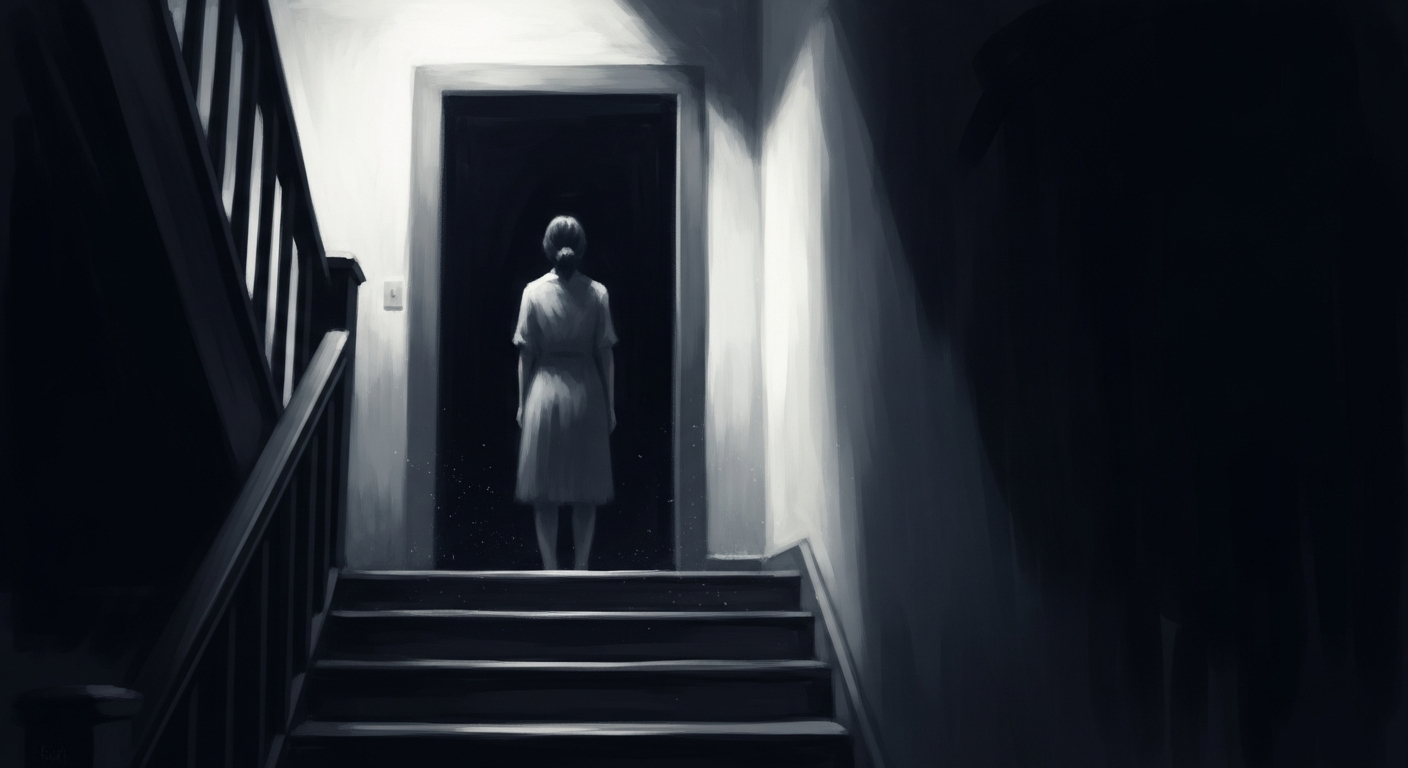
I climbed, each step a hesitant note in the symphony of silence. The worn carpet was a familiar comfort beneath my feet, but the shadows deepened with each ascending step, clinging to the walls like expectant mourners draped in velvet. At the top, the attic door loomed, a rectangle of impenetrable darkness, the very threshold between the known and the unknowable.
I paused. Not from fear, not precisely, but from a premonition, a prickling awareness that what lay beyond would irrevocably alter the landscape of my memory, like a storm reshaping the coastline. The past, I understood, was a fragile tapestry, easily unraveled by a careless tug. And I, armed with this small, cold key, was about to become a vandal in the museum of my own life, defacing the artifacts of yesterday.
Taking a breath, I offered the key to its fate. It turned with a groan, a sound that reverberated through the silent house like a prolonged sigh of resignation, or perhaps, anticipation. The lock clicked, releasing its long-held captive. I pushed the door open, and a rush of stale air, thick with the scent of mothballs and dried flowers, billowed out, carrying with it the weight of untold years, a fragrant exhalation of forgotten time.
Moonlight spilled into the attic, painting the dust motes dancing in the air like miniature stars in a forgotten galaxy. The space was larger than I remembered, a cavernous expanse filled with the detritus of generations, the discarded dreams and forgotten sorrows of lives lived and lost within these walls. Trunks overflowed with forgotten clothes, their fabrics faded and fragile, whispering tales of dances and funerals, of loves won and lost. Stacks of yellowed newspapers teetered precariously, threatening to collapse into a landslide of headlines and bygone eras, a chorus of forgotten voices clamoring to be heard. Porcelain dolls, their painted eyes staring blankly ahead, sat perched on dusty shelves, their silence more unsettling than any scream, their vacant gazes holding secrets they would never reveal.
It was a graveyard of forgotten things, a testament to the relentless march of time, a poignant reminder of the ephemeral nature of existence. And amidst this chaos, in the far corner of the attic, tucked away beneath a shroud of faded lace, like a secret hidden beneath a veil, I saw it. A small, wooden chest, its surface scarred and scratched, its brass clasp tarnished with age, yet hinting at a hidden strength. It looked like the kind of chest a pirate might bury treasure in, or a hopeful bride might pack her dreams into, a vessel of untold possibilities.
AI-generated illustration — muse style
I crossed the attic, each step a hesitant prayer, a whispered plea for understanding. The air grew colder as I neared the chest, a chill that seeped into my bones, a premonition deepening with every stride, like the rising crescendo of a forgotten melody. When I reached it, I knelt, my fingers tracing the worn wood, feeling the faint tremor that ran through the house, or perhaps, just through me, a vibration of unspoken truths.
With trembling hands, I unfastened the clasp. The sound was small, almost imperceptible, yet it echoed in the silence of the attic like a tolling bell, a solemn announcement of revelations to come. I lifted the lid.
And then I saw them.
Letters.
Hundreds of them, bound together with faded ribbons, their envelopes yellowed and brittle, their addresses meticulously handwritten in a script I recognized as my mother’s. Letters addressed to people I had never heard of, to places I had never been, destinations whispered in the wind. Letters that had never been sent, their words imprisoned within the fragile paper.
The weight of them, the sheer volume of untold stories, pressed down on me, stealing the air from my lungs, a suffocating burden of unspoken words. I reached out, my fingers brushing against the fragile paper, feeling the ghostly echo of my mother’s touch, a spectral connection across the chasm of time.
This was not just a chest of letters. This was a Pandora’s box of unspoken words, a hidden history waiting to be unleashed, a storm of secrets threatening to break loose. This was the beginning of everything I thought I knew, unraveling at the seams, the fragile fabric of my past about to be torn asunder.
My hands, trembling still, dove into the depths of the chest, past the first layer of yellowed envelopes, seeking something more, something to anchor this sudden, disorienting shift in reality. The paper felt like dry leaves, rustling with a thousand hushed voices, each one a whisper of a life I hadn’t known. Beneath the formidable stack, nestled in a hollow carved into the aged wood, I found a small, velvet-wrapped box. It was a deep, faded sapphire, the fabric worn smooth in places, hinting at countless caresses.
With bated breath, I lifted the lid. Inside, resting on a bed of similarly faded satin, lay a locket. Not the cheap, mass-produced kind, but a piece of intricate craftsmanship, tarnished silver etched with a delicate, intertwining vine pattern. It felt cold and heavy in my palm, a small, significant anchor in a sea of paper. My thumb found the tiny clasp and, with a soft click, it sprang open.
Two miniature portraits stared back at me. On one side, my mother. But not the mother I knew – not the woman whose scent of lavender and spice still haunted the empty rooms, whose weary eyes had held the weight of untold stories. This woman was younger, vibrant, her smile unburdened, a spark in her eyes that had long since been extinguished by the time I knew her. Her hair, usually confined in a neat bun, cascaded around her shoulders, a cascade of dark silk. And on the other side, a man. Young, handsome, with kind eyes and a gentle curve to his lips that mirrored my mother’s youthful joy. He was a stranger, utterly unknown to me, yet the way their gazes, frozen in time, seemed to meet across the divide of the locket spoke volumes of an intimacy I had never imagined.
A cold dread seeped into my bones, a deeper chill than the attic air. This was a truth, a tangible piece of evidence, that my mother had lived an entire life before me, a life carefully redacted from our family’s carefully constructed narrative. Who was this man? What did he mean to her? The questions hammered at the inside of my skull, demanding answers the silence of the attic could not provide. The house, usually a repository of comforting echoes, now felt brittle, each creak and groan a potential revelation, each shadow a lurking secret.
I closed the locket, the click a sharp punctuation mark on my confusion, and tucked it into my pocket, a secret to be guarded as fiercely as my mother had guarded hers. My gaze fell back to the letters. They were no longer just a curiosity; they were a lifeline, a map to a hidden continent of my mother’s past, a past that now felt more real than my own memories of her.
My fingers hovered over the topmost letter, bound with a faded blue ribbon, slightly detached from the others, as if yearning to be read. The paper was delicate, almost transparent at the edges. The script, my mother’s elegant, looping hand, addressed it simply: “To Elias.” The name from the locket echoed in my mind. Elias.
I carefully untied the ribbon, its silk threatening to disintegrate at my touch. The envelope, unsealed, offered no resistance. I unfolded the brittle sheet, conscious of the immense weight of the moment, the air thick with anticipation. The words, written in ink that had faded to a sepia whisper, seemed to leap from the page, a voice from the grave, shattering the quiet of the attic.
“Elias,” it began, “I know this letter may never reach you, but the silence has become unbearable. Every night, the moon outside my window paints the same lonely picture, and I am pulled back to that summer, to the scent of the sea and the impossible choices we made. I often wonder if I made the right one, Elias, to protect what little fragile hope I had left, even if it meant sacrificing us.”
My breath hitched. The words were a physical blow, stealing the air from my lungs. Sacrificing us. My mother, the woman who had always been the steadfast center of my universe, the unwavering constant, had a history, a heart, a life that had demanded sacrifices. A life tied to a man named Elias, a sea-scented summer, and choices I couldn’t begin to comprehend. The fragile fabric of my past had not merely been torn; it had been shredded, revealing a raw, unfamiliar landscape beneath. And I stood, adrift, clutching the letter, as the shadows in the attic seemed to deepen, filled with the ghosts of unspoken words and a mother I had never truly known.
And I stood, adrift, clutching the letter, as the shadows in the attic seemed to deepen, filled with the ghosts of unspoken words and a mother I had never truly known. The world tilted on its axis, a carefully constructed façade crumbling to dust around me. The woman I had called Mother, the woman whose quiet strength had been the bedrock of my world, was a stranger. Sacrificing us. The phrase echoed, a mournful bell tolling in the cavernous space, each reverberation chipping away at the foundation of my memories.
My fingers tightened around the brittle paper, the words blurring through a sudden film of tears. This wasn’t grief for her death; it was a deeper, more disorienting sorrow, a grief for the mother I thought I knew, who now seemed to have vanished into the mists of a secret past. My breath, still ragged, scratched at my throat. The attic, once a mere repository of forgotten things, now felt like a living entity, its dust motes dancing in the weak light, each one a fragment of a story I was only just beginning to piece together.
My gaze drifted from the letter, held like a fragile bird in my hand, to the wooden chest from which it had come. It sat, unassuming yet profoundly significant, on the worn floorboards. Its scarred surface and tarnished brass clasp, which before had hinted at age, now screamed of a deliberate concealment, a life lived behind a locked door. The stack of letters, bound in varying hues of faded ribbon, lay nestled within, a silent testament to years of unspoken words. But what else did this small vault contain? What other pieces of this fractured narrative awaited me?
With a new, almost desperate resolve, I lowered myself to sit beside the chest, the floor cold beneath me, but the chill within far more profound. I placed the first letter carefully back on top of the pile, a bookmark in the unfolding drama. My hands, trembling slightly, began to explore the chest’s deeper confines. Beneath the layers of letters, tucked into a false bottom that I almost missed, I felt something hard and cool. My fingers fumbled, and I pulled out a small, leather-bound journal, no bigger than my palm, its cover worn smooth with handling.
It wasn’t a diary, not in the traditional sense. Most of its pages were filled with pressed wildflowers, their colors muted by time but their forms still delicate and discernible. Lavender, sea thrift, a tiny sprig of rosemary – herbs and blooms from some distant, sun-drenched landscape. But interspersed amongst these botanical pressed memories were small, precise sketches: a lighthouse standing sentinel against a stormy sky, the curve of a distant coastline, the profile of a man, unmistakably Elias, laughing, his head thrown back as if caught in a moment of pure, unadulterated joy. There was a vibrancy to these drawings, a freedom of spirit I had never associated with my mother.
And on the very last page, beneath a perfectly preserved sea poppy, was a single, faded photograph. It showed my mother, younger than in the locket, perhaps eighteen or nineteen, her hair unbound and wind-swept, a wide, unguarded smile on her face. She was standing on a cliff edge, the sea a restless expanse behind her, her arm linked through Elias’s. But what stole my breath, what made my heart lurch with a terrifying certainty, was the third figure in the photograph. A woman, older than my mother, her face etched with a familiar sorrow, her eyes, though distant, holding a striking resemblance to my own. It was my grandmother, my mother’s mother, her hand resting gently on my mother’s shoulder, a silent witness to this joyous, forbidden moment.
The pieces began to click into place, shards of a broken mirror reflecting a distorted reality. My grandmother, usually a stern, unyielding presence in my childhood memories, was here, a part of this secret. The “sacrifices” my mother spoke of, the “impossible choices,” were not hers alone. This was a narrative woven with more threads, more lives, than I had ever conceived.
I closed the journal, its secrets pressing heavily against my chest, and turned back to the stack of letters, a hunger for truth gnawing at me. The carefully constructed silence of my childhood home was now shattered, replaced by the clamor of voices from the past, each demanding to be heard. I picked up another letter, this one addressed simply “My Dearest Sister.” The paper felt even thinner, more fragile, as if the very ink held the weight of untold years. With a deep, shuddering breath, I unfolded it, ready to delve deeper into the labyrinth of my family’s hidden history.
The fragile paper rustled, a whispering ghost in my hands. My mother’s elegant script, usually so precise and controlled in the few notes she’d ever left me – reminders about appointments, instructions for watering the jade plant – was looser here, almost hurried. It was as if her pen couldn’t keep pace with the tumultuous current of her thoughts. The ink, faded to a sepia shadow, seemed to bleed into the very fibers of the page, carrying the weight of its untold years.
AI-generated illustration — muse style
“My Dearest Sister,” it began, and the words themselves were a seismic shift, cracking the bedrock of my understanding. A sister. My mother had a sister. The carefully curated narrative of our small, contained family unit crumbled, piece by piece, revealing chasms I’d never imagined. How could such a fundamental truth have been withheld? A pang of something sharper than grief, closer to betrayal, sliced through me.
It feels like a lifetime since I last saw your face, felt the salt spray on my cheeks and heard your laughter carried on the wind. Do you remember those days? Before the walls went up, before the silence became so deafening? I see you there still, on the cliffs of Kestrel Point, your hair a tangle of sun and sea, fearless even then. You always were the brave one, weren’t you, Maeve?
Maeve. The name resonated in the dusty air of the attic, a forgotten chime. Kestrel Point. The imagery instantly connected to the journal: the lighthouse, the stormy sea, the wind-swept hair. It was all real, a physical place, not just a landscape of my mother’s internal world. My grandmother in the photograph, her hand resting on my mother’s shoulder – was she complicit in this silence? Or was she, too, a victim of its crushing weight?
The letter continued, each sentence a slow, agonizing revelation:
Mama… she never understood. Not truly. She saw only the scandal, the ruin, the way Elias threatened to unravel everything she had built, brick by painful brick, after Papa left. Her own bitterness curdled everything. But you, Maeve, you saw the truth in his eyes, didn’t you? The fierce, wild kindness. You saw why I couldn’t just let go. You always believed in our love, even when it seemed destined to drown us both.
I paused, breathing shallowly. Elias. My mother. Their love, not a fleeting summer romance, but a force powerful enough to threaten to “drown them both.” The word “scandal” hung in the air, a heavy shroud. And “Papa left.” Another crack in the façade, another ghost emerging from the shadows. My mother’s father, a man I knew only through a single faded portrait in the study, always felt distant, almost mythical. Now, his absence was given context, a reason for my grandmother’s “bitterness.” The layers of unspoken sorrow, of carefully constructed silence, were thicker, more intricate, than I could have ever conceived.
I know you tried, Maeve. To bridge the gap, to speak sense into Mama’s stone heart. But she was immovable. And I… I was weak. I couldn’t bear to see her shame, to be the cause of your exile. The choices felt impossible, each path leading to a different kind of heartbreak. I chose to save what little dignity she had left, to protect you from her wrath, and in doing so, I sacrificed everything. My love, my voice, even my sister.
Tears pricked at my eyes, not for myself, but for the young woman my mother had been, caught in an impossible bind. The “sacrifices” she spoke of in the other letters, the “impossible choices”—they were now laid bare. It wasn’t just a choice between love and duty, but a choice between family loyalties, between protecting a sister and placating a rigid mother, all while her own heart was breaking. My grandmother, usually a figure of quiet strength, began to reshape in my mind, her sternness now edged with a raw, almost desperate fear of social ruin.
I pray you found happiness, Maeve. That Kestrel Point offered you the solace I denied myself. I dream of the sea still, of the freedom we once shared. But here, in this house, the walls grow thicker, the air heavier with each passing year. I write to you, knowing these words will likely never reach you, but I must. I must remember that other life, that other self, before she was buried beneath the weight of expectation.
The letter ended there, without a formal closing, as if my mother had simply run out of strength, her words trailing off into the vast, unspoken. I held the fragile page, its edges soft beneath my fingertips, feeling the phantom presence of my mother’s tears, her regrets, her desperate longing. The attic, once merely a repository of forgotten things, now hummed with the echoes of a life lived in silent defiance, a life meticulously erased. My mother, the woman I thought I knew, was a stranger to me, a complex tapestry woven with threads of forbidden love, familial sacrifice, and a profound, aching sorrow. The carefully constructed narrative of my childhood had not just cracked; it had shattered completely, leaving me adrift in a sea of newly discovered truths, desperate to find the next beacon.