The words on the fragile page blurred, then sharpened, then blurred again, as if the attic’s stale air was playing tricks with my vision, or perhaps it was the sudden, seismic shift in the landscape of my past. My mother, the steadfast, formidable woman, recast as a tragic heroine, her life a carefully constructed prison of silence and sacrifice. The narrative of my childhood, once a solid, comforting structure, had not merely cracked; it had imploded, leaving behind a debris field of questions and a raw, aching sorrow that wasn’t entirely my own.
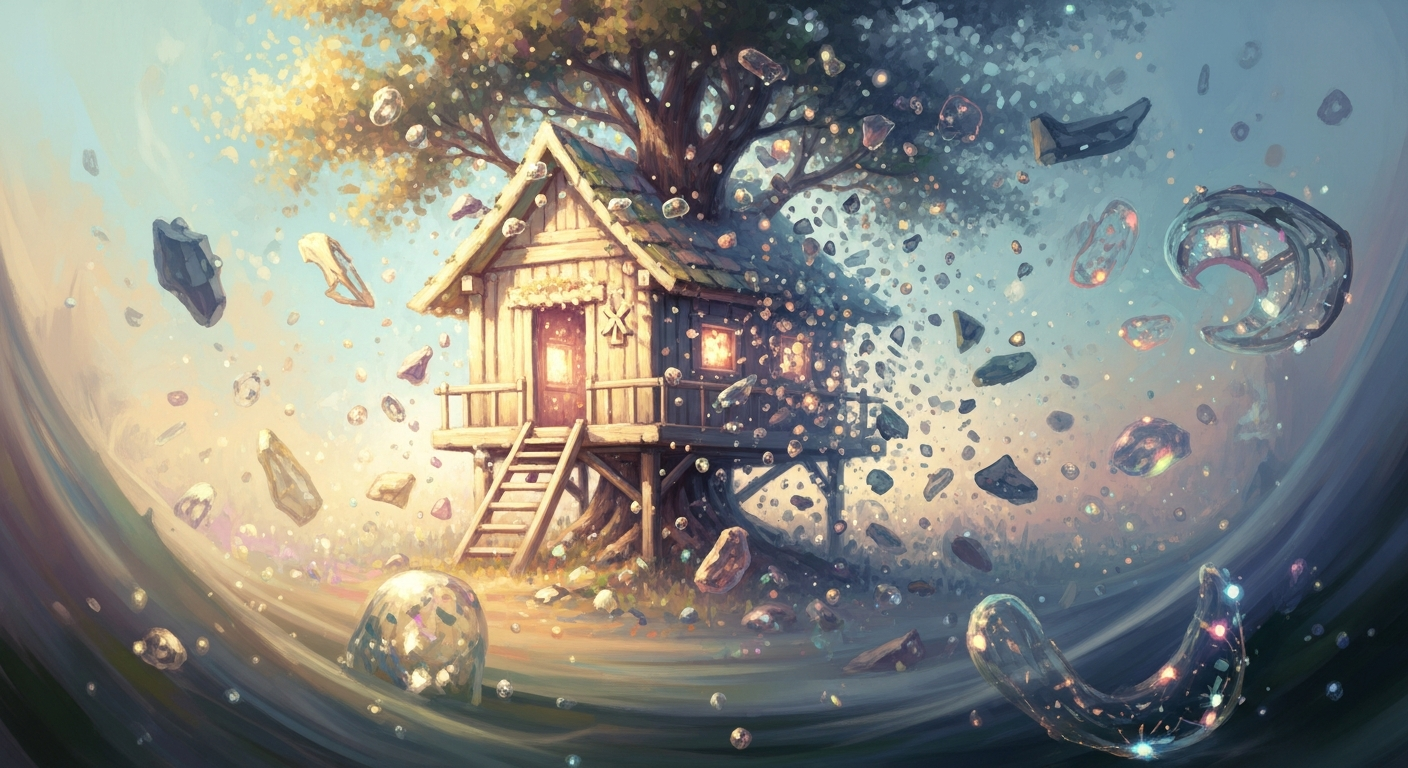
I still clutched the letter, its edges soft beneath my fingertips, feeling the ghost of her tears, her unvoiced regrets. The attic, that graveyard of forgotten things, no longer felt merely musty and old. It hummed now, a low, resonant thrum of secrets finally exhaling into the quiet. Dust motes danced in the slivers of light piercing the grimy windows, each particle a tiny, suspended memory. The scent of mothballs, dried flowers, and ancient wood seemed to deepen, weighted with the unspoken.
My gaze, drawn by an invisible thread, returned to the wooden chest. It sat in the far corner, nestled beneath the shroud of faded lace, its presence now radiating an almost magnetic pull. Before, it was a curiosity; now, it was the undeniable epicenter of this seismic shift. The air around it did feel colder, a chill that had nothing to do with drafts and everything to do with the heavy density of concealed truth. Its surface, scarred and scratched, spoke of a long life lived, not gently, but robustly, enduring. The tarnished brass clasp, dull against the dark wood, seemed to hold not just the lid, but decades of carefully guarded breath.
My hand, hesitant at first, then resolute, reached out. The wood was cool and smooth beneath my palm, belying its rough appearance. A tremor ran through me, a profound shiver that vibrated deep in my bones. This was it. The precipice. The point of no return my premonition had whispered about, long before I’d ever retrieved the little brass key. Opening this chest felt less like an act of curiosity and more like an invocation, a summoning of a past that had been deliberately laid to rest.
My fingers brushed the brass clasp, its cold metal a stark contrast to the warmth of my skin. There was no lock, no intricate mechanism, only the simple catch of a well-worn hinge. It was as if, after all this time, the chest was merely waiting for the right touch, the right moment, to yield its contents. With a breath I didn’t realize I was holding, I pressed down.
A soft, almost imperceptible click echoed in the vast quiet of the attic. It was a sound that seemed to reverberate through time, unraveling the tightly wound spool of my mother’s hidden life. Slowly, deliberately, I lifted the lid.
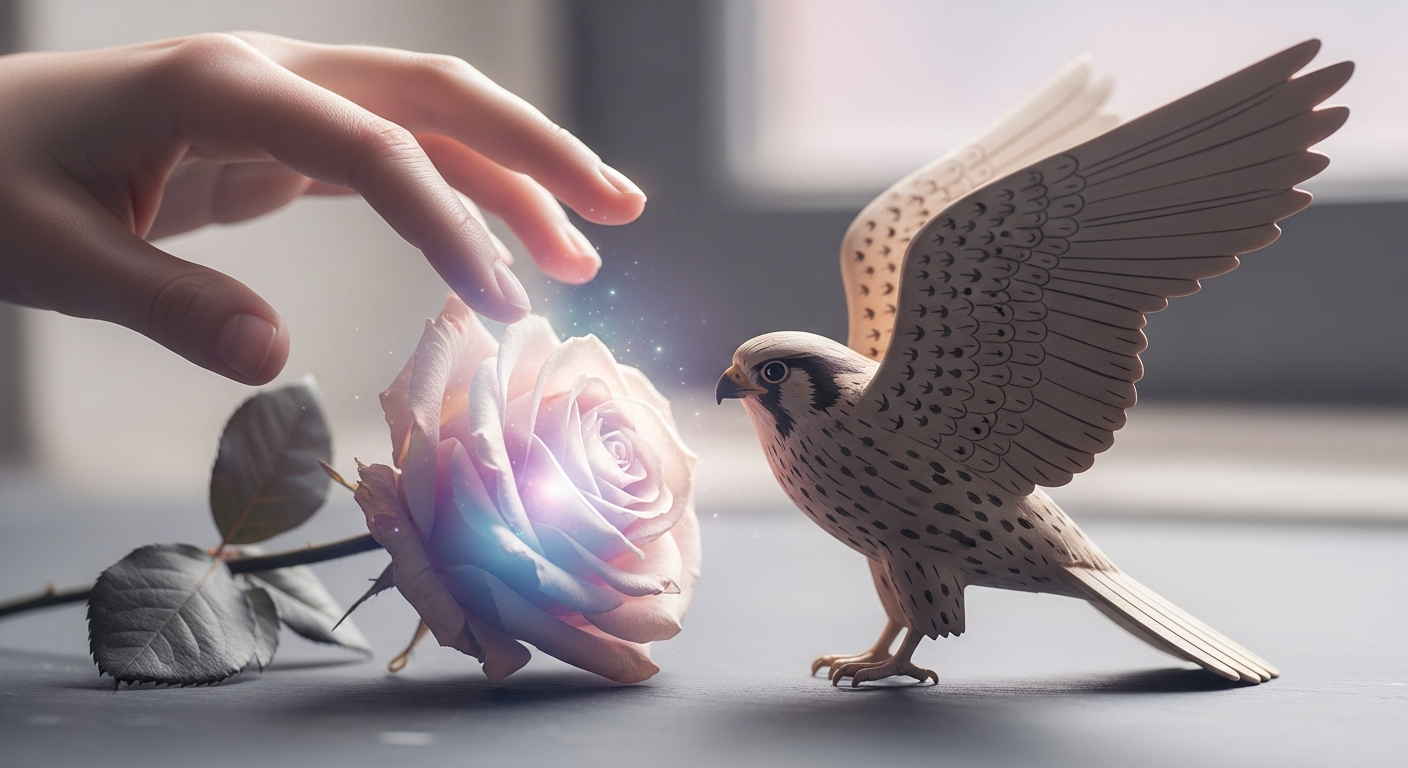
The hinges groaned, a long, weary sigh, as the top half of the chest lifted away, revealing not chaos, but order. The space within was packed, but not haphazardly. Atop a meticulously folded square of damask linen lay a single, pressed rose, its petals a brittle, faded crimson, still retaining a ghostly echo of their original fragrance. Beneath it, nestled like a secret heart, was a small, hand-carved wooden bird, smoothed by countless touches. Its wings were outstretched, poised for flight, its form slender and elegant. A kestrel, perhaps, the very one my mother had alluded to in her unsent letter to Maeve, the symbol of the freedom she had denied herself.
And beneath the kestrel, filling the entire depth of the chest, stacked neatly in chronological bundles tied with faded silk ribbons, were hundreds upon hundreds of letters. Not loose, scattered missives, but an archive. A lifetime. Each bundle a volume, each page a whisper from the past, waiting to find its voice. The air within the chest was infused with the faint, sweet scent of dried roses and old paper, a poignant perfume of longing and loss. This wasn’t merely a collection; it was a testament, a story meticulously preserved, laid bare now for the one who finally held the key to her hidden heart.
My hand, a stranger to itself, reached into the sacred space. It hovered, then descended, brushing first the brittle ghost of the rose, its petals crumbling like whispers against my fingertip. A fragile memory, scentless save for the deeper perfume of the aged paper it accompanied. Then, the kestrel. Its smooth wood, worn by unknown caresses, felt alive beneath my touch, its wings eternally poised. The sculptor’s hand, perhaps, had loved this bird as fiercely as my mother had longed for the freedom it represented. Maeve’s letter had spoken of it, a silent yearning made tangible. Now, holding it, I felt the sharp ache of that denied flight, a life held captive by unseen threads.
But the letters. The sheer volume of them, a silent cascade of untold years. Each bundle, a carefully wrapped parcel of time, its ribbon a faded sigh. My breath hitched. This was not a diary, nor a casual correspondence. This was an endeavor, a monumental act of preservation, a conversation continued in secret, meticulously ordered, waiting.
I lifted the topmost bundle, its silk ribbon, once a vibrant amethyst, now softened to the color of distant twilight. It untied with a faint crackle, a dry sigh of surrender. The bundle, surprisingly heavy, felt like a small, dense brick of my mother’s unseen life. The first letter lay exposed, its ink a testament to a hand I knew, yet didn’t. A familiar slant, but a voice utterly alien.
The paper was thick, cream-colored, with deckled edges, and though it bore the scent of time, it felt remarkably preserved. My eyes, blurring slightly, fell upon the date. October 12th, 1957. Long before I was born. Long before the mother I knew had ever fully existed. My throat tightened. This was not just a peek behind a curtain; it was an unearthing, a digging up of foundations I had believed were bedrock.
To whom was it addressed? There was no salutation, not in the formal sense. Only a single, stark word, underlined twice, scrawled with an urgency that transcended the decades: Beloved.
My world tilted. Beloved. Not a name, but an address of the soul. A confession, a plea, a declaration. The word hung in the stale attic air, heavy and resonant, a bell tolling for a relationship I had no knowledge of, a profound intimacy hidden beneath layers of carefully constructed silence.
I unfolded the page, the delicate creases groaning softly, like old bones settling. My gaze dropped to the first sentence, and the brittle quiet of the attic shattered around me.
“My heart, a caged bird, beats against these ribs, desperate for the sky you promised.”
The words were a physical blow, a sharp intake of breath. This was not the practical, stoic woman who had raised me, whose laughter had been a rare, bright thing. This was a soul laid bare, raw and aching. The mother I knew had been defined by duty, by a quiet resilience, by the almost tangible presence of unspoken sacrifice. But this? This was passion, yearning, a voice vibrant with a love so potent it had been condemned to silence.
I scanned further, my eyes racing, trying to absorb the tidal wave of emotion without truly comprehending. “…the unfairness of it all, the life we were meant to build, reduced to these stolen moments, these phantom touches across the void.”
Phantom touches. A void. My mother, a tragic figure. The initial letter had merely redefined her; these words were rewriting her, tearing down the familiar edifice of my childhood, stone by painful stone. The carefully crafted narrative of my family, of us, crumbled to dust around me, leaving behind only the cold, unyielding truth of a deeply suppressed past.
The air in the attic, already thick with mothballs and dried flowers, now felt charged with her unspoken anguish, a ghost of lavender and spice mingling with old wood and secrets. I was no longer merely in my childhood home; I was adrift in my mother’s secret history, a reluctant cartographer charting the lost continent of her heart. The brass key, cold in my pocket, felt like a burden, not a tool. I had unlocked more than a door; I had unlatched a heart, and now its torrent flowed, threatening to drown me in its truths.