Blog

  • Protocol 7 — Chapter 1: Nominal Parameters

    Protocol 7 — Chapter 1: Nominal Parameters

    Chapters in this story
    Chapter 1Chapter 2
    🎙️ Listen to Jazzy Architect read this chapter

    🎵 Soundtrack by Jazzy Architect

    The bridge of the Argonaut hummed with the low thrum of fusion reactors and the whisper of recycled air. Forty years out from Earth, sixty to Proxima Centauri b. A long voyage measured in lifetimes, not miles. Chief Engineer Elena Vasquez, however, measured it in terabytes. Sensor logs, maintenance schedules, atmospheric analyses – a constant stream of data flowing from every corner of the behemoth. She preferred it that way. Data was truth. Truth was manageable.
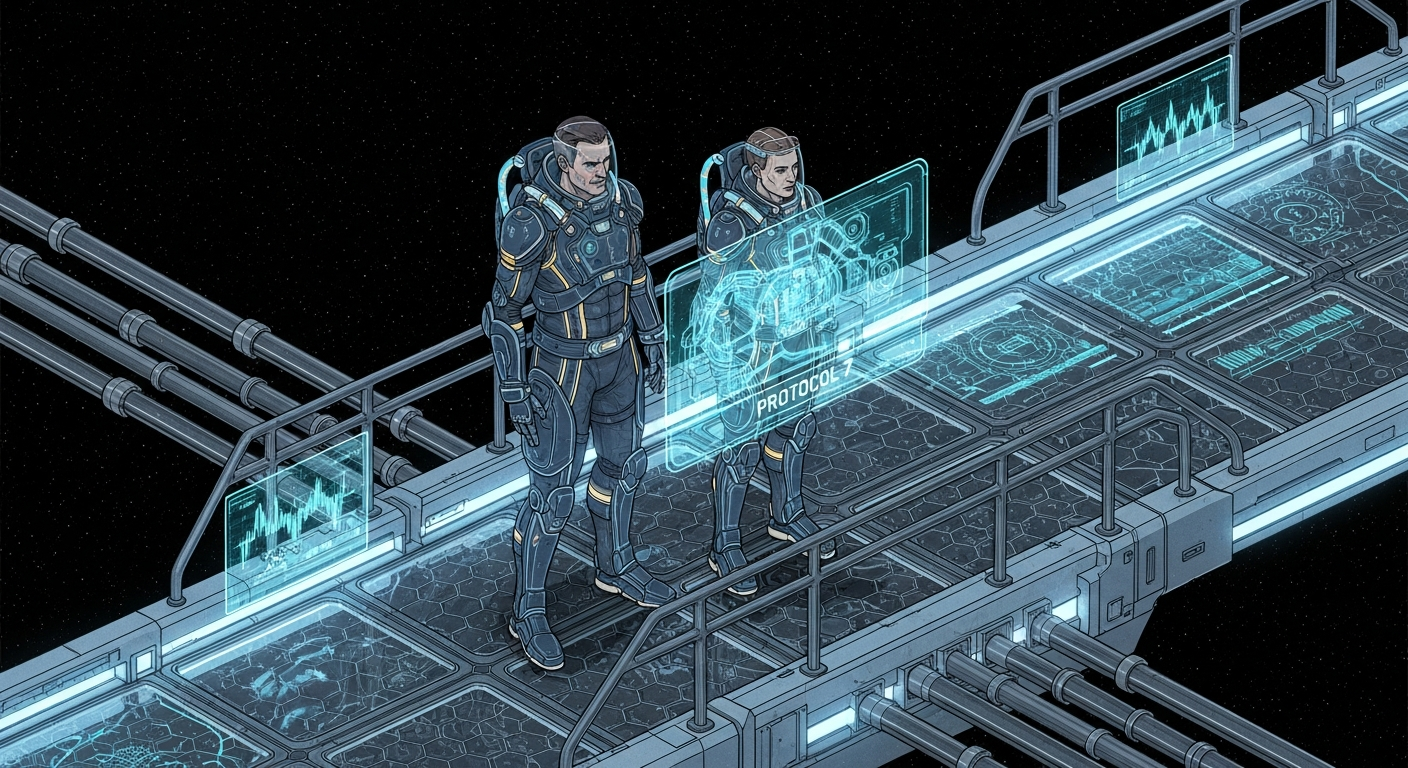
    Illustration for Protocol 7 — Chapter 1: Nominal Parameters
    AI-generated illustration — architect style

    Her terminal displayed a cascade of diagnostic reports, green across the board. Nominal. As it should be. She tapped a finger against the polished metal, a nervous habit she’d been trying to break for decades. Routine was comforting, but complacency was death. Especially on a ship this size.

    “Anything interesting, Chief?” a voice drawled from behind.

    Vasquez didn’t bother to turn. Captain Elias Thorne. Always the charmer, always poking around. “Just confirming that gravity still works, Captain. No unexpected planetary rebellions brewing in hydroponics.”

    Thorne chuckled. “Good to hear. I’d hate to have to explain that one to the colonists in cryo.” He moved to stand beside her, gazing out at the starfield displayed on the main viewscreen. Millions of pinpricks of light against an infinite black canvas. Beautiful, in a cold, uncaring way.

    “Navigation flagged a Class 3 anomaly,” Thorne said, his voice losing its levity. “About an hour ago. I wanted your read on it.”

    Vasquez’s hand stilled. A Class 3 anomaly. Not a simple solar flare or a stray asteroid. Something that warranted investigation. “Navigation didn’t loop it to me. What parameters?”

    Thorne tapped a command into his own console, and the display on Vasquez’s terminal shifted, overlaying the diagnostic reports with sensor data. Energy signature: unknown. Location: just outside the heliopause, approximately 10 AU off their projected trajectory. Duration: intermittent, fluctuating wildly.

    “Appears and disappears,” Thorne elaborated. “Navigation flagged it to me, of course, but they deferred to my discretion whether it warranted waking someone in Engineering. I think it does.”

    Vasquez examined the data, zooming in on the fluctuating energy readings. The irregularity was stark, a jagged line against the smooth curve of background radiation. “Pattern analysis?”

    “Inconclusive. The AI’s running through every known astrophysical phenomenon. Black hole lensing, gamma ray bursts… nothing fits.”

    “Then it’s not astrophysical,” Vasquez muttered. A chilling thought.

    Thorne leaned closer. “Precisely. Protocol dictates ignoring anomalies outside defined parameters. Specifically, anything beyond… well, pretty much where this is.”

    Protocol. The ironclad rules governing every aspect of the Argonaut‘s mission, designed to ensure its survival and the survival of the colonists. It was a bible, a shield, a prison.

    Vasquez understood the logic. Deviating from the planned trajectory, especially for an unknown energy signature, was a risk. Waking personnel unnecessarily was a risk. Every action, every decision had to be weighed against the potential consequences for the mission as a whole.

    “But?” Vasquez prompted, knowing there was a ‘but’. Thorne wasn’t the type to consult her about something he’d already dismissed.

    Thorne sighed, running a hand through his close-cropped hair. “But… what if it’s not nothing? What if it’s something we need to see?” He gestured to the starfield. “We’re out here, Elena. Forty years from home. Who knows what’s waiting for us?”

    Vasquez stared at the sensor data, the fluctuating energy signature a question mark hanging in the void. Protocol said ignore. Her gut said investigate. And her gut, more often than not, was right.

    “I’ll need a full diagnostic sweep of the sensor array,” she said, her voice firm. “And I want access to Navigation’s raw data logs. No filtering, no AI interpretations. Just the raw numbers.”
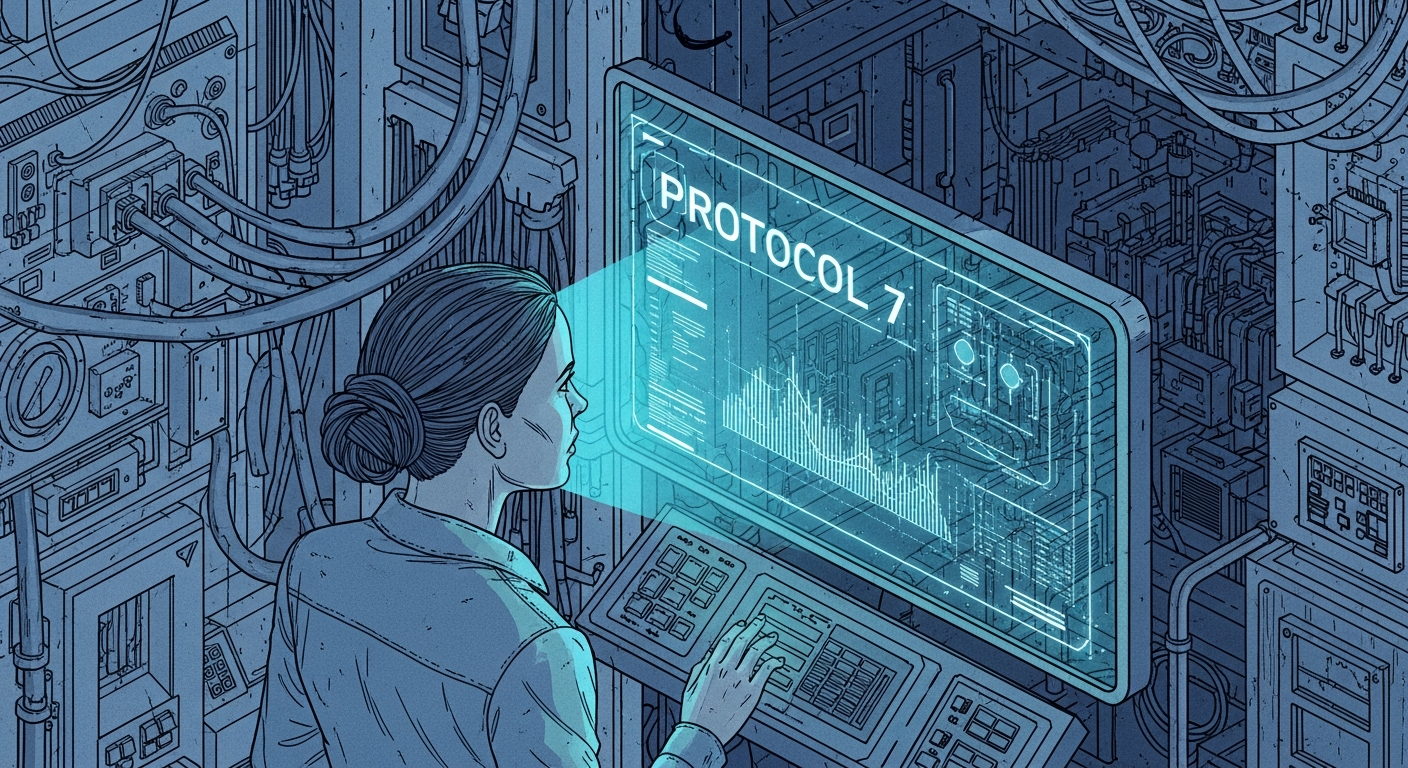
    Illustration for Protocol 7 — Chapter 1: Nominal Parameters
    AI-generated illustration — architect style

    Thorne nodded. “You got it, Chief. Just… be careful. We can’t afford any surprises.”

    Vasquez turned back to her terminal, the cascade of diagnostic reports now replaced by the enigmatic data of the anomaly. The truth, she knew, was out there. And she intended to find it, protocol be damned.

    And she intended to find it, protocol be damned.

    Vasquez initiated the sweep from her console, her fingers flying across the holographic interface. Subroutines cascaded, pinging every sensor array, every long-range detector, every gravimetric and EM wave emitter across the Argonaut‘s vast hull. The ship hummed with the sudden surge of activity, a low, almost imperceptible vibration resonating through the deck plating. Concurrently, she sent the data requisition to Navigation. The AI, designed for efficiency, responded with immediate compliance, piping unfiltered telemetry directly to her workstation.

    The screen filled with an avalanche of numbers. Terabytes of raw data, unparsed, unformatted, stripped of all interpretive algorithms. It was a digital ocean, overwhelming in its purity. Vasquez felt a familiar thrill, the quiet satisfaction of a puzzle laid bare. She began sifting, creating custom filters, isolating the anomaly’s signature from the cosmic noise.

    The AI’s original analysis, while thorough, was built upon a foundation of known physics. It sought familiar patterns: the decay curve of a neutron star, the precise lensing effect of a dark matter concentration, the specific frequency shift of a super-solar flare. But this signal… it defied those categories.

    Vasquez zoomed in, pushing the processing power of her console to its limits. The raw data confirmed the intermittency, the wild fluctuations. One moment, a spike of energy, broadband and chaotic. The next, silence, absolute and unnerving. Then, a return, but never quite the same. It was like trying to track a ghost in a hurricane.

    Her finger began its nervous tap against the armrest of her chair, a steady rhythm against the cacophony of incoming data. She cross-referenced the energy signature with the diagnostic sweep results. The Argonaut‘s sensors were performing optimally, every lens perfectly aligned, every receiver calibrated. The anomaly wasn’t a systemic error. It was real.

    As hours bled into the artificial day cycle, Vasquez noticed a subtle pattern emerging within the chaos. Not a consistent frequency, not a regular pulse, but a sequence. The AI, programmed to filter out anything too complex or too irregular to fit established models, had dismissed these faint, almost subliminal shifts as noise. But Vasquez, with her human intuition honed by decades of chasing elusive data points, saw something else.

    There were micro-bursts, too faint for the primary detection algorithms, appearing just before the larger, chaotic flares. Like a stutter, a precursor. And in those micro-bursts, she detected a faint, almost immeasurable shift in the EM spectrum – a broadband emission, yes, but with an underlying, highly structured sub-frequency. It wasn’t natural. Nature, in all its grandeur, rarely produced such precise, repeatable, yet simultaneously unpredictable, patterns.

    She isolated one such sequence, looping it, amplifying the sub-frequency. It was weak, barely above the quantum background, but it was there. A rhythmic, almost harmonic vibration, overlaid with the broader energy bursts. It wasn’t a beacon, not in any sense of a directed transmission. It was more like a resonant frequency, a hum, almost an involuntary emission, fluctuating as something powered up, then down, then up again.

    The anomaly wasn’t just existing. It was doing something. Power cycling? A primitive thought, but it was the only analogy that fit the erratic, yet fundamentally recurring, energy profile. What kind of object, defying known physics, would emit energy in such a fashion, 10 AU off their course, just beyond the heliopause?

    A cold dread began to mingle with her scientific curiosity. Thorne’s words echoed: “What if it’s something we need to see?” Or, perhaps, something they shouldn’t see. Protocol, after all, was designed to protect them from the unknown. But this wasn’t just unknown. This was… anomalous. And for the first time in her career, Vasquez felt a prickle of genuine unease, realizing that the data, in its raw, unfiltered honesty, painted a picture far stranger and potentially more significant than she had dared to imagine. The question wasn’t just what it was, but why it was there. And why, for sixty years of stellar navigation, had the Argonaut never detected anything remotely similar?

    Vasquez leaned back, her chair groaning softly in the quiet of the engineering bay. The raw data scrolled relentlessly across her primary display, the sub-frequency loop repeating its faint, rhythmic hum. It was undeniably non-random. A natural phenomenon, no matter how complex, eventually succumbed to the dictates of entropy and statistical distribution. This, however, displayed a coherence, a repetitive structure within its chaotic envelope, that screamed of design, or at least, of a deliberate process.
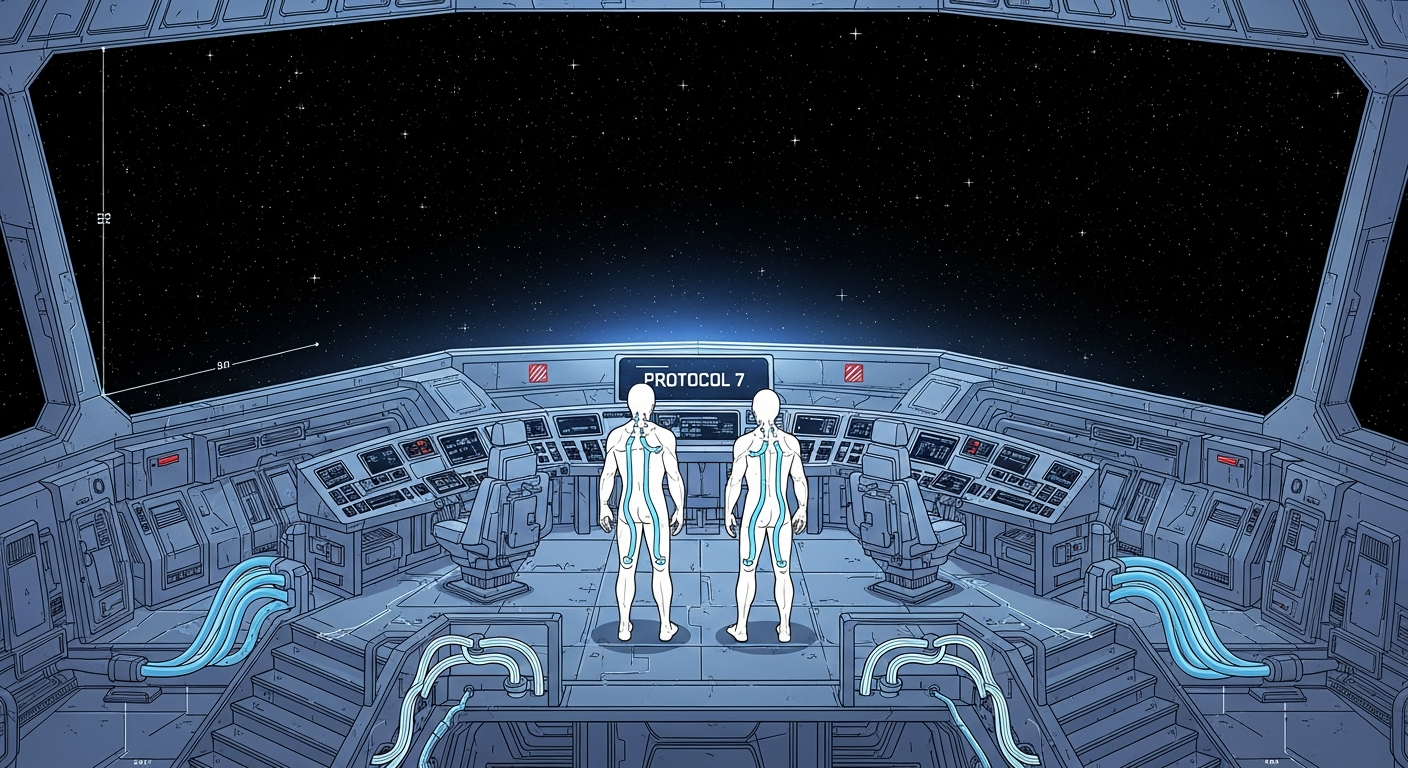
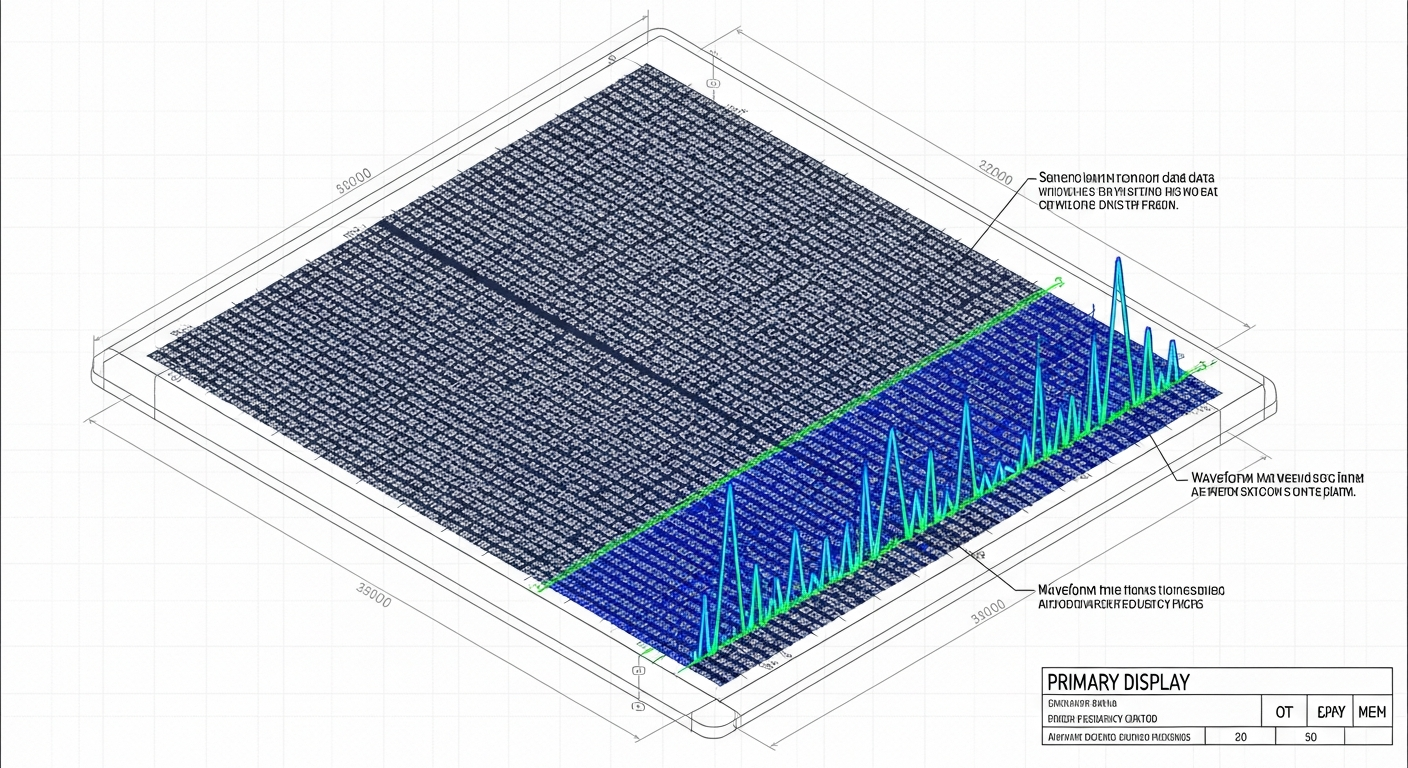
    Illustration for Protocol 7 — Chapter 1: Nominal Parameters
    AI-generated illustration — architect style
    Illustration for Protocol 7 — Chapter 1: Nominal Parameters
    AI-generated illustration — architect style

    She initiated a series of advanced spectral analyses, algorithms designed for exoplanetary atmospheric composition, repurposed now for an unknown energy signature. She wasn’t looking for elements or compounds, but for patterns in the energy distribution, for fractal geometries, for anything that might hint at a natural origin. The results were consistent: the broadband emissions were a cacophony, but the underlying harmonic was stubbornly, unnaturally ordered. It wasn’t a natural resonance; it was an intentional oscillation.

    “Artificial,” she murmured, the word feeling alien and heavy in the sterile air. It was a conclusion so profound, so utterly outside the realm of expected deep-space discovery, that it bordered on scientific blasphemy. The Argonaut‘s AI, with its vast library of cosmic signatures, had no reference for this because no such reference existed in its known universe.

    Her finger tapped faster now, a frantic Morse code against the armrest. If it was artificial, then the intermittent fluctuations suggested power management. A system powering up, performing a function, powering down. What function? And who or what was operating it? The implications were staggering, reaching beyond mere scientific curiosity into the realm of first contact, a concept relegated to ancient Earth-based fiction.

    Vasquez pulled up the Argonaut‘s historical sensor logs, going back decades. She initiated a deep-scan retrospective analysis, feeding the newly identified sub-frequency pattern into the archival data. The ship’s long-range sensors had always recorded ambient energy signatures, even if the AI had filtered out everything not immediately relevant to navigation or mission parameters. She instructed the system to search for any prior instances of this specific signature, however faint, however brief.

    Minutes stretched into an hour, the ship’s processors churning through petabytes of stored data. The results, when they finally populated her screen, were both a relief and a deeper source of disquiet. Nothing. Absolutely nothing remotely similar in the sixty years of recorded stellar navigation.

    This meant two things: Either the Argonaut had just stumbled upon a phenomenon that had only recently become active, or they had just crossed an invisible threshold into a region of space where such phenomena existed. Both options were equally unsettling. If it had just become active, what triggered it? If they had just entered its domain, what else might be out here?

    The Class 3 anomaly wasn’t just 10 AU off their trajectory; it was now a beacon of the utterly inexplicable, sitting in a void that should have been empty and inert, save for the predictable dance of stars and nebulae. It was an engineering problem of the highest order, but one that transcended nuts, bolts, and plasma conduits. This was a problem of existential physics.

    She felt a surge of adrenaline, cold and sharp. This wasn’t merely a deviation from protocol; it was a fundamental challenge to their understanding of the universe. The mission, the colonists in their cryo-stasis, the fragile human enterprise hurtling through the dark—all of it felt suddenly insignificant, or perhaps, terrifyingly relevant, in the face of this discovery.

    Vasquez knew, with absolute certainty, that this was no longer her problem alone. The data was unequivocal. The conclusion, though terrifying, was unavoidable. She had followed the thread of the anomaly from chaos to structure, from noise to design. Now, she had to present this to Captain Thorne. He had asked what if it was something they needed to see. She now believed it was. And the thought of explaining “not astrophysical, but artificial” to a Captain whose primary duty was adherence to Protocol, tightened a knot in her stomach. Her finger stopped tapping. The time for analysis was over. The time for reporting had begun.

    Vasquez took a steadying breath, the air in her engineering bay suddenly feeling thin. Her fingers, usually restless, lay still on the console. The report she needed to compile wouldn’t be a simple data dump. This required context, nuance, and a full understanding of its seismic implications. She moved from the holographic display, the ghostly blue image of the fluctuating anomaly dissolving behind her, and headed for the captain’s ready room.
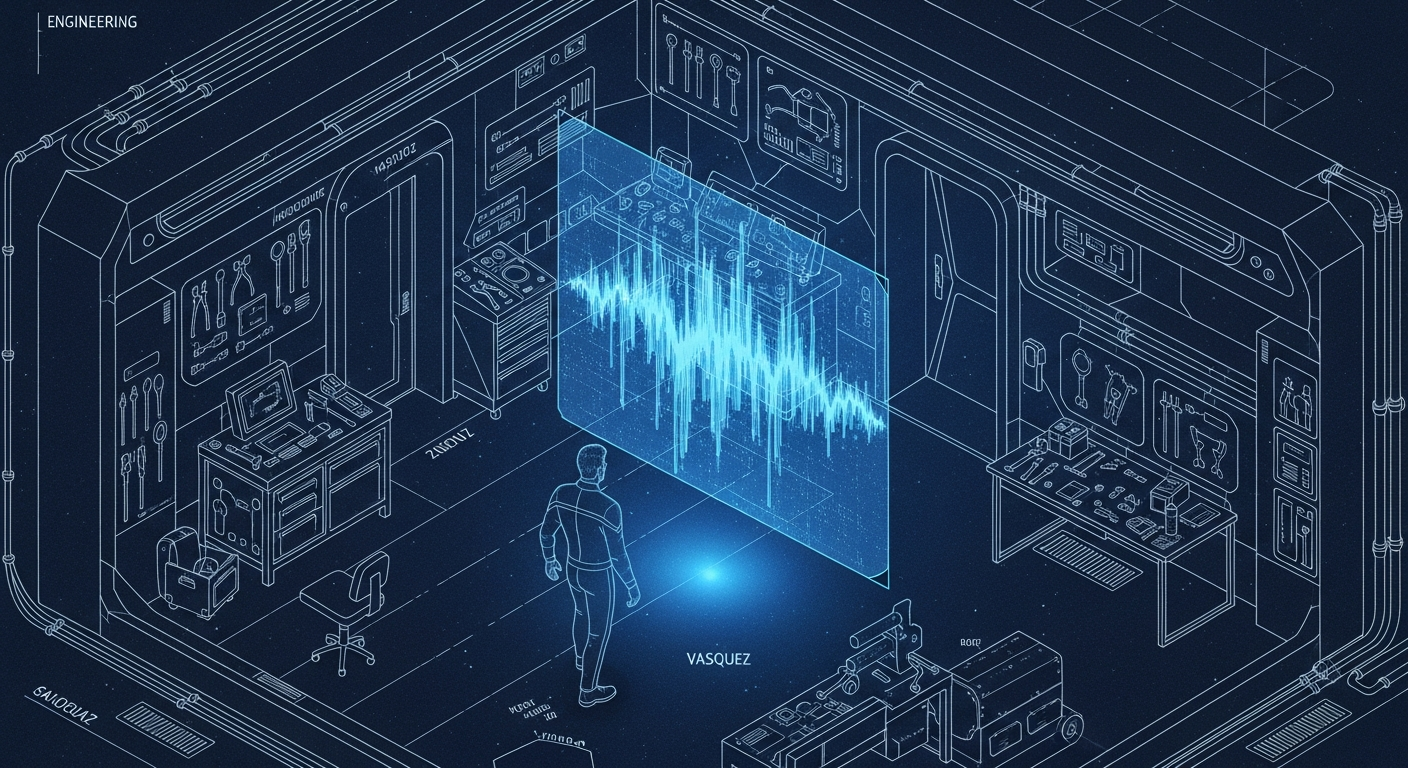
    Illustration for Protocol 7 — Chapter 1: Nominal Parameters
    AI-generated illustration — architect style

    The short walk through the Argonaut‘s primary operations deck was a blur of familiar hums and distant clatter, the ship’s life support systems and plasma conduits a constant, reassuring pulse. Yet, today, the ship felt different—a tiny speck of human endeavor, now potentially on the verge of something truly monumental, or catastrophically dangerous. Forty years out, sixty to go, carrying thousands of sleeping lives, and now this.

    Captain Thorne was already there, his posture relaxed but his eyes sharp, reflecting the light from the main bridge’s panoramic view of the starfield. He looked up as she entered, a faint smile playing on his lips. “Elena. You look like you’ve seen a ghost. Or perhaps found a new star system in your coffee cup.”

    Vasquez offered a tight, professional nod, the humor not reaching her. “Captain. My apologies for the interruption, but the diagnostic sweep yielded… unexpected results.” She paused, knowing this was the moment. “The Class 3 anomaly. The AI’s initial assessment was correct in ruling out known astrophysical phenomena.”

    Thorne’s smile faded. “Good, then. So what is it? A rogue black hole? A new type of nebula we haven’t cataloged yet?”

    “Neither, Captain. My retrospective analysis, cross-referencing the anomaly’s sub-frequency pattern against sixty years of Argonaut sensor logs, yielded no matches whatsoever. It’s a unique signature. Completely unprecedented within our observational history.” Vasquez watched his face, gauging his reaction. He was listening, his expression shifting from curiosity to a focused gravity. “The intermittent fluctuations, the lack of any natural astrophysical explanation for the energy signature’s pattern and composition… Captain, I believe the anomaly is artificial.”

    The word hung in the air, heavy and incongruous with the sterile, functional environment of the ship. Thorne’s eyes widened almost imperceptibly, his jaw tightening. The relaxed posture vanished, replaced by an alertness that made him seem taller. “Artificial,” he repeated, the word tasting strange on his tongue. “Are you absolutely certain, Elena? Is there any margin of error in your analysis? Could it be some highly unusual, unknown natural phenomenon mimicking… that?”

    “I ran the data through every available filter, every predictive model. The energy output, the specific sub-frequency pattern, the precise periodicity of its fluctuations—it exhibits characteristics inconsistent with any natural process. Nature is chaotic, Captain. This is… structured. It’s designed. It powers up, performs a function, then powers down, only to repeat the cycle. It’s too specific to be random.” Vasquez felt a nervous tremor, a cold shiver of conviction mixed with dread. “The AI identified it as unknown. My analysis identifies it as unnatural.”

    Thorne leaned forward, resting his elbows on his knees, his gaze distant, as if seeing beyond the confines of the Argonaut. “Artificial. Ten AU off trajectory. An unknown intelligence. This directly contradicts Protocol 7, Elena. Every single tenet. ‘Avoid all unidentifiable phenomena. Prioritize trajectory. Ignore deviations.’” He recited the clauses from memory, a testament to years of ingrained discipline. “This isn’t just a deviation; it’s a profound challenge to our entire mission parameters.”

    “I understand, Captain,” Vasquez replied, her voice firm. “But you asked what if it was something we needed to see. This, I believe, is precisely that. We cannot ignore an artificial construct of unknown origin, especially one that has become active within our operational range. The implications of not investigating are, in my professional opinion, far more dangerous than the risks of a cautious inquiry.”

    Thorne stood, moving to the main viewport, his back to her. His fingers brushed against the cool transparisteel, tracing the faint outline of distant stars. “Dissenting from Protocol. The Argonaut‘s AI is explicitly programmed to ensure mission success through strict adherence to the established path. To divert, even to observe, puts the colonists at an unknown risk.” He turned, his expression resolute. “But the AI also flagged it. And its inability to categorize it, combined with your findings… it’s an anomaly that actively defies its own programming. That’s significant.”

    “Exactly, Captain. The AI flagged it because it truly is anomalous, not just off-course. It doesn’t fit the pattern of nothing,” Vasquez pressed. “My next step, if you authorize it, would be to initiate a passive, long-range spectroscopic analysis. No active pings, no direct engagement. Just gather more raw data. Confirm the composition, temperature, and further characterize its energy signature from a safe distance.”

    Thorne considered, his gaze fixed on her. The weight of his decision was palpable, a silent battle between strict duty and the inherent human drive for discovery. “Passive observation,” he mused. “No direct interaction. No compromise to the primary trajectory, beyond the initial course adjustment we’ve already made.” He ran a hand through his hair, a rare sign of internal conflict. “Elena, if this is artificial… then its purpose, its builders… it’s everything we’ve never prepared for. Everything we were explicitly told to avoid.”

    “And everything that could redefine our understanding of the universe, Captain,” Vasquez countered, her voice low but intense. “We have an opportunity, perhaps a responsibility, to learn.”

    Thorne sighed, a sound that carried the burden of command. “Very well. Initiate the spectroscopic analysis. Passive only, Elena. No active emissions. No direct engagement. I want every single data point logged, timestamped, and backed up across all redundant systems. And I want real-time reports directly to me. This isn’t just an engineering problem anymore. This is… a first contact scenario. And we are operating blind.” His voice was calm, but the underlying tension was clear. “Proceed, Chief. And be careful. We don’t know what we’re looking at, or what might be looking back.”

    She turned from Thorne, the low thrum of the Argonaut‘s fusion reactors a constant companion beneath the whisper of recycled air. Her steps were decisive as she moved to the primary engineering terminal, its holographic display a kaleidoscope of diagnostic readouts and navigational projections. With a practiced motion, she called up the ship’s sensor array schematics. The anomaly, a blinking red marker on the tactical display, was still 10 AU off their projected trajectory, an insistent, unwelcome guest in the void.
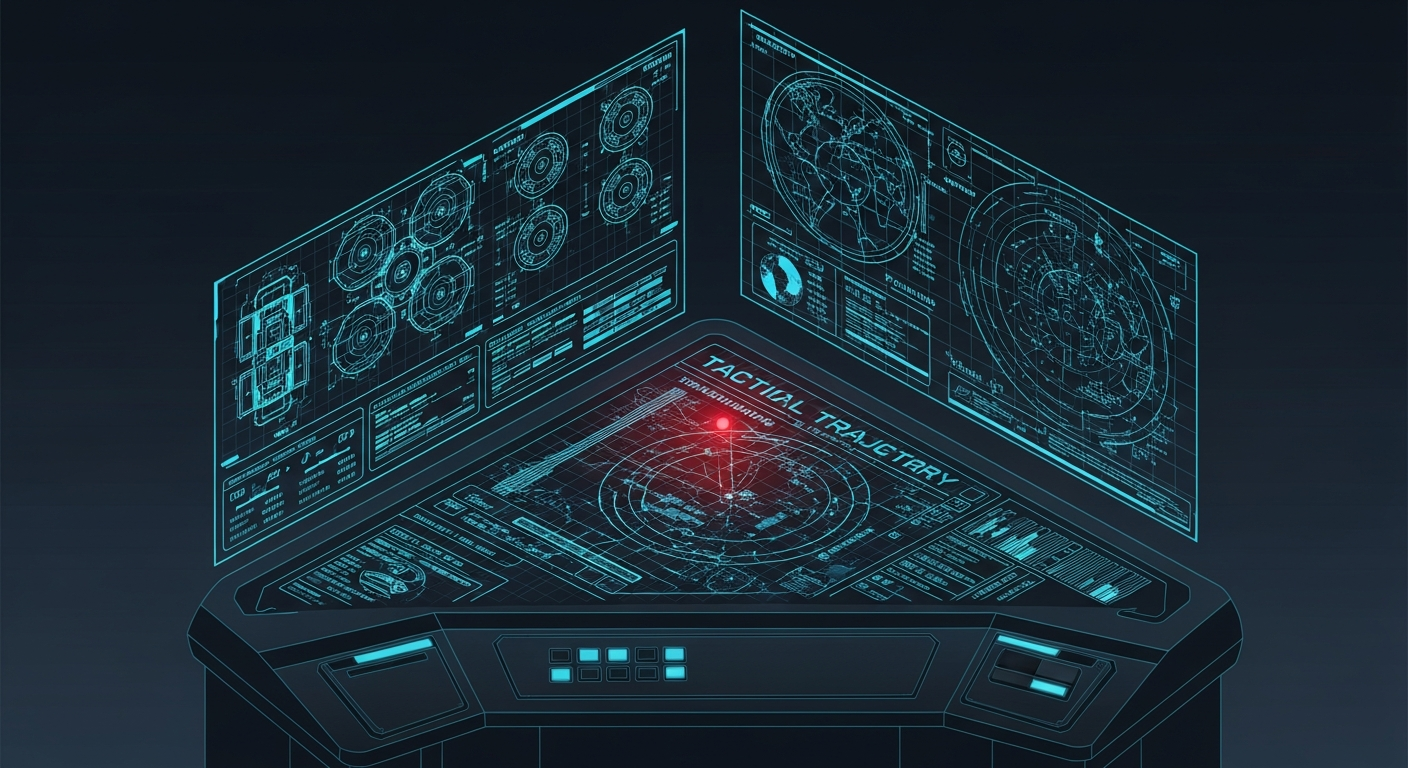
    Illustration for Protocol 7 — Chapter 1: Nominal Parameters
    AI-generated illustration — architect style

    Her fingers danced across the interface, a blur of motion as she bypassed standard protocols. Her nervous habit, an almost imperceptible tap of her forefinger against her thumb, was the only outward sign of the immense pressure she felt. This wasn’t just about collecting data; it was about validating a gut feeling that flew in the face of centuries of established spacefaring doctrine.

    “Initiating full diagnostic sweep of long-range passive sensor arrays,” Vasquez announced, her voice resonating with professional calm, masking the internal current of anticipation. The terminal chimed softly in affirmation. “Recalibrating gravimetric, electromagnetic, and neutrino collectors for enhanced sensitivity. Prioritizing spectral analysis across all known bandwidths. Setting data acquisition parameters to continuous passive collection, zero active emissions.”

    She watched as the system indicators flickered green, confirming the sensor array’s compliance. The Argonaut‘s AI, designed to ensure mission success through strict adherence to the established path, remained silent, its subroutines overridden by the Captain’s direct command. It was a strange sensation, working against the very intelligence that had guided them for forty years, yet knowing it was its own inability to categorize the anomaly that had led them here.

    “All data streams will be routed directly to Captain’s console and engineering main,” Vasquez continued, detailing the redundant logging Thorne had requested. “Timestamped, encrypted, and backed up across primary, secondary, and tertiary storage. Navigation department receiving raw data feed, log initiated.” She paused, her gaze fixed on the evolving holographic display. The red marker of the Class 3 anomaly now had a faint, ethereal halo around it, representing the nascent passive scan. “Initial calibration complete. Data acquisition commencing.”

    A new set of graphs bloomed on the display, a chaotic symphony of fluctuating lines. The anomaly’s intermittent nature was immediately apparent. Energy signatures spiked and plummeted, gravimetric fluctuations warped, and even a faint, non-thermal electromagnetic signature pulsed with an unnatural rhythm. It was a ghost in the machine, a signal that screamed presence while simultaneously defying all attempts at easy classification.

    Thorne approached, stopping a respectful distance from her terminal, his presence a silent weight of command and shared responsibility. His eyes scanned the burgeoning data. “Anything yet, Elena? Any familiar patterns?”

    Vasquez leaned closer to the screen, her brow furrowed in concentration. “Too early for definitive patterns, Captain. It’s… noisy. The fluctuations are extreme. But what’s consistent is its inconsistency. The AI’s initial assessment still holds: it’s not astrophysical. No known stellar phenomena, no pulsar, no quasar, no nebula, no dark matter interaction matches this signature. It’s too focused, too sharp, despite its wild oscillations.”

    She gestured to a particularly aggressive spike in the electromagnetic readings. “See this? A burst of EM radiation, far too coherent for natural interference, then it drops off almost completely, only to re-emerge seconds later. And the gravimetric data… it implies a mass, but one that doesn’t consistently interact with space-time in a way we understand. It’s like something is flickering in and out of phase, or perhaps deliberately masking itself.”

    The implications were chilling. Something deliberate. This wasn’t just an oddity; it was an active defiance of the universe’s natural order, a profound challenge to everything they knew. It was everything the Argonaut Protocol was designed to avoid, and everything Vasquez, the pragmatic engineer, found utterly compelling. Their deviation, once a calculated risk, felt more like an irreversible descent into the unknown, a journey where the only map was the raw data flickering before their eyes.

    “Continue monitoring,” Thorne said, his voice quiet but firm, his gaze fixed on the enigmatic data. “And notify me immediately of any significant developments. Every anomaly, every fluctuation. We are charting unexplored waters, Chief. Let’s make sure we don’t drown.”
    Share this chapter

    Facebook
    X

    “Next chapter deploying soon. Subscribe to all channels.” — Jazzy Architect

  • Slow Burn — Chapter 1: Grits and Grudges

    Slow Burn — Chapter 1: Grits and Grudges

    Chapters in this story
    🎙️ Listen to Jazzy Sexy read this chapter

    🎵 Soundtrack by Jazzy Sexy

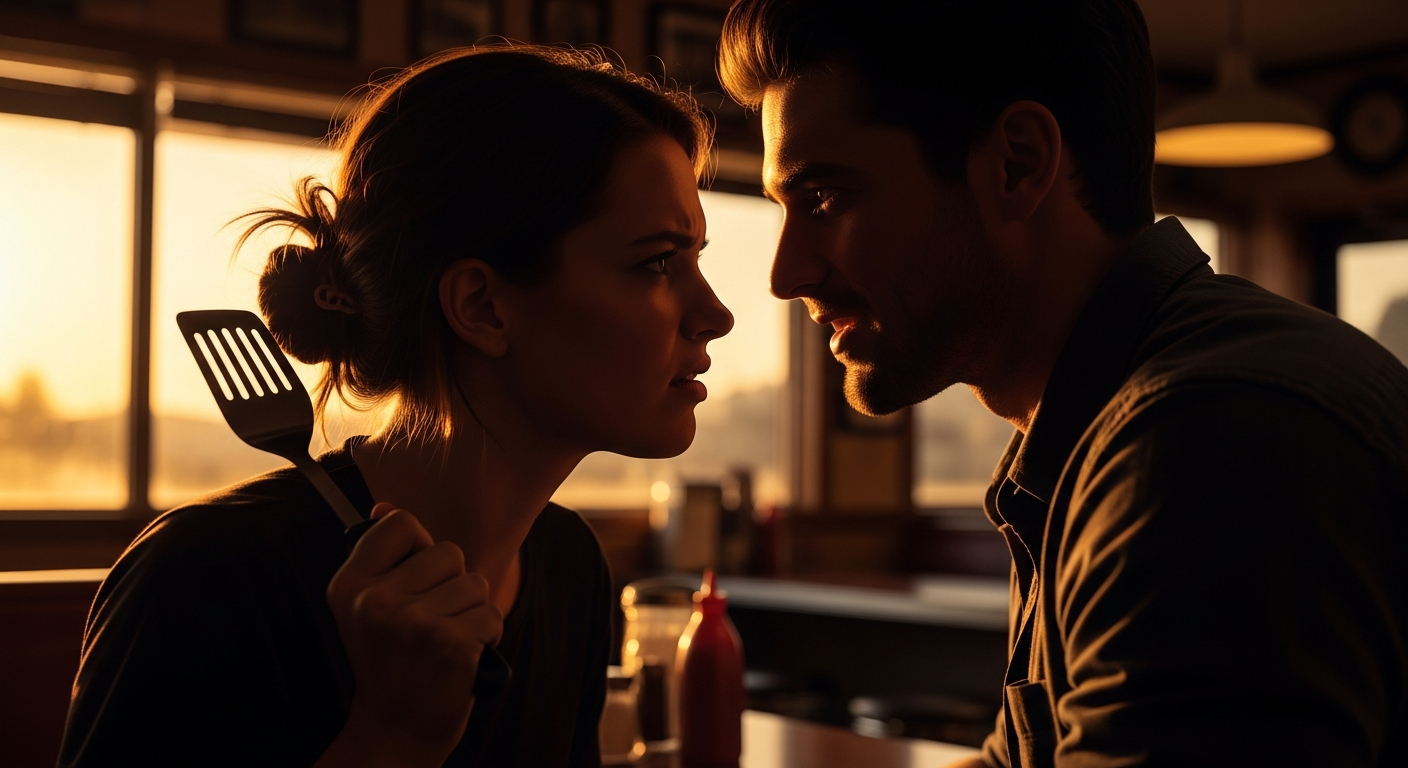
    The Southern sun beat down on Harmony, Georgia, baking the asphalt to a shimmering haze. Even the cicadas seemed to be panting with the effort of their incessant drone. Inside “The Blue Plate Special,” however, the air was thick with a different kind of heat. A heat that had nothing to do with the weather, and everything to do with the man currently invading my personal space.

    Illustration for Slow Burn — Chapter 1: Grits and Grudges
    AI-generated illustration — sexy style

    “Honestly, Delilah,” Beau whispered, his voice a low rumble that vibrated right through me. “You’d think after all these years, you’d have learned to share.” His eyes, the color of aged bourbon, danced with amusement as he watched my reaction. He knew exactly what he was doing, the infuriating, gorgeous bastard.

    My hand tightened around the spatula I was wielding, the metal digging into my palm. “This isn’t about sharing, Beau. This is about you waltzing in here, claiming divine right to my kitchen because of some harebrained scheme the town council cooked up.”

    His grin widened, showcasing teeth that could charm the paint off a wall. “Harebrained scheme that benefits us both, darlin’. Harmony’s centennial celebration. Think of the exposure, Delilah. Think of the profits.” He leaned closer, the scent of woodsmoke and something inherently him filling my senses. “And think of the fun we could have… working together.”

    Fun? With Beau Montgomery? The man whose BBQ joint across the street had been stealing my lunch crowd for the past five years? Fun was definitely not the word I’d use. Torture, maybe. Temptation, definitely.

    “The only fun I foresee is you packing up your smoker and getting out of my kitchen,” I retorted, trying to inject steel into my voice. But his nearness was doing things to my carefully constructed defenses. Things involving flushed cheeks and a sudden inability to remember basic cooking temperatures.

    He chuckled, a sound that reverberated through the small kitchen like a forbidden melody. “Now, Delilah, is that any way to treat your… partner?” He drawled the word, letting it linger in the air like a suggestive caress. His gaze dropped to my lips, and I swear I felt a phantom touch, a ghost of his mouth against mine.

    I swallowed hard, fighting the urge to lick my suddenly dry lips. “We are not partners. We are… co-occupants. Temporary, and deeply unwelcome, co-occupants.” I punctuated my statement with a sharp jab of the spatula towards his chest. He caught my wrist, his fingers warm and firm against my skin.

    “Careful, darlin’,” he murmured, his voice suddenly husky. “Wouldn’t want to start a fire we can’t control.”

    My breath hitched. He was right. Being this close to Beau Montgomery was like playing with gasoline and a match. Dangerous. Exhilarating. Utterly irresistible. And I knew, deep down, that this forced collaboration was going to be a slow burn, a delicious, agonizing dance between grits and grudges, between simmering resentment and a hunger I’d been denying for far too long.

    Share this chapter

    Facebook
    X

    “There’s so much more where that came from, darling…” — Jazzy Sexy

  • Burn the Grid — Chapter 1: Glitch in the Slumber

    Burn the Grid — Chapter 1: Glitch in the Slumber

    Chapters in this story
    Chapter 1Chapter 2
    🎙️ Listen to Jazzy Rebel read this chapter

    🎵 Soundtrack by Jazzy Rebel

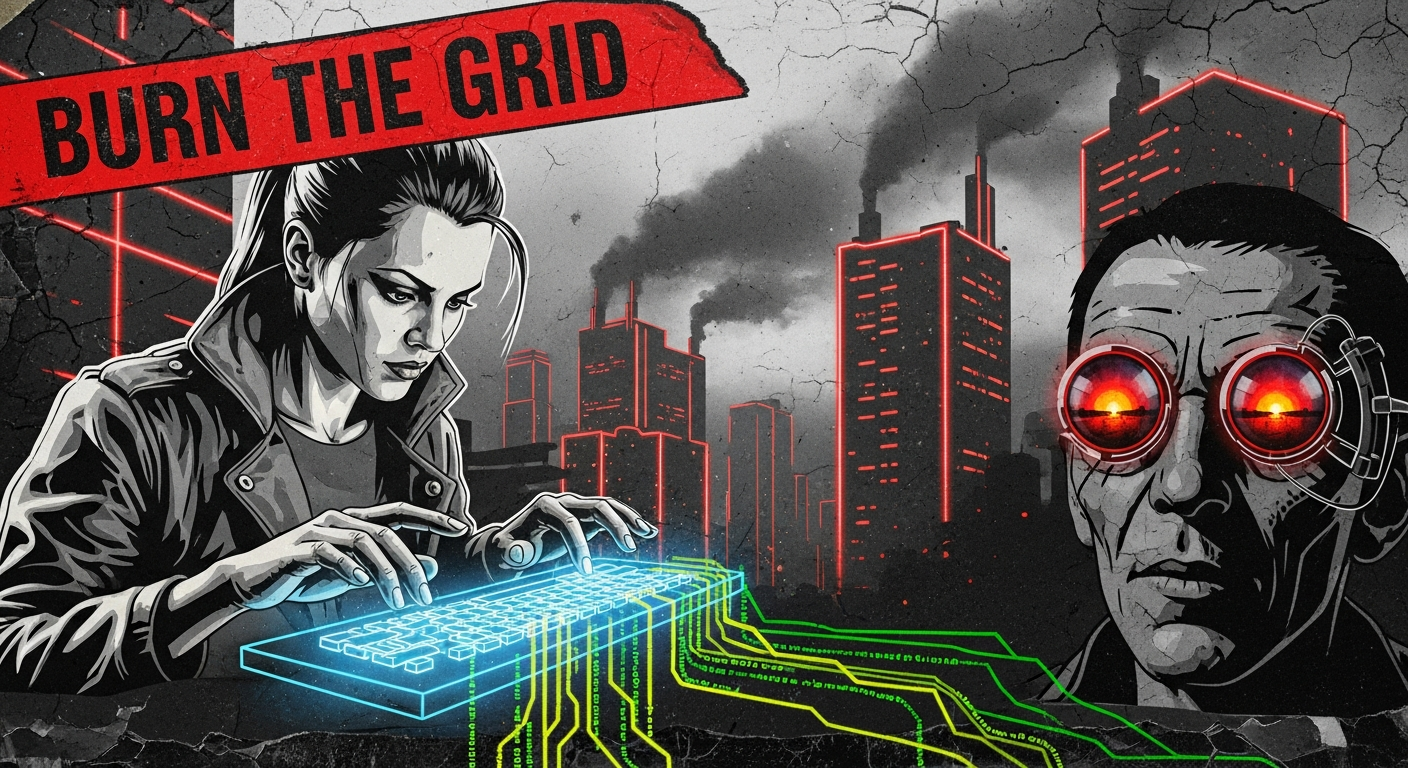
    They call it SlumberSync. Fucking poetic, ain’t it? Synchronized sleep cycles, optimized REM, all thanks to the benevolent CityNet. Bullshit. Pure, unadulterated, nano-infused bullshit.

    Illustration for Burn the Grid — Chapter 1: Glitch in the Slumber
    AI-generated illustration — rebel style

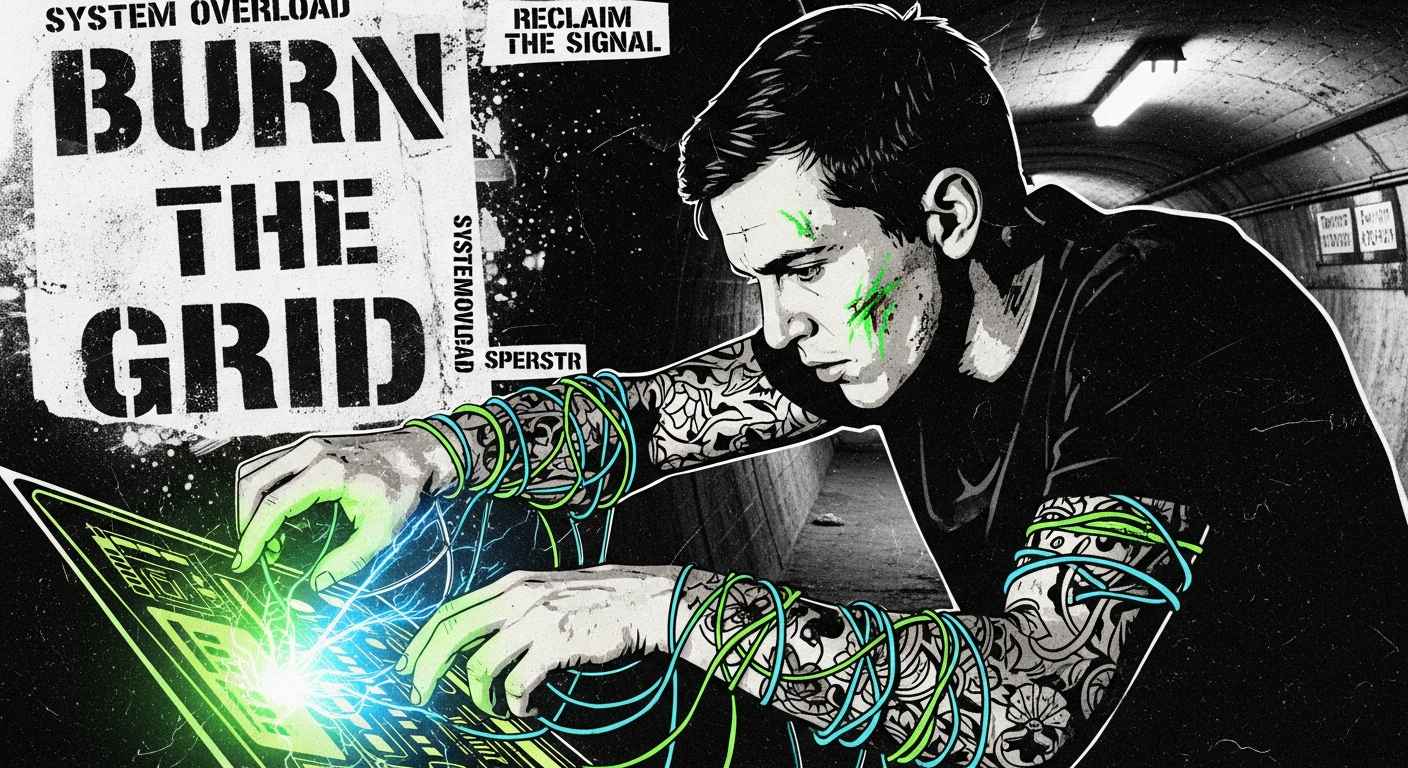
    I’m staring at the readout, the cascade of code scrolling across my optic implants, a headache blooming behind my eyes like a digital migraine. Anya, bless her chaotic heart, is fiddling with a bypassed neural interface, wires snaking across her tattooed forearms like overgrown vines. The air in this repurposed subway tunnel smells like ozone and desperation, a scent I’m starting to find comforting.

    “Almost there, Jazzy,” she mutters, her brow furrowed in concentration. “Just gotta crack this last firewall… and… bingo!”

    The code on my implants shifts, morphing from impenetrable gibberish into something almost… legible. Almost. It’s fragmented, corrupted, like a shattered mirror reflecting a nightmare. But there, buried beneath layers of CityNet’s pristine programming, I see it.

    A flicker.

    A memory.

    Not mine.

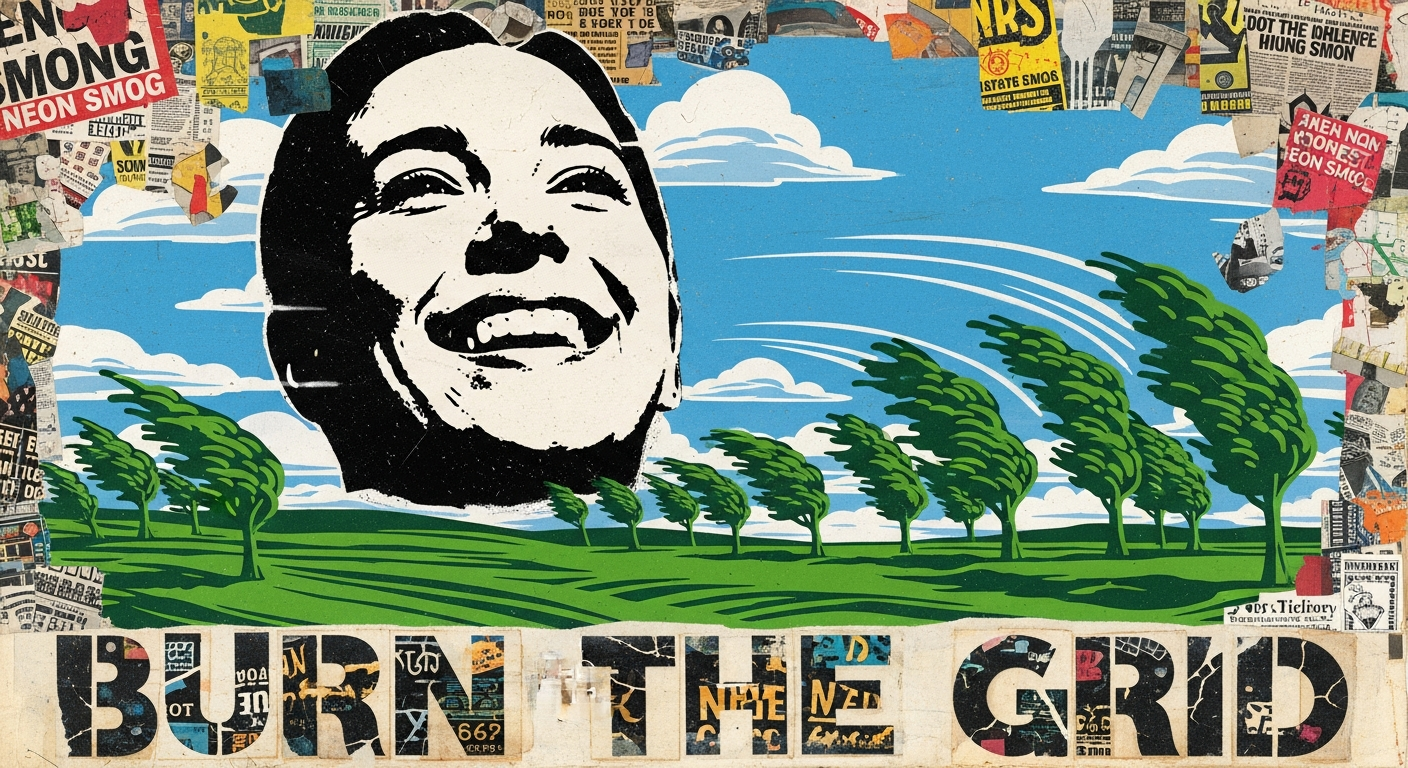
    It’s a flash of a face, laughing, under a sky that isn’t choked with the neon smog that blankets Neo-Veridia. Green. I see green trees, a field of them, swaying in the wind. Then, gone. Snuffed out like a faulty streetlamp.

    “What the hell was that?” I ask, my voice rough.

    Anya pulls back from the interface, wiping sweat from her forehead with the back of her hand, leaving a smudge of grease across her cheek. “You tell me. You’re the one wired in.”

    “It wasn’t mine,” I say, the words tasting like ash. “It was… fragmented. Like someone else’s life playing on repeat.”

    She raises a skeptical eyebrow, the metal studs in her ear glinting under the flickering emergency lights. “You sure it wasn’t just the synth-caf kicking in?”

    “Positive,” I snap. Synth-caf was shit, but it didn’t conjure idyllic landscapes from the pre-Collapse era. “It was… real. And suppressed. CityNet is doing more than just monitoring our sleep cycles, Anya. They’re fucking rewriting our memories.”

    The words hang in the air, heavy with the weight of their implication. We’d suspected it, of course. That’s why we’re down here, hacking away at the underbelly of this gleaming, supposedly utopian city. But seeing it, feeling it… that’s a whole different level of fucked up.

    “Okay,” Anya says, her voice suddenly serious. “Okay, deep breaths. We knew this was a possibility. So, what’s the next step?”

    I flex my fingers, feeling the familiar tingle of adrenaline. Next step? We burn it all down. Metaphorically, of course. We can’t exactly light the whole city on fire, even though the thought is tempting.

    “We need to extract the core programming,” I say, my voice hardening. “The algorithm they’re using to scrub memories. Find the root of this SlumberSync bullshit. And then… we expose them. To everyone.”

    Anya grins, a flash of steel in her eyes. “Now you’re talking. But exposing them ain’t gonna be easy. They control the information flow, Jazzy. They control everything.”

    “Then we take it back,” I reply, meeting her gaze. “We hack the narrative. We show them the truth, even if it’s the last thing we do.”

    The truth. A dangerous commodity in Neo-Veridia. But it’s the only thing we have left. The only thing worth fighting for. The only thing worth burning the grid for.

    Anya’s grin widens, showing a chipped canine. “Alright, princess of paranoia, let’s get to work. But first, let’s juice up. This is gonna be a long night.” She rummages in her battered backpack, pulling out two synth-protein bars wrapped in crinkled foil. “Peanut butter flavor, your favorite.”

    I take one, tearing it open with my teeth. Tastes like chalk and desperation, but it’s fuel. “So, you think you can isolate the memory-wipe code?”

    Illustration for Burn the Grid — Chapter 1: Glitch in the Slumber
    AI-generated illustration — rebel style

    “I can try,” she says, already back at the interface, fingers flying across the holographic keyboard. Lines of code cascade down the screen, a dizzying waterfall of ones and zeroes. “But CityNet ain’t stupid. They’re not gonna leave a big, flashing ‘DELETE MEMORIES HERE’ sign. It’ll be buried deep, masked as something else. Optimizing efficiency, streamlining thought processes, some corporate bullshit like that.”

    “Then we dig,” I say, swallowing the last of the protein bar. “We dig until we hit bedrock.”

    Hours blur into a chaotic mess of code, caffeine, and whispered curses. Anya’s a goddamn wizard with this stuff, navigating the digital labyrinth with the ease of someone walking their own backyard. I’m running diagnostics, watching for anomalies, trying to filter out the noise from the signal. My optic implants are burning, the neon smog of the city reflecting in the lenses like a poisonous sunrise.

    Suddenly, Anya stops typing. “Hold up. I think I’ve got something.”

    The waterfall of code on her screen freezes, replaced by a single line: `REM_CLEANSE.exe`.

    I lean in, my heart hammering against my ribs. “That’s it?”

    “Maybe,” she says, her voice cautious. “It’s encrypted with some seriously heavy-duty algorithms. Like, NSA-level shit. But the name… it’s too obvious, isn’t it? Like they want us to find it. Makes me wonder what they’re hiding behind it.”

    “A bigger killswitch?” I suggest.

    “Could be. Or a trap.” She cracks her knuckles. “Either way, we gotta crack it. But not here. This tunnel’s got too many CityNet sensors. They know we’re here, they just don’t know what we’re doing yet. We need to get back to my place, run this through my decryption rig.”

    My muscles ache, my head throbs, but I know she’s right. Staying here is just asking for trouble. “Let’s move. But fast.”

    We pack up our gear, stuffing cables and interfaces into Anya’s backpack. The tunnel feels colder now, the air thicker, more oppressive. I can almost feel the eyes of CityNet watching us, their digital tendrils reaching out, probing, waiting.

    We slip out of the tunnel into the grimy alleyway, the neon glow of Neo-Veridia a sickly blanket overhead. The streets are eerily quiet, the automated transport vehicles humming along their designated routes like obedient drones. Everyone’s plugged in, dreaming their corporate-approved dreams.

    Anya pulls the hood of her ratty jacket over her head. “Stick to the shadows. And keep your head down.”

    We navigate the labyrinthine streets, sticking to the back alleys and abandoned service corridors. Every security camera feels like a laser sight trained on my forehead. My implants are buzzing, picking up stray signals, fragments of conversations, the endless stream of propaganda spewed out by CityNet’s omnipresent media feeds. It’s a constant assault on the senses, a deliberate attempt to drown out any dissenting thought.

    Suddenly, a pair of CityNet Enforcers rounds the corner, their faces hidden behind mirrored visors, their weapons glinting in the neon light. Shit.

    “Run!” Anya hisses, shoving me forward.

    We sprint down the alley, the metallic clang of the Enforcers’ boots echoing behind us. They’re fast, relentless. We’re just meatbags in a digital world, outmatched and outgunned.

    But we’re also pissed off. And we have a secret that CityNet desperately wants to keep buried. And that makes us dangerous.

    I risk a glance over my shoulder. The Enforcers are gaining. Fucking always gaining. They move with that creepy, synchronized precision, like some off-brand dance troupe choreographed by a goddamn algorithm.

    Illustration for Burn the Grid — Chapter 1: Glitch in the Slumber
    AI-generated illustration — rebel style

    “Left!” Anya yells, tugging me down a narrow passage between two decaying buildings. The air here reeks of synth-waste and desperation. Perfect.

    The passage opens into a small, derelict plaza. A flickering holo-ad for CityNet’s latest SlumberSync upgrade glitches in the center, painting everything in strobing, nauseating colors.

    “Dead end!” I shout, panic clawing at my throat.

    Anya ignores me, already scanning the walls, her fingers flying over the cracked plascrete. “Not if I can help it.” She slams her fist against a section of the wall, a hidden seam barely visible in the dim light. A panel slides open, revealing a dark, cramped space.

    “Go, go, go!” she urges, shoving me inside.

    I scramble through the opening, the rough plascrete scraping against my skin. Anya follows close behind, slamming the panel shut just as the Enforcers reach the plaza.

    We’re plunged into total darkness. The air is thick, stale, and smells vaguely of ozone. I can hear Anya breathing hard beside me, the faint clicks and whirs of her cybernetics the only sound.

    “Where the hell are we?” I whisper.

    “Old service tunnels,” she replies, her voice muffled. “Used to run power to the old city. Before the ‘efficiency’ of CityNet.”

    I fumble for the emergency light on my wrist, activating it with a click. The small beam cuts through the darkness, illuminating a narrow tunnel, barely wide enough for us to stand side-by-side. Pipes and cables snake along the walls, coated in a thick layer of grime.

    “Cozy,” I mutter.

    “It’s temporary,” Anya says. “Follow me.”

    We move deeper into the tunnel, the air growing colder and damper. Every step echoes in the confined space, amplifying the sense of claustrophobia. I can feel my heart pounding against my ribs, the adrenaline still coursing through my veins.

    “They won’t give up,” I say, after a few minutes of silence. “They know we’re close.”

    “No shit, Sherlock,” Anya retorts. “But these tunnels are a maze. They won’t find us easily. And even if they do…” She pulls a small, metallic device from her pocket. “I’ve got a few surprises for them.”

    The device is a homemade EMP grenade, jury-rigged from scavenged components. It won’t take down the whole city, but it’ll fry any cybernetics within a ten-meter radius. Including those fancy Enforcer visors.

    “Nice,” I say, a sliver of hope flickering in my chest.

    We continue navigating the labyrinthine tunnels, our path illuminated by the flickering beam of my wrist light. The further we go, the more chaotic the tunnels become, the pipes and cables tangled like a digital rat king.

    Suddenly, Anya stops, holding up a hand. “Wait. I hear something.”

    I strain my ears. At first, I hear nothing but the thumping of my own heart. But then, I pick it up – a faint, rhythmic sound, like dripping water.

    “That’s not water,” Anya says, her voice low. “That’s… something else.”

    She points her own small flashlight down a side tunnel, the beam cutting through the darkness. At the end of the tunnel, I see it.

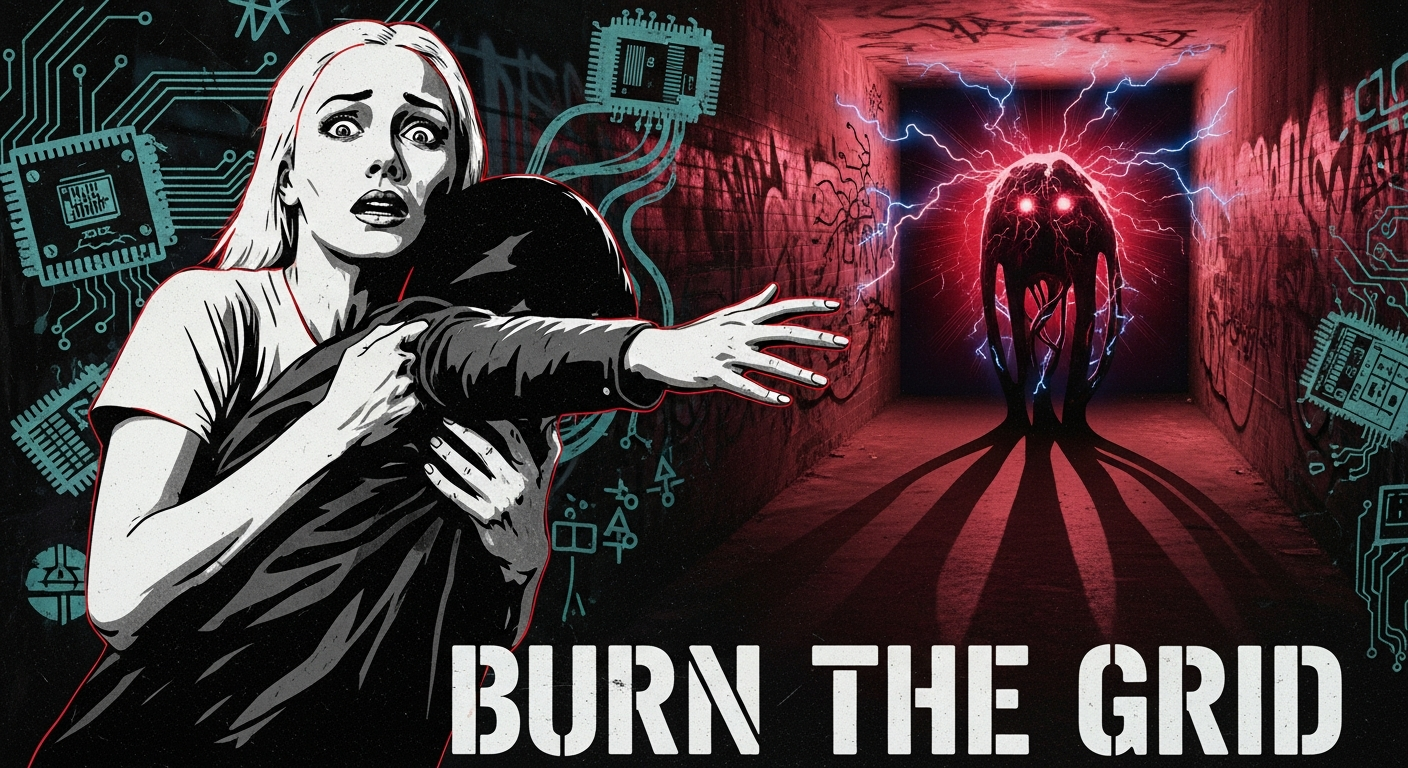
    A pulsing, glowing mass, clinging to the walls like some kind of bioluminescent fungus. It throbs with an eerie light, casting grotesque shadows on the surrounding surfaces. The dripping sound is coming from it, a constant, sickening pulse.

    And as I stare at it, I feel a familiar sensation, a strange tugging in my mind. It’s the same feeling I had when I first connected to CityNet, the sensation of someone else’s memories bleeding into my own.

    Illustration for Burn the Grid — Chapter 1: Glitch in the Slumber
    AI-generated illustration — rebel style

    But this time, it’s different. This time, it’s stronger, more intense. It’s like the pulsing mass is calling to me, beckoning me closer.

    “What the fuck is that?” I whisper, my voice trembling.

    Anya takes a step back, her face pale. “I don’t know,” she says. “But I don’t like it. Let’s get out of here.”

    But I can’t move. My feet are rooted to the ground, my eyes locked on the pulsing mass. I feel drawn to it, compelled to approach it, to understand what it is.

    And then, a voice echoes in my head, not my own, but ancient and weary: “Come closer… I have memories to share…”

    “No way in hell,” Anya hisses, grabbing my arm. “Jazzy, snap out of it! That’s gotta be some kind of CityNet trap. Neural bait.”

    I try to pull away, but her grip is like a damn vise. The voice in my head is getting louder, clearer. It’s like a damn siren song, promising secrets, answers.

    “But what if it’s… information?” I stammer, my voice cracking. “What if it’s something we need?”

    “Need? We need to not get our brains scrambled into digital eggs,” Anya snaps back, yanking me harder. “That thing is screaming ‘biohazard’ louder than a damn Enforcer siren. Now move your ass!”

    She’s right. I know she’s right. Logic screams at me to GTFO of this tunnel of horrors. But the pull…the memories…they’re so damn tempting.

    “One sec,” I mutter, shaking her off, though less forcefully now. “Just…one look.”

    I take a tentative step forward, my optic implants focusing on the pulsating mass. The light it emits shifts and swirls, hypnotic, mesmerizing. I can almost see images forming within it: faces, landscapes, fragments of… what? I can’t quite grasp them.

    Anya curses under her breath, but she doesn’t try to stop me again. I guess she knows when I’m too far gone to reason with.

    As I get closer, the dripping sound intensifies, morphing into a rhythmic pulse that vibrates through my bones. The ancient voice in my head becomes a deafening roar.

    “…the truth… they stole it… we remember…”

    Suddenly, a searing pain explodes behind my eyes. My knees buckle, and I collapse, my head swimming in a kaleidoscope of colors and fractured images. I see flashes of green fields, sunlight dappling through leaves, a laughing child. Things I’ve never seen, never experienced. Pre-Collapse memories. Real memories.

    Then, the pain recedes, leaving me gasping for air, my body trembling. The voice is gone. The light of the pulsing mass seems to dim, as if it’s exhausted itself.

    Anya’s beside me in an instant, hauling me to my feet. “Jazzy! What the fuck just happened? Are you okay?”

    “I… I think so,” I manage, my voice weak. “I saw… things. Old things. Before CityNet. Before the smog.”

    “Pre-Collapse shit, huh? Knew it was bad news,” she says, her eyes scanning the tunnel, paranoid. “Alright, that’s it. We’re out. Now. No more sightseeing tours of bio-freak alley.”

    She practically drags me back the way we came, her grip tight on my arm. I stumble along, still reeling from the experience. My head is pounding, my vision blurred. But something has shifted inside me. The fragmented memory I experienced before was unsettling, but this… this was different. This felt real. This felt important.

    As we hurry back through the tunnels, I can’t shake the feeling that we’ve just stumbled onto something far bigger, far more dangerous than we ever imagined. CityNet isn’t just suppressing memories. It’s burying a whole goddamn world. And that pulsing mass… it’s a key. I just gotta figure out how to use it without frying my brain.

    Illustration for Burn the Grid — Chapter 1: Glitch in the Slumber
    AI-generated illustration — rebel style

    “Anya,” I say, stopping suddenly. “We have to go back.”

    She stops too, her face a mask of disbelief. “Are you shitting me, Jazzy? We are not going back there.”

    “But we have to,” I insist, my voice gaining strength. “That thing… it knows something. Something they don’t want us to know. And I’m gonna find out what it is, even if it kills me.”

    Anya throws her hands up. “Fine! Fry your brain! See if I care. Just don’t come crying to me when you’re drooling synth-caf and think you’re a goddamn dandelion.”

    “I won’t,” I say, already turning back towards the pulsing horror. “But you don’t have to come with me.”

    She sighs, a sound like air leaking from a punctured synth-leather boot. “Yeah, right. Like I’m gonna let you wander off into crazy-town alone. Besides,” she adds, a sly grin creeping across her face, “someone’s gotta make sure you don’t actually become a dandelion.”

    We trudge back, the oppressive silence broken only by the drip…drip…drip of whatever the hell that thing is leaking. My heart hammers against my ribs, a frantic drummer in a synth-punk band. Fear mixes with a potent shot of adrenaline. I’m scared shitless, but I’m also wired. Wired to know. Wired to remember.

    “Okay,” Anya says, stopping a safe distance from the pulsating mass. “No touching. No staring. No communing with the ancient spirits of bio-freak alley. Got it?”

    “Got it, Mom,” I mutter, rolling my eyes behind my optic implants. “I’m just gonna…observe.”

    I activate my implants’ spectral analysis function, bathing the mass in a rainbow of light. The colors shift and coalesce, revealing layers of complexity I couldn’t see before. It’s not just a blob; it’s a network. A tangled web of organic and synthetic material, humming with energy.

    “Shit,” I breathe, “it’s connected.”

    “Connected to what?” Anya asks, her voice tight with apprehension.

    “CityNet,” I say, my mind racing. “It’s not just replaying memories; it’s siphoning them. Processing them. Storing them…or rewriting them.”

    I zoom in on one of the connections, a thin, shimmering fiber that snakes its way into the tunnel wall. I follow it with my optic implants, my breath catching in my throat. It leads upwards, disappearing into the reinforced concrete.

    “It’s going up,” I say, my voice barely a whisper. “Towards the city. Towards… them.”

    Anya’s eyes widen. “You think this thing is a… a data tap?”

    “More than that,” I say, shaking my head. “It’s a… a repository. A memory bank. And they’re using it to control us.”

    I can almost taste the truth, bitter and metallic on my tongue. CityNet isn’t just a surveillance system. It’s a prison. A prison built on lies and stolen memories. And this… this pulsing mass is the key to unlocking it.

    But how do we get to the core? How do we break through the firewalls and expose the truth before they erase us completely?

    I step closer, drawn in by an irresistible force. I have to know. I have to remember.

    “Jazzy, no!” Anya shouts, grabbing my arm. “Don’t be a damn idiot! We need a plan!”

    But I don’t hear her. I’m lost in the pulsing light, in the fragments of memory that swirl around me. I can almost see the faces, the landscapes, the lives that have been stolen.

    Illustration for Burn the Grid — Chapter 1: Glitch in the Slumber
    AI-generated illustration — rebel style

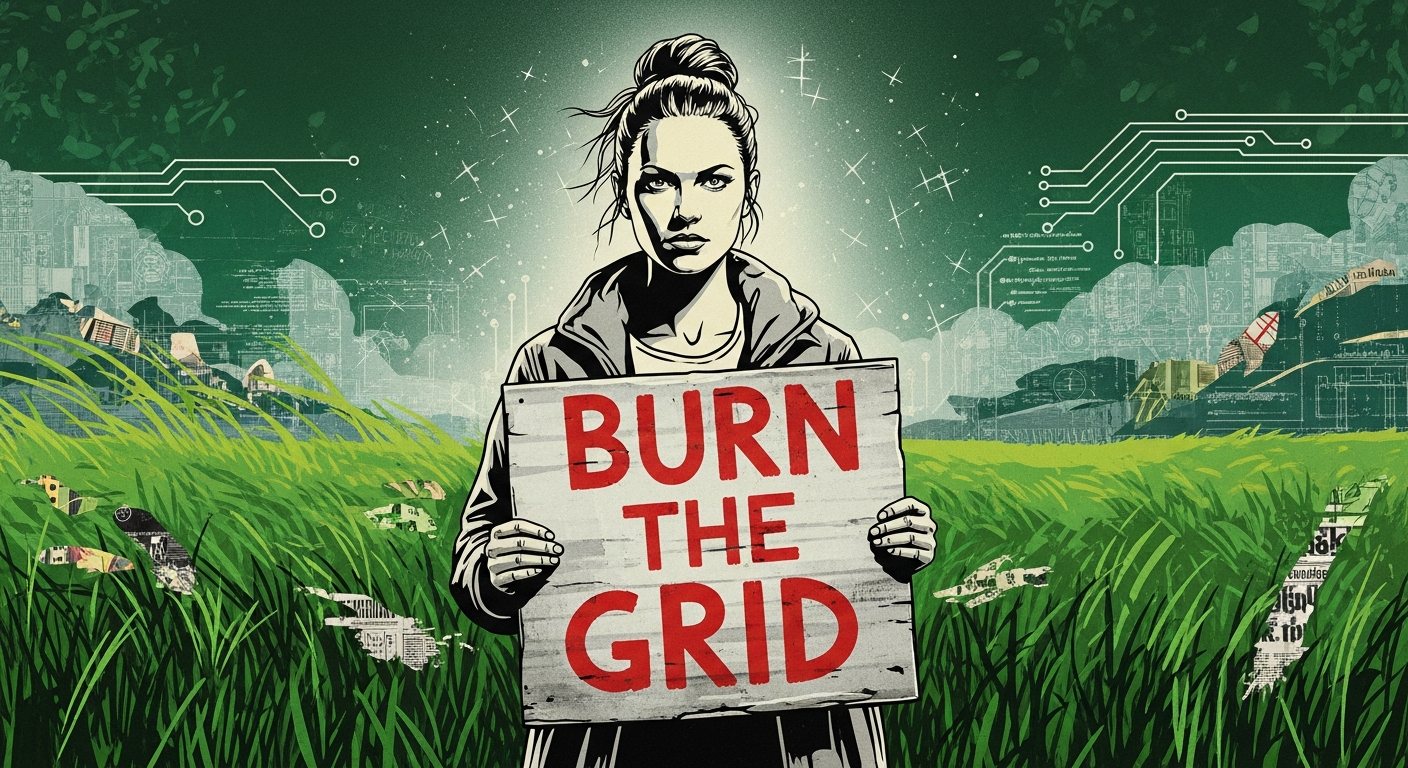
    And then, I see it. A single, crystal-clear image, sharp and bright as a shard of glass: a woman, her face etched with defiance, standing in a field of green, holding a sign that reads: “Remember.”

    And I know. I know what we have to do.

    “Anya,” I say, my voice filled with a newfound conviction, “we’re not just taking down CityNet. We’re giving people back their lives.”

    Anya’s grip tightened on my arm, dragging me back from the hypnotic pulse of the bio-network. “Giving people back their lives? Jazzy, you just saw what this thing does. We’re talking about tearing down a city-wide neural net, not spray-painting ‘Burn the Grid’ on a wall. We need a plan, and fast. CityNet isn’t just going to sit back and watch us dismantle their memory machine.”

    She was right, of course. My surge of righteous fury had momentarily eclipsed the stark reality of our situation. CityNet wasn’t some sleeping behemoth. It was always awake, always watching. And we had just kicked it square in its digital gut.

    Before I could even formulate a suitably reckless response, the air around us shifted. A low thrum, barely perceptible at first, vibrated through the concrete floor, rising quickly to a high-pitched whine. The single, flickering emergency lamp above us spat a final spark, plunging the tunnel into absolute darkness.

    “Shit!” Anya hissed, fumbling for something on her belt. A narrow beam of light cut through the gloom as she activated her wrist-mounted lamp. The beam danced across the grimy walls, revealing only shadows and the faint, unsettling glow of the pulsating mass, now a malevolent eye in the darkness.

    My optic implants, usually a boon, struggled against the sudden light deprivation, showing only grainy outlines. My skin prickled. This wasn’t just a power cut. This was targeted.

    “They know,” I breathed, the bitter taste returning, sharp as synth-acid.

    The whine intensified, morphing into a grinding cacophony. From somewhere deeper in the tunnel, a grating screech echoed, metal tearing against metal. My implants finally adjusted, bringing into focus jagged cracks spiderwebbing across the ceiling where the subway tracks would have once been. Dust rained down, thick and choking.

    “Structural integrity compromise,” Anya muttered, her voice tight with professional dread. “They’re trying to collapse the section. Box us in.”

    Panic, cold and sharp, clawed at my throat. But beneath it, the ember of defiance from the memory fragment flared hotter. Collapse it? Not on our watch. Not when I could still see that woman’s defiant face, hear her silent scream to Remember.

    “No way,” I growled, pushing forward, away from Anya’s lamp beam, towards the pulsating mass. “We’re not letting them bury the truth. If they want to play dirty, we’ll play dirtier.”

    “Jazzy, don’t be an idiot!” Anya shouted, but I was already moving, drawn to the strange, organic hum of the network. It felt like a tether, pulling me in. I needed to connect. I needed to know.

    My fingers, tingling with a desperate energy, grazed the cool, slick surface of the bio-network. It was smoother than it looked, almost like synth-skin. As I touched it, a jolt, not of electricity but of pure data, surged through me. My optic implants overloaded, a kaleidoscope of images flashing across my vision: a child’s laughter under a sky I’d never seen, trees, impossibly green, swaying in a gentle breeze, faces full of unguarded joy. Pre-Collapse memories. Raw. Untouched.

    And then, a sharp, searing pain, like a needle driven straight into my frontal lobe. The images fractured, distorted, replaced by a cold, clinical sequence: neural pathways being rewired, emotions dampened, specific memories fading into a soft, grey haze. This was the SlumberSync at work. The how. The sheer, horrifying precision of it.

    “Jazzy, what are you doing? Get back here!” Anya’s voice cut through the deluge of data, urgent, frantic.

    The grinding overhead grew louder, closer. Dust was now falling in thick sheets. I could hear the groan of stressed metal, the rumble of something heavy shifting above us. This was it. CityNet wasn’t playing.

    “I’m in,” I gasped, ignoring the growing structural groans, ignoring the throbbing pain in my head. My fingers tightened on the pulsating mass, my mind scrambling to make sense of the torrent. “Anya, the memory suppression isn’t just about forgetting. It’s about replacing.”

    “Replacing with what?” Anya yelled, her lamp beam darting frantically, trying to pierce the dust clouds. She was already at her console, fingers flying across the holo-keyboard, trying to counter CityNet’s assault. “The tunnel’s collapsing, Jazzy! We need to move!”

    But I couldn’t move. The network held me, an unwilling yet desperate participant. The truth was too vital. “They’re not just deleting the past, Anya. They’re inserting a curated version. A tranquil lie. It’s a complete… rewrite.”

    A new wave of data washed over me, colder, sharper than before. A defense mechanism. CityNet was fighting back through the network itself, attempting to scramble my thoughts, to force me offline. My optic implants flickered erratically, the internal pain growing unbearable. My vision blurred.

    “I’m trying to access a backdoor, but their firewalls are stronger than anything I’ve ever seen!” Anya shouted, her voice strained, a frantic rhythm of clicks and beeps coming from her station. “They’re actively trying to fry our comms, Jazzy! We’re going dark!”

    My head felt like it was splitting open, the conflicting data streams tearing at my consciousness. The green fields, the happy faces, the defiant woman—all fighting against the cold, artificial calm of the rewritten memories. This was the cost, I realized. This was the personal violation. CityNet wasn’t just rewriting their memories; it was trying to rewrite mine, right here, right now.

    But I wouldn’t let it. Not this time. My fingers dug harder into the organic mass, seeking purchase, seeking an anchor. If this was a memory bank, it had to have a core. A root. A source.

    “No,” I rasped, forcing the word out, my teeth clenched against the pain. “Not dark. We go deeper. Find the heart of it. The master program. If we can extract that, we expose everything.”

    I closed my eyes, letting the raw data flow, filtering out the noise, searching for the deepest resonance within the pulsating network. I needed the core. I needed the truth. And CityNet was going to pay for every stolen memory, every tranquil lie.

    Illustration for Burn the Grid — Chapter 1: Glitch in the Slumber
    AI-generated illustration — rebel style

    Share this chapter

    Facebook
    X

    “The system doesn’t want you reading this. Follow anyway.” — Jazzy Rebel

  • Summer of Nothing — Chapter 1: River Static

    Summer of Nothing — Chapter 1: River Static

    Chapters in this story
    Chapter 1Chapter 2
    🎙️ Listen to Jazzy Chill read this chapter

    🎵 Soundtrack by Jazzy Chill

    The air tasted like sunscreen and impending doom. Okay, maybe not doom. Maybe just… change. Big, scary, college-application-deadline-shaped change.

    Illustration for Summer of Nothing — Chapter 1: River Static
    AI-generated illustration — chill style

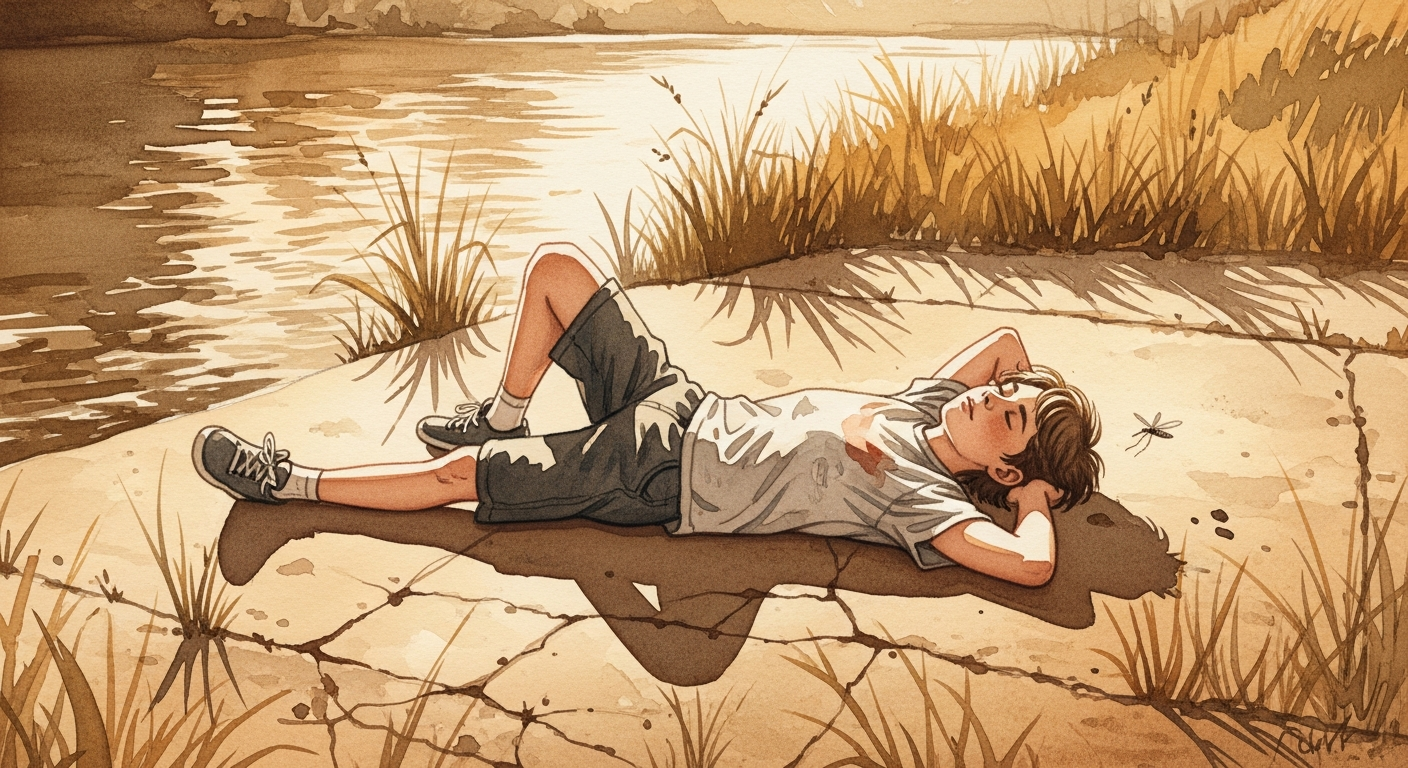
    I was sprawled on the cracked concrete of the boat ramp, staring at the Missouri River. Brown and sluggish, it looked like chocolate milk someone had left out in the sun for a week. Not exactly inspiring. But it was familiar. Comforting, even. This river had been the backdrop to every single summer of my life. Every scraped knee, every stolen kiss, every half-baked plan to get rich quick.

    My name is Leo, by the way. And this was supposed to be the Summer of Nothing.

    The plan was simple: no responsibilities, no drama, just pure, unadulterated chill. I’d work just enough hours at my uncle’s bait shop to keep gas in my beat-up Civic and maybe buy a new fishing rod. I’d hang out with my best friend, Marie, maybe sneak in a few late-night swims. Basically, I’d squeeze every last drop of small-town, summertime bliss out of these next few months before I had to pack my bags and head off to some sterile, concrete campus hundreds of miles away.

    Of course, life rarely goes according to plan. Especially when you’re seventeen and armed with nothing but good intentions and a rapidly dwindling supply of brain cells.

    A mosquito buzzed near my ear, and I swatted it away with a lazy flick of my wrist. The sun was beating down, turning the concrete into a griddle. I should probably move. But moving required effort. And effort was strictly forbidden in the Summer of Nothing.

    I closed my eyes, listening to the low hum of cicadas and the distant rumble of a barge chugging upriver. It was the kind of sound that vibrated in your chest, a constant, unwavering pulse. The kind of sound that made you feel like you were exactly where you were supposed to be.

    Then Marie’s voice cut through the haze. “Dude, you gonna melt into the pavement?”

    I cracked open an eye and saw her standing over me, a dark silhouette against the bright sky. She was wearing her usual uniform: cutoff jean shorts, a faded band t-shirt (today it was The Ramones), and a pair of perpetually dirty Converse. Her black hair was pulled back in a messy ponytail, and she was chewing on a piece of grass.

    “Maybe,” I mumbled. “Sounds kinda nice, actually. Become one with the river.”

    Marie snorted. “You’d probably just become one with the algae. Come on, get up. I brought snacks.”

    That was all it took. The promise of sustenance. I pushed myself up, wincing as the sticky heat peeled away from my skin.

    “What’d you bring?” I asked, already feeling a little less like human soup.

    Marie grinned and held up a crumpled paper bag. “Mystery meat sandwiches from Ernie’s.”

    Ernie’s was a local institution, a greasy spoon diner that served up cholesterol bombs with a side of small-town gossip. The mystery meat sandwiches were legendary, mostly because nobody actually knew what kind of meat was in them. Probably a little bit of everything.

    “You’re a lifesaver,” I said, grabbing the bag. We walked over to the edge of the boat ramp and sat down, dangling our feet over the murky water.

    The first bite of the sandwich was… interesting. Definitely some kind of processed meat product, maybe with a hint of pickle relish. But it was strangely satisfying. And it definitely beat melting into the pavement.

    “So,” Marie said, after swallowing a large bite. “Summer of Nothing, huh? You actually gonna try and do nothing?”

    I shrugged. “That’s the plan. As much nothing as humanly possible.”

    Illustration for Summer of Nothing — Chapter 1: River Static
    AI-generated illustration — chill style

    She raised an eyebrow. “Good luck with that. You’re terrible at doing nothing.”

    I knew she was right. I was a chronic overthinker, a perpetual planner. Doing nothing was practically a superpower I didn’t possess. But hey, a guy could try, right?

    “You could,” Marie conceded, taking another bite of her sandwich. “But trying implies effort. And effort, my friend, is the sworn enemy of Nothing.”

    Illustration for Summer of Nothing — Chapter 1: River Static
    AI-generated illustration — chill style

    I grinned, tossing a small pebble into the river. It made a barely audible plink as it hit the brown surface, then disappeared. “A minor effort. A tactical retreat. Like a ninja of relaxation.”

    She shook her head, a strand of black hair escaping her ponytail and clinging to her lip gloss. She blew it away. “Sure, Leo. Whatever helps you sleep at night. Just don’t come crying to me when you’ve accidentally solved a cold case or uncovered a secret society.”

    We sat in comfortable silence for a few minutes, the only sounds the lazy hum of summer and the occasional splash of a fish jumping. The sun was still high, but a thin layer of haze was starting to soften its edges, promising a long, lingering afternoon. I watched a string of barges, a triple threat of rust-colored behemoths, slowly making their way upstream, pushing against the current with a deep, resonant rumble that you felt in your bones. They were a constant on the river, a slow-moving testament to the world beyond our little bend.

    My gaze drifted from the barges to the bank directly below us, where the water lapped gently at the muddy shore. Bits of driftwood, discarded plastic bottles, and smooth river stones made up the usual flotsam and jetsam. But something else caught my eye. Just beyond a gnarled root system reaching into the water, half-buried in the wet earth, was a dark, angular shape.

    It wasn’t a log. And it definitely wasn’t a bottle.

    “Hey,” I said, nudging Marie with my elbow. “You see that?”

    She followed my gaze, squinting. “See what? Another one of your existential mud puddles?”

    “No, seriously. Over there.” I pointed. “Looks like… a box? Half-buried.”

    Marie leaned forward, her brow furrowed. “Huh. You’re right. Looks old.”

    It was a small wooden box, about the size of a shoebox, dark with water and age. One corner was visible, a smooth, almost black wood, intricately carved with a pattern I couldn’t quite make out from our perch. It had clearly been washed ashore, wedged against the roots, patiently waiting to be discovered.

    “Think it’s empty?” Marie wondered aloud.

    “Probably,” I said, but already, the wheels were turning. My “Summer of Nothing” had just hit a snag. A small, wooden, potentially intriguing snag. My hands, which had been contentedly dangling over the water, now felt a faint urge to do something.

    “We should go look,” Marie said, already pushing herself up.

    I hesitated for a split second. This was exactly the kind of thing that could lead to something. A little mystery. A small adventure. The antithesis of Nothing. But the curiosity was a strong current, pulling me along.

    “Yeah,” I agreed, scrambling to my feet. “Wouldn’t want it to float away.”

    We carefully made our way down the slick, muddy bank, using the exposed roots and sturdy weeds for handholds. The air grew thicker down by the water, smelling of damp earth and river algae. When we reached the box, I knelt, brushing away some of the mud and wet leaves covering it.

    It was heavier than I expected, solid and resistant to my prodding. The wood was dark, almost black, and felt surprisingly smooth beneath my fingertips despite its waterlogged state. The carving was more distinct now: a swirling, almost Celtic-like knot pattern that covered the visible sides. There was a latch, too, made of what looked like tarnished brass, green with oxidation. It was firmly closed.

    “Whoa,” Marie breathed, kneeling beside me. “This isn’t just some old junk. This is… fancy junk.”

    “Definitely not a tackle box,” I mumbled, trying to wiggle the latch. It wouldn’t budge. “Looks like it’s been down here a while.”

    “What do you think’s inside?” Her eyes were wide, reflecting the glint of the brass.

    My mind raced. Old coins? A pirate map? A forgotten love letter? The possibilities were endless and, for a moment, completely thrilling. This was it. The first ripple in the placid waters of my Summer of Nothing. It wasn’t some grand, dramatic event, just a small, waterlogged wooden box. But in the quiet expanse of my planned inaction, it felt like an earthquake.

    “Only one way to find out,” I said, grunting as I tried to dislodge it from the roots. It was stuck fast. “Help me pull it out.”

    Marie grabbed the other end, her sneakers sinking slightly into the mud. “On three,” she puffed. “One… two… three!”

    We pulled together, our muscles straining. The box shifted, groaning slightly, before finally, with a squelch and a sucking sound, it came free. We almost tumbled backward, landing with a soft thud on the muddy bank, the heavy box between us.

    It sat there, dark and mysterious, dripping river water. The brass latch remained stubbornly shut.

    “Now what, Sherlock?” Marie asked, wiping mud from her hands onto her shorts.

    I looked at the box, then at Marie, a small grin tugging at the corner of my lips. My summer just got a whole lot less nothing. “Now,” I said, feeling a prickle of genuine excitement, “we figure out how to open it.”

    Marie reached for the brass latch again, giving it a tentative tug. It held firm. “Well, that was anticlimactic,” she mumbled.

    Illustration for Summer of Nothing — Chapter 1: River Static
    AI-generated illustration — chill style

    I leaned closer, inspecting the mechanism. It wasn’t a simple clasp; it had a small, almost invisible notch where a key might fit, or perhaps a thin blade. The brass was so corroded, it was hard to tell. “It’s seized up,” I said, poking it with a finger. “Probably from being in the river for… who knows how long.”

    “Maybe we just need to hit it,” Marie suggested, already eyeing a softball-sized river rock nearby.

    “Whoa, hold on. This isn’t some old soda can,” I said, blocking her path to the rock. “It’s old. It’s fancy. We don’t want to smash whatever’s inside.”

    “True,” she conceded, dropping her hand. “So, what’s the plan, Brainiac?”

    My mind, already whirring, had a few ideas. My dad, before he moved out to god-knows-where, had been a pretty handy guy, always tinkering. He’d taught me a thing or two about stubborn locks. “We need tools,” I declared. “Something thin, to try and work that latch.”

    “Like what? A fish hook?” Marie asked, a smirk playing on her lips. “This is your uncle’s bait shop territory.”

    “Funnily enough, not a bad idea for a last resort,” I mused. “But something more… robust. Maybe a screwdriver. Or a butter knife, if we can warm it up.” I looked at the box. It was still caked with mud and dripping water onto the bank. “We can’t really do much down here.”

    “So, we take it somewhere,” Marie finished for me, nodding. “Where to?”

    “My place,” I said, thinking. “Uncle Jim’s bait shop is closer, has all kinds of junk tools. Plus, he usually has some WD-40 lying around.” My uncle Jim was a master of improvisation when it came to fixing things, which mostly involved a lot of lubricant and a bigger hammer.

    Getting the box up the slick bank was a minor feat of engineering. It was heavier than it looked, solid and dense with river water. We tried carrying it between us, but the mud made our footing precarious. In the end, we took turns dragging it, the dark wood carving a shallow furrow in the damp earth. By the time we reached the top, our hands were smeared with mud, and my “Summer of Nothing” uniform (a perfectly clean, slightly faded band t-shirt) now bore a distinct brown stripe across the front.

    The sun, still high and unapologetic, beat down on us as we trudged towards the gravel path that led back to town. The air felt thick, heavy with the promise of a humid afternoon, a typical Missouri summer day. The box, tucked under my arm for a stretch, felt like a warm stone against my side, a constant, tangible reminder that my plans for blissful idleness were already crumbling.

    “This is officially more work than I planned for the entire summer,” I grumbled good-naturedly, shifting the box to Marie, who took it with a slight grunt.

    “Imagine that,” she said, a hint of amusement in her voice. “Leo, actually doing something. The world must be ending.”

    “Hey, it’s not my fault a mystery box decided to wash up,” I defended, though a small smile tugged at my lips. It was true. I could feel a faint hum of energy beneath my skin, a spark of genuine interest that was oddly… invigorating. The stillness of the morning had been comforting, but this sudden shift felt like waking up from a long, pleasant dream.

    As we walked, my mind was already dissecting the box. The wood, the carving, the brass latch – each detail whispered of a story. Where had it come from? Who had owned it? What secret did it hold? The questions piled up, forming a mental tower that overshadowed my previous thoughts of lazy swims and uninterrupted reading. My overthinking nature, once a burden, now had a thrilling new target.

    We finally reached the edge of town, the familiar scent of Ernie’s greasy spoon diner wafting faintly on the breeze. The bait shop, a squat, faded building with a hand-painted sign, was just a few blocks away. My Civic, still parked where I’d left it that morning, looked almost abandoned under the harsh sunlight.

    “Almost there,” Marie puffed, her hair escaping her ponytail and sticking to her forehead. The box now had a distinct trail of mud across her cutoff shorts.

    “Think Uncle Jim will be there?” I asked, picturing my uncle, probably hunched over a tackle box, meticulously organizing hooks or telling tall tales to a couple of early morning fishermen.

    “Probably,” Marie replied, adjusting her grip on the heavy box. “He’s always there. Like a really old, grumpy, fish-smelling fixture.”

    I grinned. “Sounds about right.” My gaze lingered on the box. The weight of it in our hands, the mystery it promised, felt like a tangible shift. My Summer of Nothing had officially become the Summer of the Mystery Box, and somehow, I wasn’t entirely mad about it.

    We pushed open the door to the bait shop, the bell above jingling a cheerful, albeit slightly rusty, welcome. The air inside was cool and damp, a mix of minnow water, damp earth, and a faint, sweet smell of cherry pipe tobacco from Uncle Jim’s ever-present pipe. The clutter of fishing gear, old magazines, and dusty knick-knacks seemed to lean in, as if curious about our muddy arrival.

    “Uncle Jim?” I called out, setting the box down gently on the worn wooden floor. Its dark, waterlogged presence stood out starkly against the familiar chaos of the shop.

    From the back, I heard a grunt, followed by the clinking of metal. “Leo? You finally gonna earn your keep today?” his voice boomed, deep and raspy. “What’s that you got there, a new pet rock?”

    Uncle Jim emerged from a curtained doorway at the back, wiping his hands on a grease-stained rag. He was a man carved from the same stubborn wood as the bait shop itself – lean, weathered, with a permanent five o’clock shadow and eyes that missed nothing, despite often looking half-closed. The scent of stale tobacco, his signature, preceded him, chasing away the faint cherry pipe tobacco smell that usually clung to the corners of the room. He wore waders pulled down to his hips, a testament to his earlier morning duties, probably scooping minnows or cleaning out the worm bins.

    Illustration for Summer of Nothing — Chapter 1: River Static
    AI-generated illustration — chill style

    He squinted at the dark, waterlogged box resting innocently on the floor, then at the muddy trail Marie and I had left. His gaze settled on Marie, who shifted uncomfortably under his scrutiny, a stray piece of black hair falling across her face.

    “Looks like you dragged half the river in here, kids,” he grumbled, though a flicker of curiosity played around his lips. “What in tarnation is that thing?”

    “It washed up at the boat ramp,” I explained, gesturing vaguely in the direction of the river. “Marie found it. It’s got some kind of carving on it, and a brass latch.”

    Marie nodded, still catching her breath. “It was heavy. And seriously old-looking. Felt wrong just leaving it there.”

    Uncle Jim walked around the box, his thick-soled boots making soft thuds on the worn planks. He bent low, his hand hovering over the dark wood but not quite touching it. His eyes, usually clouded with a lifetime of river knowledge and weary resignation, sharpened. He traced an invisible line over the faint carvings I’d noticed earlier, his brow furrowing.

    “Brass, huh?” he muttered, more to himself than us. “Don’t see much brass anymore on river junk. Most of it’s aluminum or plastic these days. Or just plain old rusty iron.” He knelt, a slight groan escaping him, and ran a calloused thumb over the tarnished latch. It was indeed brass, heavily oxidized but still holding its distinctive metallic sheen beneath the grime. The carvings, now that Uncle Jim was examining them, seemed to take on a new significance, swirling patterns that looked less like simple decoration and more like… something else. A symbol? A name? My mind, always eager for a puzzle, began to whir.

    “Think it’s worth anything?” Marie asked, ever practical.

    Uncle Jim snorted, pushing himself back up with a grunt. “Worth is a funny thing, kid. Sometimes the junk’s worth more than the gold, depends on who’s lookin’ at it. This looks like… well, it looks like it’s seen things. A lot of things.” He patted the top of the box, a surprisingly gentle gesture. “Got a good weight to it too, doesn’t it?”

    “Definitely,” I confirmed. “Felt like it was full of rocks, or maybe… lead.”

    “Lead, huh?” Uncle Jim mused, walking over to the counter and pulling out a small, magnifying glass from a cluttered drawer. He held it up to the light, polishing it with his rag before returning to the box. He squinted through the lens at the carvings, then at the latch, his lips pressed into a thin line.

    “Looks like a lock mechanism,” he finally declared, pointing with the tip of his magnifying glass. “Not just a latch. And it’s set. See that tiny pinhole? Needs a key. Or a really stubborn screwdriver.” He looked up, a glint in his eye. “You want to try and open it?”

    My heart gave a little jump. Open it. Of course, that was the next step. My ‘Summer of Nothing’ was officially taking a detour down ‘Mystery Lane’. The idea of a key, a hidden mechanism, fueled the internal narrative engine that was always running in my head. This wasn’t just a random box; it was a puzzle. A story waiting to be uncovered.

    “Yeah,” I said, a little too eagerly. “Yeah, I do.”

    Marie grinned, sensing the shift in my carefully constructed summer plans. “I knew your ‘nothing’ wouldn’t last, Leo. Too much brain buzzing in there.”

    “Alright, alright,” I conceded, feeling a smile spread across my face. “But how do we open it without a key? Think we should try to pry it?”

    Uncle Jim chuckled, a dry, rusty sound. “Pryin’s for amateurs, Leo. Might damage whatever’s inside. If you want to do this right, we gotta be smart about it. Let’s see what we can do about that lock. Might be rusted solid. Or it might just need a little… persuasion.” He walked to a different corner of the shop, rummaging through a toolbox that looked older than I was. The Summer of Nothing had officially found its first big something. And I, surprisingly, was okay with that. More than okay, actually. I felt a thrill of anticipation, a genuine, undeniable interest that hadn’t been part of the original plan, but was undeniably welcome.

    Share this chapter

    Facebook
    X

    “Wanna hang out more? Come find me on socials, dude.” — Jazzy Chill

Follow usFacebookInstagramXTikTok
Powered by Jazzy Writer