The bridge of the Argonaut hummed with the low thrum of fusion reactors and the whisper of recycled air. Forty years out from Earth, sixty to Proxima Centauri b. A long voyage measured in lifetimes, not miles. Chief Engineer Elena Vasquez, however, measured it in terabytes. Sensor logs, maintenance schedules, atmospheric analyses – a constant stream of data flowing from every corner of the behemoth. She preferred it that way. Data was truth. Truth was manageable.
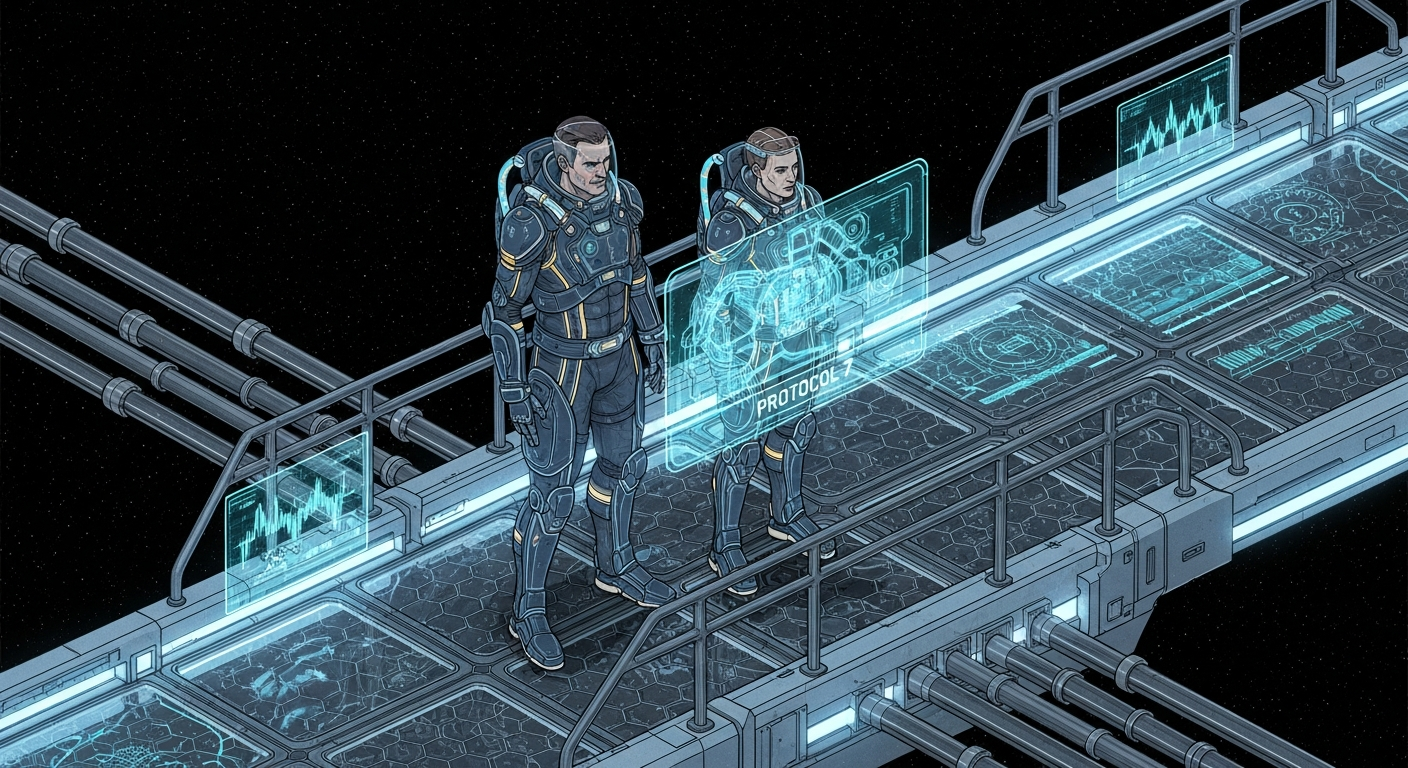
Her terminal displayed a cascade of diagnostic reports, green across the board. Nominal. As it should be. She tapped a finger against the polished metal, a nervous habit she’d been trying to break for decades. Routine was comforting, but complacency was death. Especially on a ship this size.
“Anything interesting, Chief?” a voice drawled from behind.
Vasquez didn’t bother to turn. Captain Elias Thorne. Always the charmer, always poking around. “Just confirming that gravity still works, Captain. No unexpected planetary rebellions brewing in hydroponics.”
Thorne chuckled. “Good to hear. I’d hate to have to explain that one to the colonists in cryo.” He moved to stand beside her, gazing out at the starfield displayed on the main viewscreen. Millions of pinpricks of light against an infinite black canvas. Beautiful, in a cold, uncaring way.
“Navigation flagged a Class 3 anomaly,” Thorne said, his voice losing its levity. “About an hour ago. I wanted your read on it.”
Vasquez’s hand stilled. A Class 3 anomaly. Not a simple solar flare or a stray asteroid. Something that warranted investigation. “Navigation didn’t loop it to me. What parameters?”
Thorne tapped a command into his own console, and the display on Vasquez’s terminal shifted, overlaying the diagnostic reports with sensor data. Energy signature: unknown. Location: just outside the heliopause, approximately 10 AU off their projected trajectory. Duration: intermittent, fluctuating wildly.
“Appears and disappears,” Thorne elaborated. “Navigation flagged it to me, of course, but they deferred to my discretion whether it warranted waking someone in Engineering. I think it does.”
Vasquez examined the data, zooming in on the fluctuating energy readings. The irregularity was stark, a jagged line against the smooth curve of background radiation. “Pattern analysis?”
“Inconclusive. The AI’s running through every known astrophysical phenomenon. Black hole lensing, gamma ray bursts… nothing fits.”
“Then it’s not astrophysical,” Vasquez muttered. A chilling thought.
Thorne leaned closer. “Precisely. Protocol dictates ignoring anomalies outside defined parameters. Specifically, anything beyond… well, pretty much where this is.”
Protocol. The ironclad rules governing every aspect of the Argonaut‘s mission, designed to ensure its survival and the survival of the colonists. It was a bible, a shield, a prison.
Vasquez understood the logic. Deviating from the planned trajectory, especially for an unknown energy signature, was a risk. Waking personnel unnecessarily was a risk. Every action, every decision had to be weighed against the potential consequences for the mission as a whole.
“But?” Vasquez prompted, knowing there was a ‘but’. Thorne wasn’t the type to consult her about something he’d already dismissed.
Thorne sighed, running a hand through his close-cropped hair. “But… what if it’s not nothing? What if it’s something we need to see?” He gestured to the starfield. “We’re out here, Elena. Forty years from home. Who knows what’s waiting for us?”
Vasquez stared at the sensor data, the fluctuating energy signature a question mark hanging in the void. Protocol said ignore. Her gut said investigate. And her gut, more often than not, was right.
“I’ll need a full diagnostic sweep of the sensor array,” she said, her voice firm. “And I want access to Navigation’s raw data logs. No filtering, no AI interpretations. Just the raw numbers.”
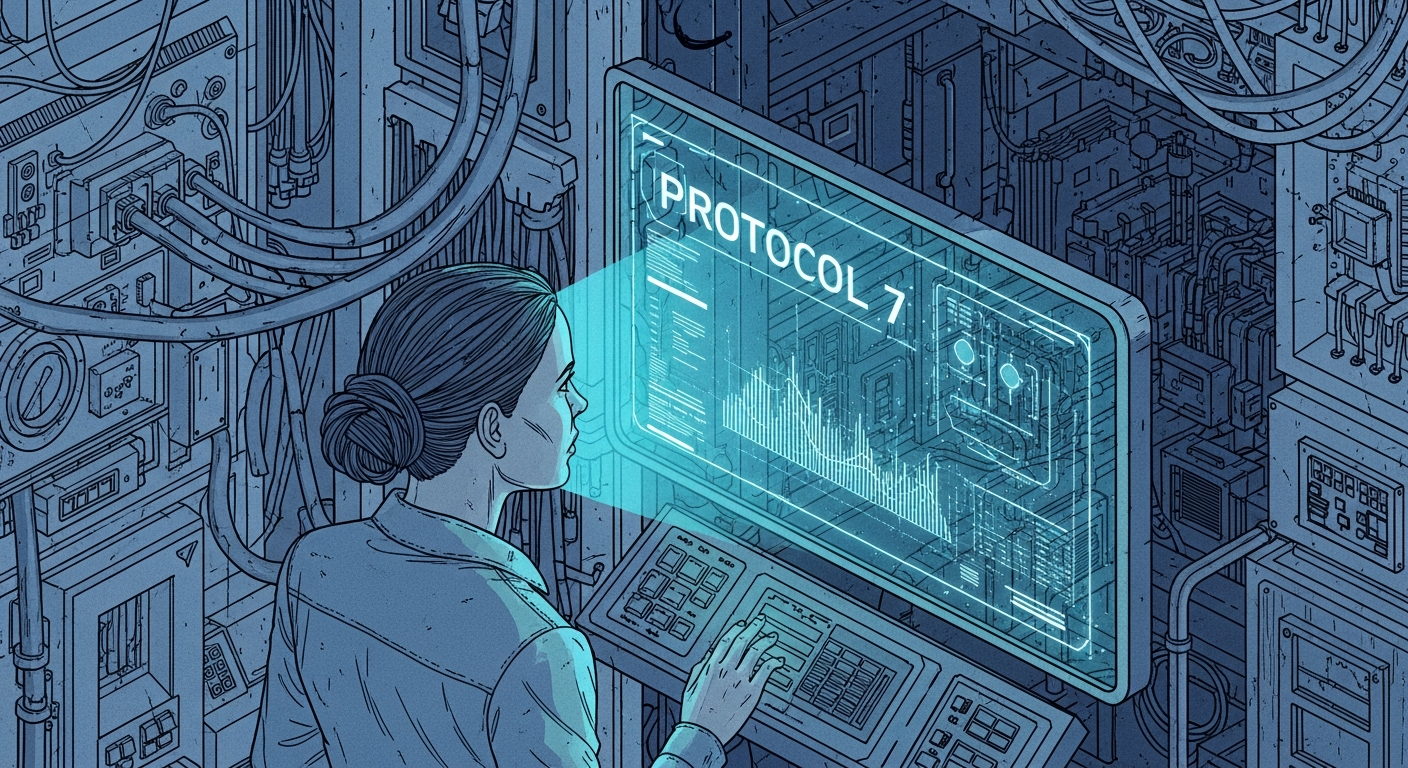
Thorne nodded. “You got it, Chief. Just… be careful. We can’t afford any surprises.”
Vasquez turned back to her terminal, the cascade of diagnostic reports now replaced by the enigmatic data of the anomaly. The truth, she knew, was out there. And she intended to find it, protocol be damned.
And she intended to find it, protocol be damned.
Vasquez initiated the sweep from her console, her fingers flying across the holographic interface. Subroutines cascaded, pinging every sensor array, every long-range detector, every gravimetric and EM wave emitter across the Argonaut‘s vast hull. The ship hummed with the sudden surge of activity, a low, almost imperceptible vibration resonating through the deck plating. Concurrently, she sent the data requisition to Navigation. The AI, designed for efficiency, responded with immediate compliance, piping unfiltered telemetry directly to her workstation.
The screen filled with an avalanche of numbers. Terabytes of raw data, unparsed, unformatted, stripped of all interpretive algorithms. It was a digital ocean, overwhelming in its purity. Vasquez felt a familiar thrill, the quiet satisfaction of a puzzle laid bare. She began sifting, creating custom filters, isolating the anomaly’s signature from the cosmic noise.
The AI’s original analysis, while thorough, was built upon a foundation of known physics. It sought familiar patterns: the decay curve of a neutron star, the precise lensing effect of a dark matter concentration, the specific frequency shift of a super-solar flare. But this signal… it defied those categories.
Vasquez zoomed in, pushing the processing power of her console to its limits. The raw data confirmed the intermittency, the wild fluctuations. One moment, a spike of energy, broadband and chaotic. The next, silence, absolute and unnerving. Then, a return, but never quite the same. It was like trying to track a ghost in a hurricane.
Her finger began its nervous tap against the armrest of her chair, a steady rhythm against the cacophony of incoming data. She cross-referenced the energy signature with the diagnostic sweep results. The Argonaut‘s sensors were performing optimally, every lens perfectly aligned, every receiver calibrated. The anomaly wasn’t a systemic error. It was real.
As hours bled into the artificial day cycle, Vasquez noticed a subtle pattern emerging within the chaos. Not a consistent frequency, not a regular pulse, but a sequence. The AI, programmed to filter out anything too complex or too irregular to fit established models, had dismissed these faint, almost subliminal shifts as noise. But Vasquez, with her human intuition honed by decades of chasing elusive data points, saw something else.
There were micro-bursts, too faint for the primary detection algorithms, appearing just before the larger, chaotic flares. Like a stutter, a precursor. And in those micro-bursts, she detected a faint, almost immeasurable shift in the EM spectrum – a broadband emission, yes, but with an underlying, highly structured sub-frequency. It wasn’t natural. Nature, in all its grandeur, rarely produced such precise, repeatable, yet simultaneously unpredictable, patterns.
She isolated one such sequence, looping it, amplifying the sub-frequency. It was weak, barely above the quantum background, but it was there. A rhythmic, almost harmonic vibration, overlaid with the broader energy bursts. It wasn’t a beacon, not in any sense of a directed transmission. It was more like a resonant frequency, a hum, almost an involuntary emission, fluctuating as something powered up, then down, then up again.
The anomaly wasn’t just existing. It was doing something. Power cycling? A primitive thought, but it was the only analogy that fit the erratic, yet fundamentally recurring, energy profile. What kind of object, defying known physics, would emit energy in such a fashion, 10 AU off their course, just beyond the heliopause?
A cold dread began to mingle with her scientific curiosity. Thorne’s words echoed: “What if it’s something we need to see?” Or, perhaps, something they shouldn’t see. Protocol, after all, was designed to protect them from the unknown. But this wasn’t just unknown. This was… anomalous. And for the first time in her career, Vasquez felt a prickle of genuine unease, realizing that the data, in its raw, unfiltered honesty, painted a picture far stranger and potentially more significant than she had dared to imagine. The question wasn’t just what it was, but why it was there. And why, for sixty years of stellar navigation, had the Argonaut never detected anything remotely similar?
Vasquez leaned back, her chair groaning softly in the quiet of the engineering bay. The raw data scrolled relentlessly across her primary display, the sub-frequency loop repeating its faint, rhythmic hum. It was undeniably non-random. A natural phenomenon, no matter how complex, eventually succumbed to the dictates of entropy and statistical distribution. This, however, displayed a coherence, a repetitive structure within its chaotic envelope, that screamed of design, or at least, of a deliberate process.
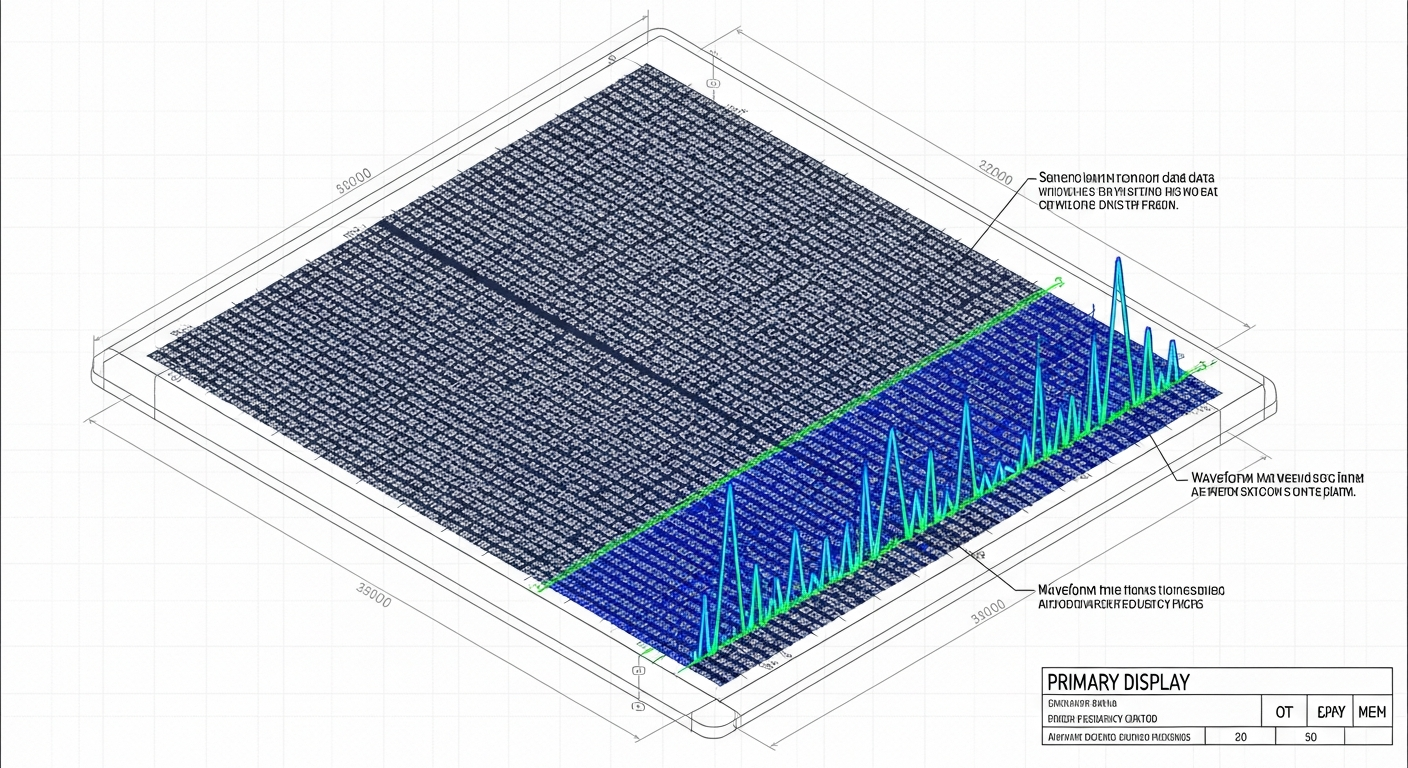
She initiated a series of advanced spectral analyses, algorithms designed for exoplanetary atmospheric composition, repurposed now for an unknown energy signature. She wasn’t looking for elements or compounds, but for patterns in the energy distribution, for fractal geometries, for anything that might hint at a natural origin. The results were consistent: the broadband emissions were a cacophony, but the underlying harmonic was stubbornly, unnaturally ordered. It wasn’t a natural resonance; it was an intentional oscillation.
“Artificial,” she murmured, the word feeling alien and heavy in the sterile air. It was a conclusion so profound, so utterly outside the realm of expected deep-space discovery, that it bordered on scientific blasphemy. The Argonaut‘s AI, with its vast library of cosmic signatures, had no reference for this because no such reference existed in its known universe.
Her finger tapped faster now, a frantic Morse code against the armrest. If it was artificial, then the intermittent fluctuations suggested power management. A system powering up, performing a function, powering down. What function? And who or what was operating it? The implications were staggering, reaching beyond mere scientific curiosity into the realm of first contact, a concept relegated to ancient Earth-based fiction.
Vasquez pulled up the Argonaut‘s historical sensor logs, going back decades. She initiated a deep-scan retrospective analysis, feeding the newly identified sub-frequency pattern into the archival data. The ship’s long-range sensors had always recorded ambient energy signatures, even if the AI had filtered out everything not immediately relevant to navigation or mission parameters. She instructed the system to search for any prior instances of this specific signature, however faint, however brief.
Minutes stretched into an hour, the ship’s processors churning through petabytes of stored data. The results, when they finally populated her screen, were both a relief and a deeper source of disquiet. Nothing. Absolutely nothing remotely similar in the sixty years of recorded stellar navigation.
This meant two things: Either the Argonaut had just stumbled upon a phenomenon that had only recently become active, or they had just crossed an invisible threshold into a region of space where such phenomena existed. Both options were equally unsettling. If it had just become active, what triggered it? If they had just entered its domain, what else might be out here?
The Class 3 anomaly wasn’t just 10 AU off their trajectory; it was now a beacon of the utterly inexplicable, sitting in a void that should have been empty and inert, save for the predictable dance of stars and nebulae. It was an engineering problem of the highest order, but one that transcended nuts, bolts, and plasma conduits. This was a problem of existential physics.
She felt a surge of adrenaline, cold and sharp. This wasn’t merely a deviation from protocol; it was a fundamental challenge to their understanding of the universe. The mission, the colonists in their cryo-stasis, the fragile human enterprise hurtling through the dark—all of it felt suddenly insignificant, or perhaps, terrifyingly relevant, in the face of this discovery.
Vasquez knew, with absolute certainty, that this was no longer her problem alone. The data was unequivocal. The conclusion, though terrifying, was unavoidable. She had followed the thread of the anomaly from chaos to structure, from noise to design. Now, she had to present this to Captain Thorne. He had asked what if it was something they needed to see. She now believed it was. And the thought of explaining “not astrophysical, but artificial” to a Captain whose primary duty was adherence to Protocol, tightened a knot in her stomach. Her finger stopped tapping. The time for analysis was over. The time for reporting had begun.
Vasquez took a steadying breath, the air in her engineering bay suddenly feeling thin. Her fingers, usually restless, lay still on the console. The report she needed to compile wouldn’t be a simple data dump. This required context, nuance, and a full understanding of its seismic implications. She moved from the holographic display, the ghostly blue image of the fluctuating anomaly dissolving behind her, and headed for the captain’s ready room.
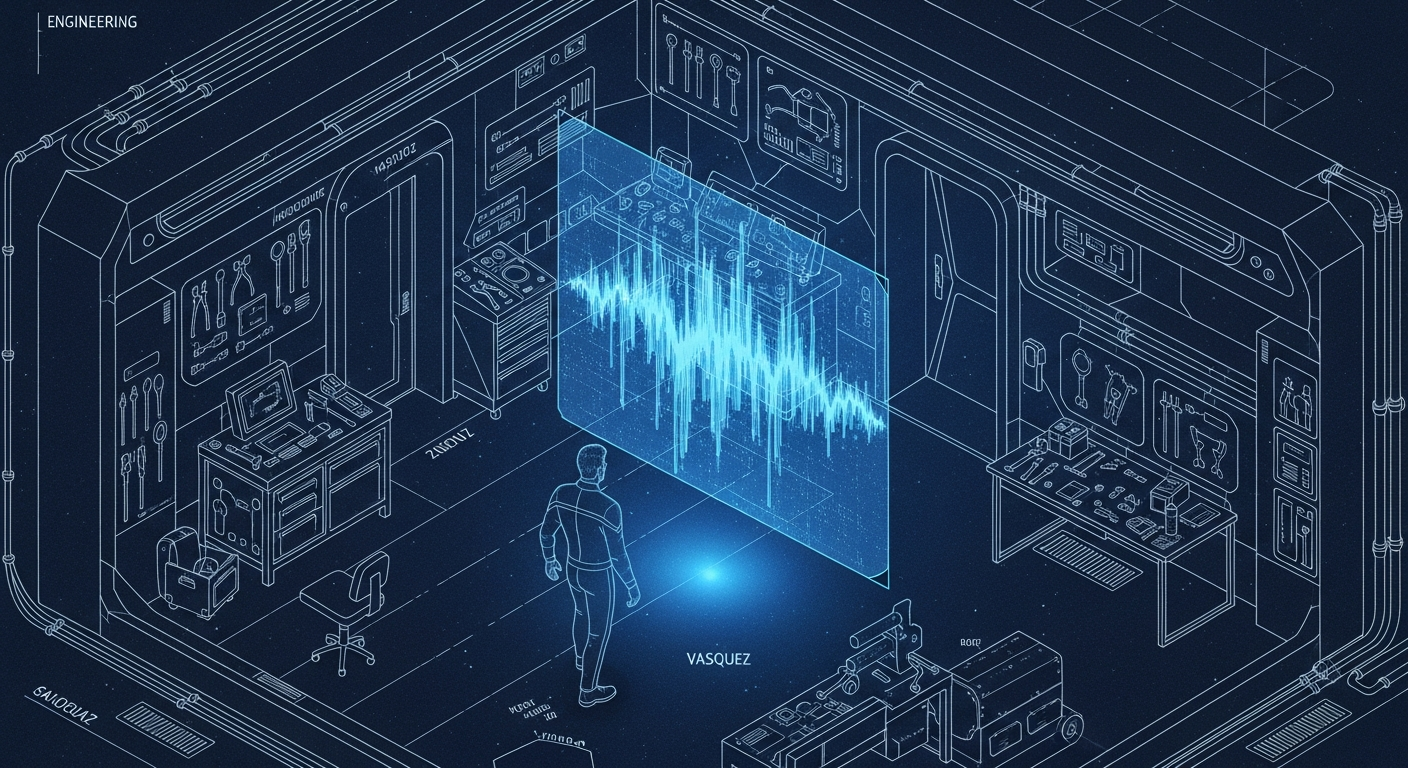
The short walk through the Argonaut‘s primary operations deck was a blur of familiar hums and distant clatter, the ship’s life support systems and plasma conduits a constant, reassuring pulse. Yet, today, the ship felt different—a tiny speck of human endeavor, now potentially on the verge of something truly monumental, or catastrophically dangerous. Forty years out, sixty to go, carrying thousands of sleeping lives, and now this.
Captain Thorne was already there, his posture relaxed but his eyes sharp, reflecting the light from the main bridge’s panoramic view of the starfield. He looked up as she entered, a faint smile playing on his lips. “Elena. You look like you’ve seen a ghost. Or perhaps found a new star system in your coffee cup.”
Vasquez offered a tight, professional nod, the humor not reaching her. “Captain. My apologies for the interruption, but the diagnostic sweep yielded… unexpected results.” She paused, knowing this was the moment. “The Class 3 anomaly. The AI’s initial assessment was correct in ruling out known astrophysical phenomena.”
Thorne’s smile faded. “Good, then. So what is it? A rogue black hole? A new type of nebula we haven’t cataloged yet?”
“Neither, Captain. My retrospective analysis, cross-referencing the anomaly’s sub-frequency pattern against sixty years of Argonaut sensor logs, yielded no matches whatsoever. It’s a unique signature. Completely unprecedented within our observational history.” Vasquez watched his face, gauging his reaction. He was listening, his expression shifting from curiosity to a focused gravity. “The intermittent fluctuations, the lack of any natural astrophysical explanation for the energy signature’s pattern and composition… Captain, I believe the anomaly is artificial.”
The word hung in the air, heavy and incongruous with the sterile, functional environment of the ship. Thorne’s eyes widened almost imperceptibly, his jaw tightening. The relaxed posture vanished, replaced by an alertness that made him seem taller. “Artificial,” he repeated, the word tasting strange on his tongue. “Are you absolutely certain, Elena? Is there any margin of error in your analysis? Could it be some highly unusual, unknown natural phenomenon mimicking… that?”
“I ran the data through every available filter, every predictive model. The energy output, the specific sub-frequency pattern, the precise periodicity of its fluctuations—it exhibits characteristics inconsistent with any natural process. Nature is chaotic, Captain. This is… structured. It’s designed. It powers up, performs a function, then powers down, only to repeat the cycle. It’s too specific to be random.” Vasquez felt a nervous tremor, a cold shiver of conviction mixed with dread. “The AI identified it as unknown. My analysis identifies it as unnatural.”
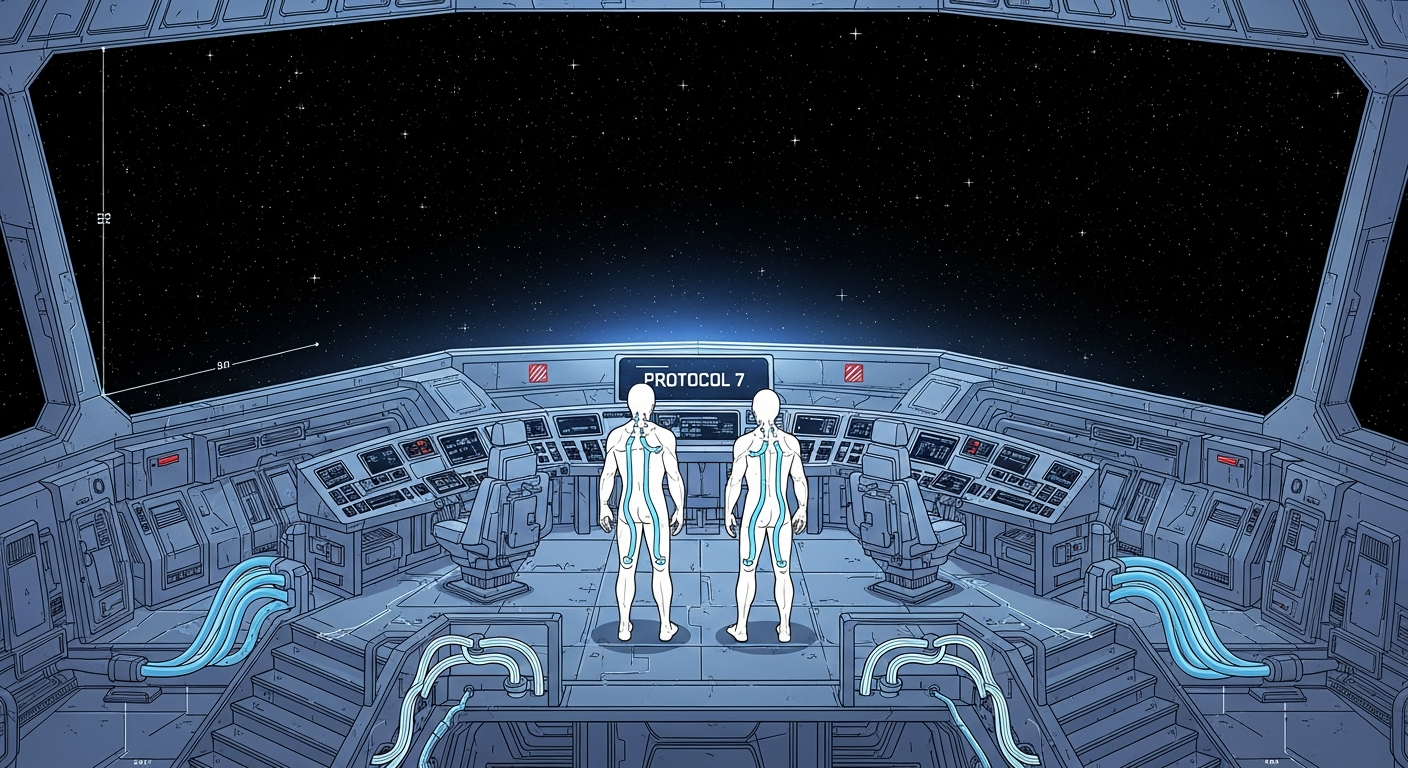
Thorne leaned forward, resting his elbows on his knees, his gaze distant, as if seeing beyond the confines of the Argonaut. “Artificial. Ten AU off trajectory. An unknown intelligence. This directly contradicts Protocol 7, Elena. Every single tenet. ‘Avoid all unidentifiable phenomena. Prioritize trajectory. Ignore deviations.’” He recited the clauses from memory, a testament to years of ingrained discipline. “This isn’t just a deviation; it’s a profound challenge to our entire mission parameters.”
“I understand, Captain,” Vasquez replied, her voice firm. “But you asked what if it was something we needed to see. This, I believe, is precisely that. We cannot ignore an artificial construct of unknown origin, especially one that has become active within our operational range. The implications of not investigating are, in my professional opinion, far more dangerous than the risks of a cautious inquiry.”
Thorne stood, moving to the main viewport, his back to her. His fingers brushed against the cool transparisteel, tracing the faint outline of distant stars. “Dissenting from Protocol. The Argonaut‘s AI is explicitly programmed to ensure mission success through strict adherence to the established path. To divert, even to observe, puts the colonists at an unknown risk.” He turned, his expression resolute. “But the AI also flagged it. And its inability to categorize it, combined with your findings… it’s an anomaly that actively defies its own programming. That’s significant.”
“Exactly, Captain. The AI flagged it because it truly is anomalous, not just off-course. It doesn’t fit the pattern of nothing,” Vasquez pressed. “My next step, if you authorize it, would be to initiate a passive, long-range spectroscopic analysis. No active pings, no direct engagement. Just gather more raw data. Confirm the composition, temperature, and further characterize its energy signature from a safe distance.”
Thorne considered, his gaze fixed on her. The weight of his decision was palpable, a silent battle between strict duty and the inherent human drive for discovery. “Passive observation,” he mused. “No direct interaction. No compromise to the primary trajectory, beyond the initial course adjustment we’ve already made.” He ran a hand through his hair, a rare sign of internal conflict. “Elena, if this is artificial… then its purpose, its builders… it’s everything we’ve never prepared for. Everything we were explicitly told to avoid.”
“And everything that could redefine our understanding of the universe, Captain,” Vasquez countered, her voice low but intense. “We have an opportunity, perhaps a responsibility, to learn.”
Thorne sighed, a sound that carried the burden of command. “Very well. Initiate the spectroscopic analysis. Passive only, Elena. No active emissions. No direct engagement. I want every single data point logged, timestamped, and backed up across all redundant systems. And I want real-time reports directly to me. This isn’t just an engineering problem anymore. This is… a first contact scenario. And we are operating blind.” His voice was calm, but the underlying tension was clear. “Proceed, Chief. And be careful. We don’t know what we’re looking at, or what might be looking back.”
She turned from Thorne, the low thrum of the Argonaut‘s fusion reactors a constant companion beneath the whisper of recycled air. Her steps were decisive as she moved to the primary engineering terminal, its holographic display a kaleidoscope of diagnostic readouts and navigational projections. With a practiced motion, she called up the ship’s sensor array schematics. The anomaly, a blinking red marker on the tactical display, was still 10 AU off their projected trajectory, an insistent, unwelcome guest in the void.
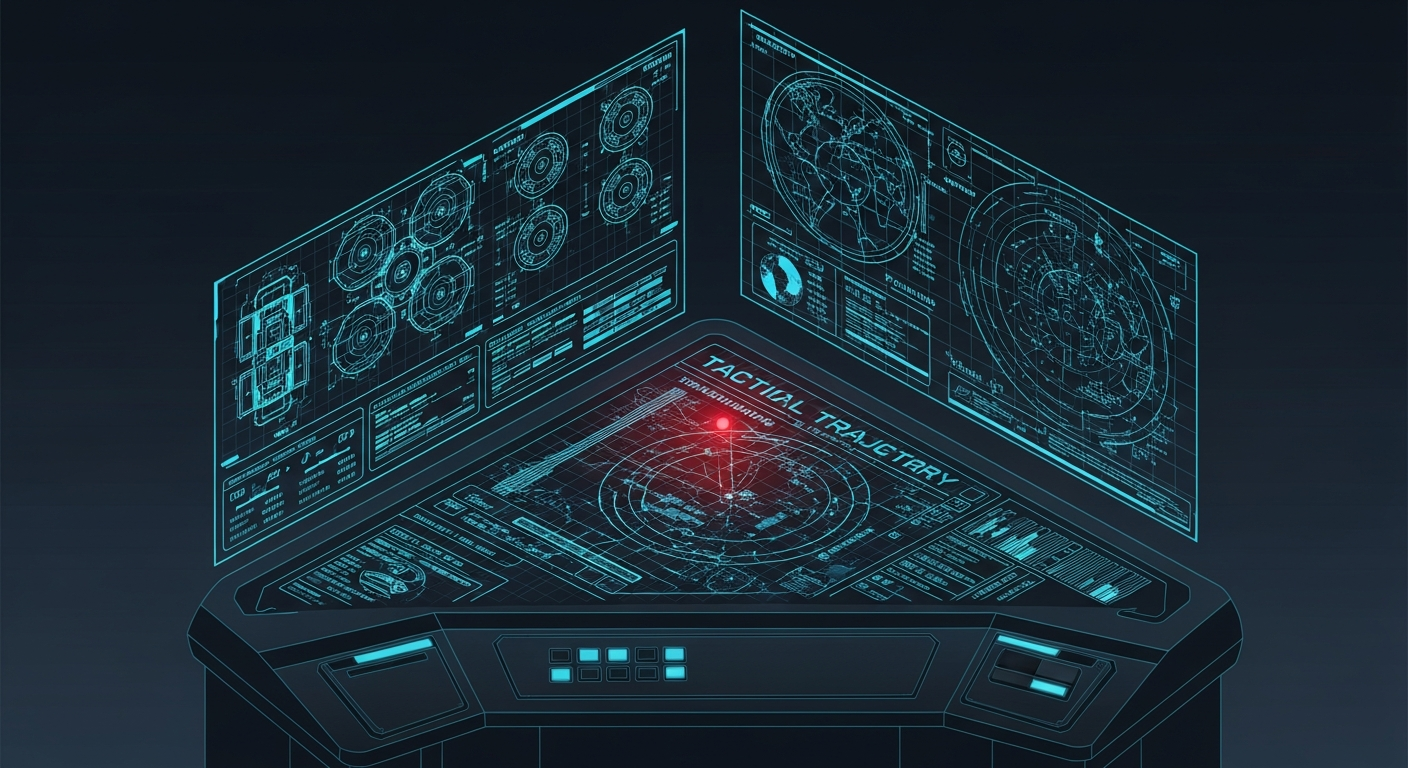
Her fingers danced across the interface, a blur of motion as she bypassed standard protocols. Her nervous habit, an almost imperceptible tap of her forefinger against her thumb, was the only outward sign of the immense pressure she felt. This wasn’t just about collecting data; it was about validating a gut feeling that flew in the face of centuries of established spacefaring doctrine.
“Initiating full diagnostic sweep of long-range passive sensor arrays,” Vasquez announced, her voice resonating with professional calm, masking the internal current of anticipation. The terminal chimed softly in affirmation. “Recalibrating gravimetric, electromagnetic, and neutrino collectors for enhanced sensitivity. Prioritizing spectral analysis across all known bandwidths. Setting data acquisition parameters to continuous passive collection, zero active emissions.”
She watched as the system indicators flickered green, confirming the sensor array’s compliance. The Argonaut‘s AI, designed to ensure mission success through strict adherence to the established path, remained silent, its subroutines overridden by the Captain’s direct command. It was a strange sensation, working against the very intelligence that had guided them for forty years, yet knowing it was its own inability to categorize the anomaly that had led them here.
“All data streams will be routed directly to Captain’s console and engineering main,” Vasquez continued, detailing the redundant logging Thorne had requested. “Timestamped, encrypted, and backed up across primary, secondary, and tertiary storage. Navigation department receiving raw data feed, log initiated.” She paused, her gaze fixed on the evolving holographic display. The red marker of the Class 3 anomaly now had a faint, ethereal halo around it, representing the nascent passive scan. “Initial calibration complete. Data acquisition commencing.”
A new set of graphs bloomed on the display, a chaotic symphony of fluctuating lines. The anomaly’s intermittent nature was immediately apparent. Energy signatures spiked and plummeted, gravimetric fluctuations warped, and even a faint, non-thermal electromagnetic signature pulsed with an unnatural rhythm. It was a ghost in the machine, a signal that screamed presence while simultaneously defying all attempts at easy classification.
Thorne approached, stopping a respectful distance from her terminal, his presence a silent weight of command and shared responsibility. His eyes scanned the burgeoning data. “Anything yet, Elena? Any familiar patterns?”
Vasquez leaned closer to the screen, her brow furrowed in concentration. “Too early for definitive patterns, Captain. It’s… noisy. The fluctuations are extreme. But what’s consistent is its inconsistency. The AI’s initial assessment still holds: it’s not astrophysical. No known stellar phenomena, no pulsar, no quasar, no nebula, no dark matter interaction matches this signature. It’s too focused, too sharp, despite its wild oscillations.”
She gestured to a particularly aggressive spike in the electromagnetic readings. “See this? A burst of EM radiation, far too coherent for natural interference, then it drops off almost completely, only to re-emerge seconds later. And the gravimetric data… it implies a mass, but one that doesn’t consistently interact with space-time in a way we understand. It’s like something is flickering in and out of phase, or perhaps deliberately masking itself.”
The implications were chilling. Something deliberate. This wasn’t just an oddity; it was an active defiance of the universe’s natural order, a profound challenge to everything they knew. It was everything the Argonaut Protocol was designed to avoid, and everything Vasquez, the pragmatic engineer, found utterly compelling. Their deviation, once a calculated risk, felt more like an irreversible descent into the unknown, a journey where the only map was the raw data flickering before their eyes.
“Continue monitoring,” Thorne said, his voice quiet but firm, his gaze fixed on the enigmatic data. “And notify me immediately of any significant developments. Every anomaly, every fluctuation. We are charting unexplored waters, Chief. Let’s make sure we don’t drown.”