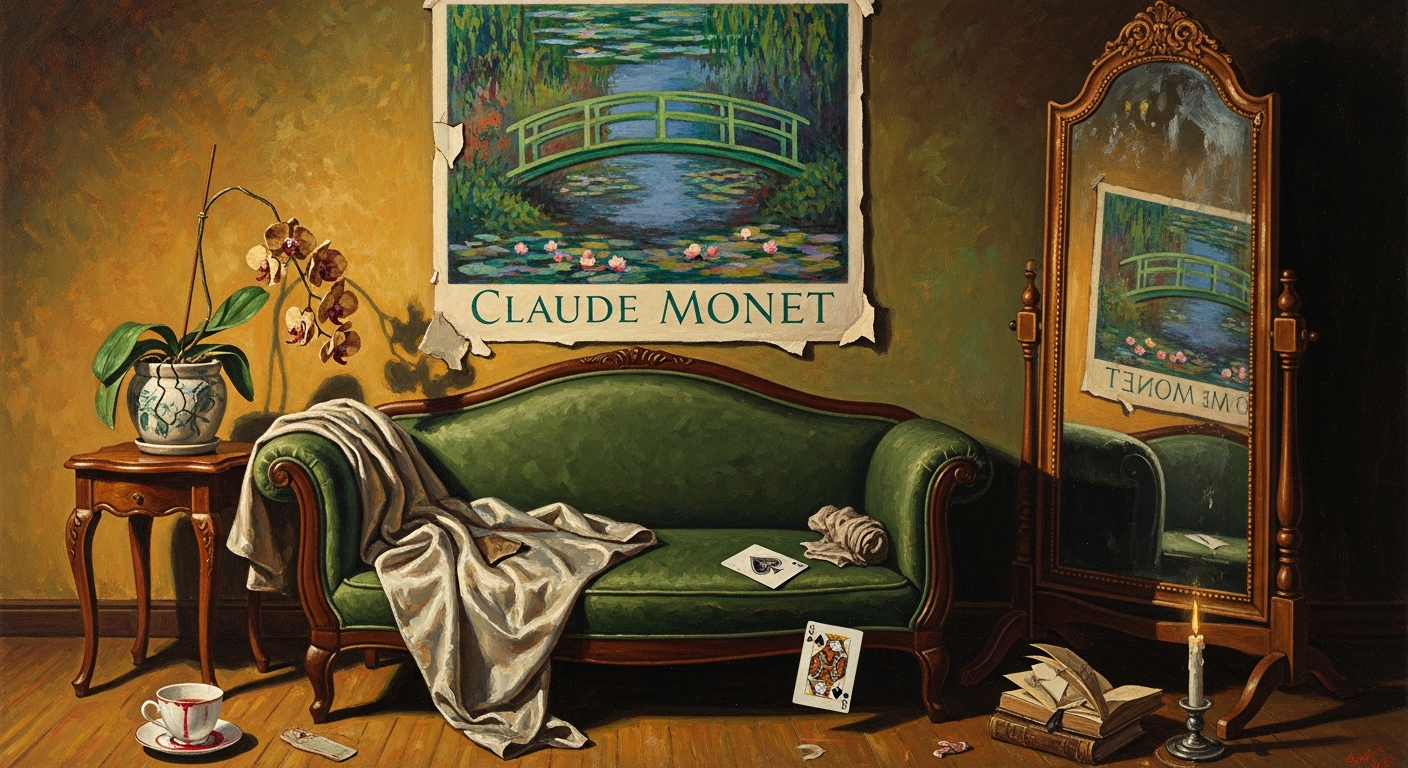
The waiting room hummed, a low thrum of anxiety barely masked by the tinkling waterfall feature in the corner. Its artificial tranquility always struck me as a bit…desperate. Like a carefully curated stage set designed to convince the audience – and perhaps the performers – that everything was alright. It rarely worked. The framed print above the velvet settee, a Monet lily pond bathed in impossible light, felt particularly egregious today. (See Illustration: Monet print hangs slightly askew above a dark green velvet settee. The composition is tight, focusing on the disjunction between the vibrant, idealized art and the palpable anxiety in the room. A single, wilting potted orchid sits on a side table.)
I smoothed the nonexistent wrinkles from my linen skirt and glanced at the clock for what felt like the hundredth time in as many minutes. Ten after. My new patient, a Ms. Elara Vance, was late. Not catastrophically so, but enough to prickle the edges of my well-honed professional calm. Tardiness, in my experience, was rarely just tardiness. It was a signal. A whispered message from a part struggling to be heard.
I practiced a slow, deliberate breath, a grounding technique I often recommended to my patients. In. Hold. Out. The air tasted faintly of lavender from the diffuser, a scent chosen for its supposed calming properties. Another stage set, I thought wryly.
My practice, nestled in a quiet brownstone in the West Village, was my sanctuary. The soft lighting, the plush velvet chairs, the carefully chosen artwork – each element was intended to create a space of safety and vulnerability. A space where the wounded parts could finally, tentatively, step into the light. Ironic, then, that I often felt like the one most in need of its comforts.
The buzzer startled me. Elara Vance.
I pressed the intercom. “Come on up, Ms. Vance. Second floor.”
I stood, adjusting the collar of my silk blouse. My reflection in the antique mirror near the door caught my eye. Tired. The circles under my eyes seemed more pronounced than usual. I pinched my cheeks, trying to coax a bit of color into my face. Years of listening to other people’s pain had a way of leeching the vitality from your own. (See Illustration: Close-up of Julianne’s face reflected in the antique mirror. The reflection is slightly distorted, emphasizing the dark circles under her eyes and the pinched quality of her cheeks. The background is blurred, suggesting a sense of isolation.)
The sound of footsteps on the stairs was hesitant, almost apologetic. I opened the door just as Elara reached the landing.
She was… striking. Raven hair cascaded around a face that was both delicate and fiercely intelligent. Her eyes, a startling shade of violet, held a depth of sorrow that seemed far too profound for someone who couldn’t have been older than thirty. She was dressed simply, in a black turtleneck and jeans, but there was an undeniable elegance about her.
“Dr. Moreau?” Her voice was soft, almost a whisper.
“Please, call me Julianne,” I said, offering a warm smile. “Welcome. Come in.”
She stepped inside, her gaze sweeping the room as if searching for something. Or perhaps, I thought, trying to determine if it was safe. “Thank you,” she murmured. (See Illustration: Elara stands just inside the doorway, her violet eyes wide and searching. The composition emphasizes her slender figure and the contrast between her dark clothing and the warm, inviting colors of the office. The viewpoint is from Julianne’s perspective, creating a sense of intimacy and observation.)
I gestured towards the couch. “Please, make yourself comfortable.”
She sat down, perching on the edge of the cushion as though ready to flee at any moment. Her hands, I noticed, were clenched tightly in her lap.
“So,” I began, settling into my own chair, “tell me what brings you here, Ms. Vance.”
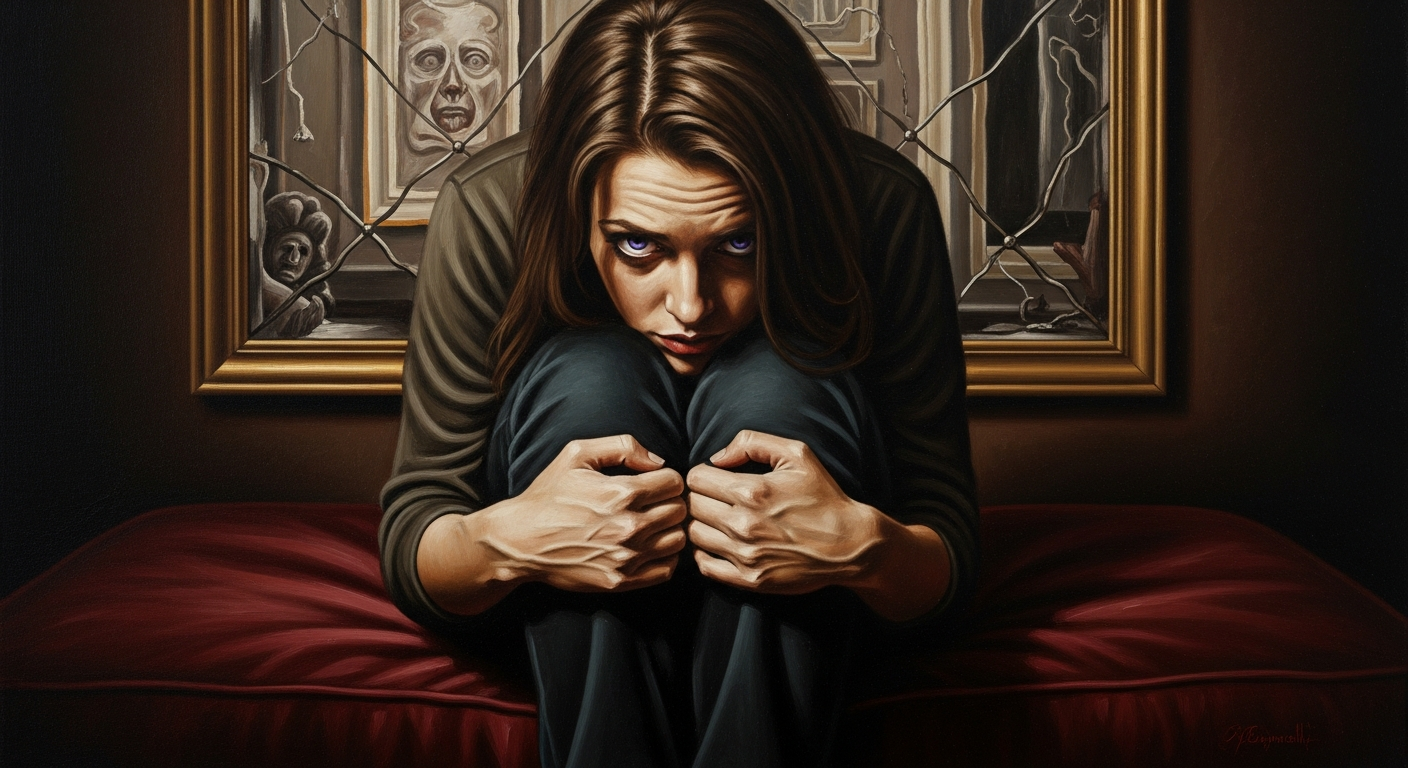
She hesitated, her violet eyes meeting mine with an intensity that made me slightly uncomfortable. It was as if she was looking right through me, seeing something I wasn’t even aware was there.
“I… I don’t know where to begin,” she said finally, her voice barely audible.
“Anywhere is fine,” I assured her. “Just start wherever feels right.”
She took a deep breath, and for a moment, I thought she wouldn’t speak. Then, she said, “I feel… broken. Like there are pieces of me missing.”
The words hung in the air, heavy with unspoken pain. Broken. Missing. It was a familiar refrain, one I had heard countless times in my years of practice. But something about the way she said it, the raw vulnerability in her eyes, resonated with me in a way that was… unsettling.
“Tell me more about these missing pieces,” I prompted gently.
She looked down at her hands, her fingers twisting together. “I don’t know what they are. I just… I feel incomplete. Like I’m living someone else’s life.”
Living someone else’s life. The phrase echoed in my mind, a faint, almost imperceptible tremor running through me. It was a feeling I knew all too well.
“And when did you start feeling this way?” I asked, my voice carefully neutral.
She looked up, her violet eyes locking onto mine once more. “Always,” she said. “I think I’ve always felt this way.” (See Illustration: Extreme close-up of Elara’s violet eyes. The focus is razor-sharp, capturing the depth of sorrow and the unsettling intensity of her gaze. The background is completely blurred, isolating her eyes as the sole point of focus.)