“Always,” she repeated, the word a fragile thing released into the quiet of the room.
I allowed the silence to linger, a space for the weight of that single word to settle. “And have you sought help before, Elara?” I asked, keeping my tone soft, encouraging.
She shook her head, her raven hair swaying gently. “No. I… I’ve always been good at pretending. At appearing normal.” A wry, almost self-deprecating smile touched her lips, but it didn’t reach her eyes. “It’s exhausting, though. The pretending.”
Exhausting, indeed. The ceaseless performance of normalcy, the constant vigilance against revealing the cracks beneath the surface. I knew the feeling intimately.
“What made you decide to come in now?” I prompted.
She hesitated again, her gaze drifting towards the Monet print on the wall, the soft blues and greens a stark contrast to the intensity of her own presence. “I… I had a dream,” she said finally, her voice barely a whisper. “A terrible dream. And when I woke up, I knew I couldn’t pretend anymore.”
“Tell me about the dream,” I encouraged.
Elara shifted on the couch, pulling her knees up to her chest, wrapping her arms around them as if seeking protection. She closed her eyes for a moment, and I could see the faint tremor in her jaw.
“It was dark,” she began, her voice strained. “Endlessly dark. And I was… I was lost. Wandering through this darkness, searching for something. Someone. But there was nothing. Just… emptiness. And this overwhelming sense of… dread.”
She opened her eyes, her violet gaze haunted. “And then, I saw it. A mirror. Standing in the middle of the darkness. And when I looked into it…” She trailed off, unable to finish the sentence.
“What did you see, Elara?” I asked gently.
She shook her head, her eyes welling with tears. “I… I can’t. It was… me. But not me. Someone… else. Someone broken. Twisted. And she was screaming. But no sound came out.”
The image she painted was chilling, the mirror a symbol of a fragmented self, a reflection of inner turmoil. I made a note to explore the symbolism of the mirror further in future sessions.
“That sounds incredibly distressing,” I said, my voice filled with genuine empathy. “It’s understandable that you would be shaken by such a dream.”
She nodded, wiping away a stray tear with the back of her hand. “It felt… real. More real than anything I’ve ever experienced.”
“Dreams can often tap into deep-seated emotions and anxieties,” I explained. “They can be a powerful tool for understanding ourselves.”
I paused, considering my next words carefully. “Elara, it takes courage to come here and share these difficult feelings. I want you to know that you’re safe here. This is a space where you can explore these ‘missing pieces’ without judgment.”
I watched her closely, searching for a sign, a flicker of hope, a loosening of the rigid tension that held her captive. And for a brief moment, I thought I saw it. A faint softening in her violet eyes, a subtle relaxation of the clenched hands in her lap.
But then, just as quickly, it was gone. And Elara Vance was once again a closed book, her secrets locked away behind a wall of sorrow.
I watched her, a quiet observer of the intricate architecture of human defense. The flicker I had seen, that fleeting moment of potential connection, dissolved into the same guardedness that had first struck me. It was a common pattern, this dance of approach and retreat, especially when trauma lay coiled beneath the surface. Yet, with Elara, the wall felt more formidable, built with an almost ancient precision, honed by years of practice. There was a particular weight to her sorrow, a density that made my own weariness stir.
“The image of the broken mirror, Elara, and the silent scream…” I began again, my voice a soft probe against the quiet. “Can you tell me more about what that felt like? Not just what you saw, but what you experienced in that moment?”
She shivered, a barely perceptible tremor that ran through her frame, despite the warmth of the room. Her violet eyes, still tinged with the memory of tears, fixed on some point beyond me, beyond the wall, as if trying to locate the source of that forgotten scream.
“It felt… hollow,” she whispered, her voice strained, as if each word was a physical effort. “Like the air had been sucked out of the world. And the screaming… it wasn’t just her screaming. It was… a part of me. Trying to get out. Trying to be heard. But there was nothing. No sound. Just the terror of it.”
The word “hollow” hung in the air, a stark descriptor of existential dread. The silent scream, the inability to express profound distress, resonated with a deeper current within me. It spoke of disowned parts, of experiences too overwhelming to be processed, shoved into the subconscious where they festered. This was the landscape of fragmentation, the very terrain IFS sought to navigate.
“And when you woke up,” I continued, seeking to bridge the dream world with her waking reality, “what was the immediate aftermath? Did the feeling linger?”
Elara nodded slowly, her gaze finally meeting mine, a raw vulnerability in their depths that made my breath catch. “It was like… I woke up, but I hadn’t really left the dream. The hollowness was still there, in my chest. And the knowledge… the absolute certainty that I couldn’t pretend anymore. That the broken person in the mirror was real. She was me.”
Her words struck a chord that went beyond professional curiosity. The broken person in the mirror was real. She was me. A familiar ache stirred within me, a recognition of a burden I had thought long buried. The boundaries, usually so clear, so meticulously maintained in this space, seemed to waver, blurring the line between healer and wounded.
I took a deep, centering breath, reminding myself of my role, of the safe container I needed to embody. “It sounds like the dream was a profound revelation for you, Elara,” I said, striving to keep my voice steady, empathetic. “A breaking point, perhaps. A moment when your inner world demanded to be seen, even if it was terrifying.”
She didn’t respond directly, merely tightened her arms around her knees, pulling herself into an even smaller bundle. Her silence was not empty, but thick with unspoken stories, with the weight of years of carefully constructed pretense. It was the silence of a person who had learned that speaking the truth was dangerous.
The clock on the wall ticked softly, marking the slow passage of time. I knew pushing her too hard, too fast, would only solidify her defenses. The art of this work was in patience, in creating a space so undeniably safe that the hidden parts felt brave enough to venture out.
“We don’t have to unravel it all today, Elara,” I offered, my voice a gentle anchor. “What matters right now is that you’re here. That you’ve acknowledged this feeling, this dream. That’s a significant step. And we can take the next steps together, at your pace.”
I leaned forward slightly, my posture open, inviting. “This space, this time, is for you to explore whatever comes up. And if that means sitting in silence sometimes, that’s okay too. My only request is that you try to be as honest as you can, even when it feels difficult.”
Her eyes, still shadowed, flickered to the Monet print again, then back to me. For a moment, I thought she might speak, might offer another fragment of the dream, another piece of the puzzle. Instead, she let out a slow, tremulous breath, a slight tremor passing through her lips. It was a release, almost imperceptible, but it was there. A small loosening, perhaps, in the tightly wound springs of her guarded self. The session was drawing to a close, but the unraveling had only just begun. The broken mirror, I knew, held far more than just a single reflection.
I offered a soft, almost imperceptible nod, giving her space to process, to simply be with the faint tremor. “Our time is almost up for today, Elara,” I said gently, my voice designed to ease the transition, not abrupt it. “But I want to commend you again for sharing what you did. That takes immense courage.”
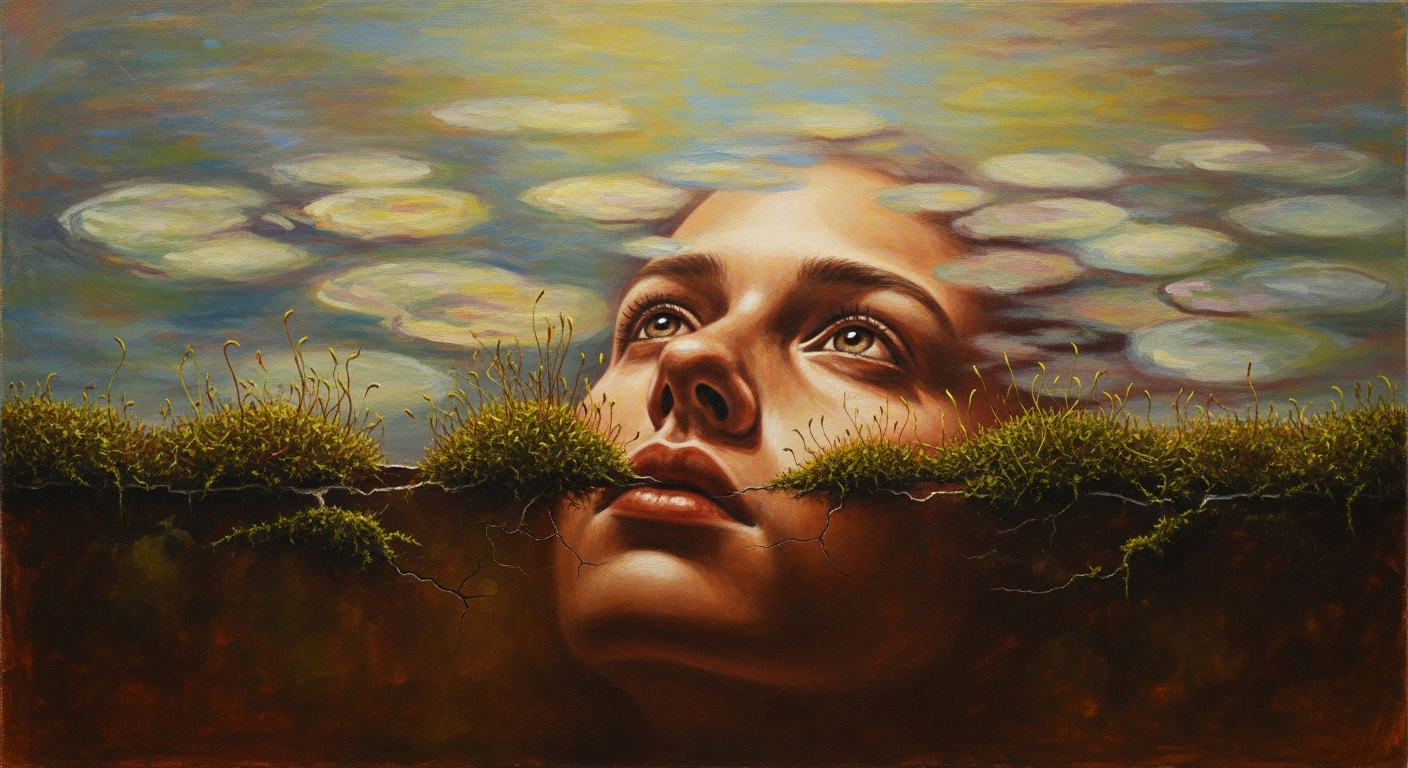
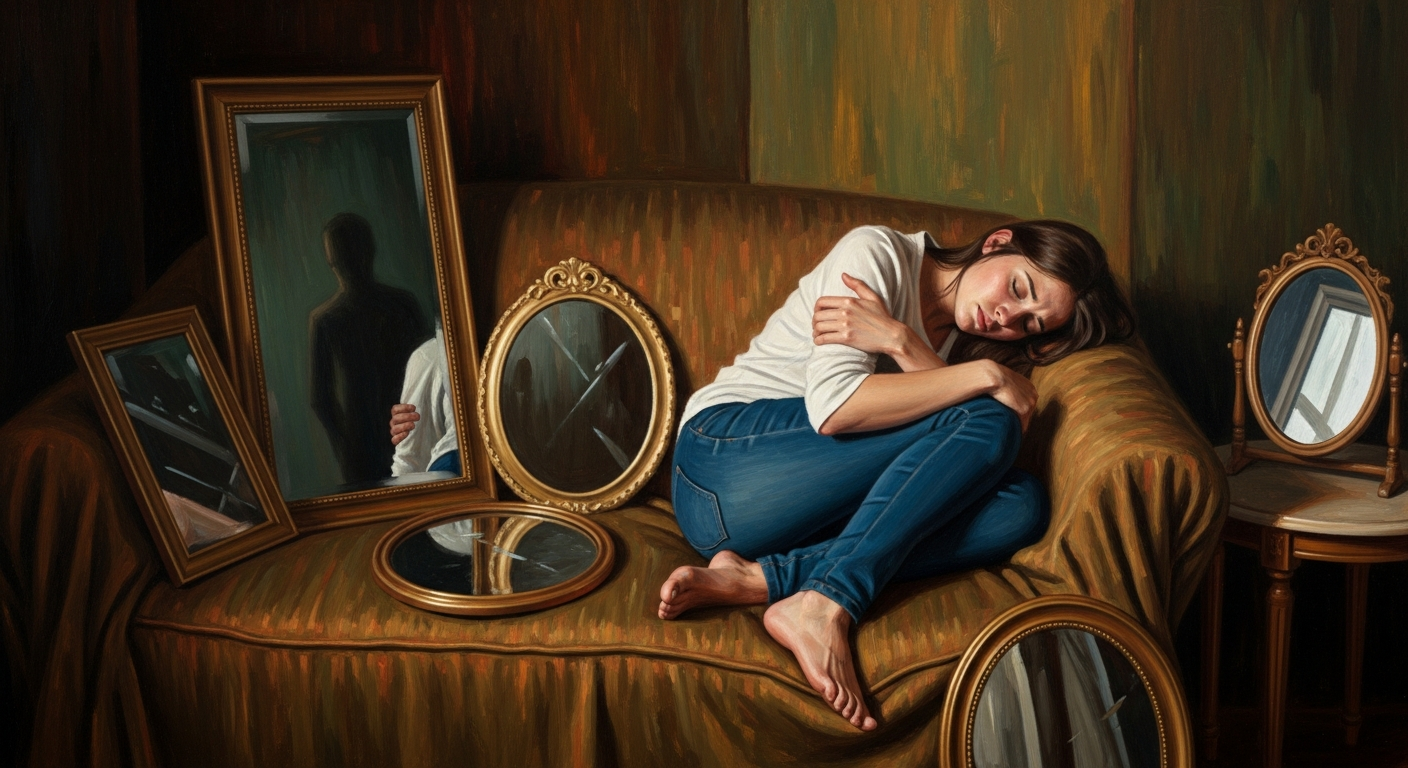
Her gaze finally lifted from the Monet, finding mine again. The vulnerability was still there, flickering beneath the surface, but her defenses were already rebuilding, like moss reclaiming a stone wall. She pushed her knees away from her chest, her posture straightening imperceptibly, the subtle shift a physical manifestation of her retreat.
“Thank you,” she murmured, her voice a shade softer than when she’d first arrived, though still tinged with that profound, practiced sorrow. It was a polite, almost reflexive response, a social grace honed by years of pretending. She didn’t meet my gaze for long, her eyes dropping to her hands clasped tightly in her lap.
I offered a small, reassuring smile. “We can pick up right here next week. Is Thursday at the same time still good for you?”
She nodded, rising gracefully from the plush velvet chair. Even in her guardedness, there was an inherent elegance to her movements. She retrieved her bag from beside her feet, the faint rustle of leather the only sound in the room. As she walked towards the door, I noted the subtle curve of her shoulders, as if bearing an invisible weight. There was no lingering glance back, no final word, just a quiet, purposeful exit. The faint click of the latch echoed in the suddenly empty room.
I sat for a moment longer, the warmth of the vacated chair still radiating faintly beside me. The silence was heavier now, no longer thick with Elara’s unspoken stories, but imbued with the reverberations of her revelation. The broken person in the mirror was real. She was me. The words resonated in my own chest, a low, persistent hum that vibrated against a scar I had long thought healed. My professional detachment, usually a sturdy shield, felt surprisingly porous today. It wasn’t just empathy I felt; it was a stirring of recognition, a disquieting familiarity.
I rose and walked to the window, gazing out at the quiet West Village street. The late afternoon light cast long shadows, painting the brownstones in hues of amber and gold. My mind, however, was still in the dim landscape of Elara’s dream, wrestling with the vivid imagery of a fractured self. What depths of pain must lie beneath that formidable wall of guardedness for such a dream to shatter a lifetime’s pretense? Her sorrow had a weight to it, a density that suggested not fresh grief, but ancient, calcified pain.
I moved to my desk, picking up my pen. I jotted down a few key phrases: broken reflection, pretense shattered, hollow, terrifying reality. I considered the symbolism of the mirror – a tool for self-perception, yet in her dream, a source of ultimate terror. It wasn’t just a distorted image; it was an other, a stranger who was undeniably her. This was the work of a deeply entrenched Protector, I mused, one that had kept Elara’s true self, her vulnerable parts, hidden and safe, even from herself. The dream was a crack in that armor, a desperate plea from an exiled part finally demanding to be seen.
But what about the ache in my chest? The unsettling sense of recognition? I ran a hand through my hair, the cool air of the room a slight balm. It was my job to remain objective, to hold the safe container, to not allow my own internal landscape to interfere. Yet, Elara’s description of a “ceaseless performance of normalcy,” of hiding inner cracks, felt less like a clinical observation and more like a whisper from my own past. The boundaries were indeed blurring, not overtly, but subtly, internally, a quiet erosion at the edges of my professional self.
This wasn’t merely a challenging case; it felt like a reckoning. Elara’s journey to confront her broken self was beginning, but I had an unsettling premonition that it might, in turn, force me to confront my own. The unraveling, I realized, might not be a solitary act. It could very well be a shared one. The soft ticking of the clock now seemed to mark not just the passage of time, but the relentless approach of something profound and deeply personal. I closed my eyes, picturing Elara’s sorrowful face, and a new layer of responsibility settled upon me, one that resonated with an intensity I hadn’t felt in years.
I reopened them, the quiet hum of the room a backdrop to the whirring of my own thoughts. The immediate task was clear: to strategize. Elara had given me a profound entry point, a window into the core of her suffering, even as she slammed the door shut moments later. Her retreat, a swift, almost imperceptible shift back behind her formidable wall, was not an act of defiance but an instinct for self-preservation. It spoke of a deep-seated fear, a primal terror of what might emerge if the cracks were allowed to widen.
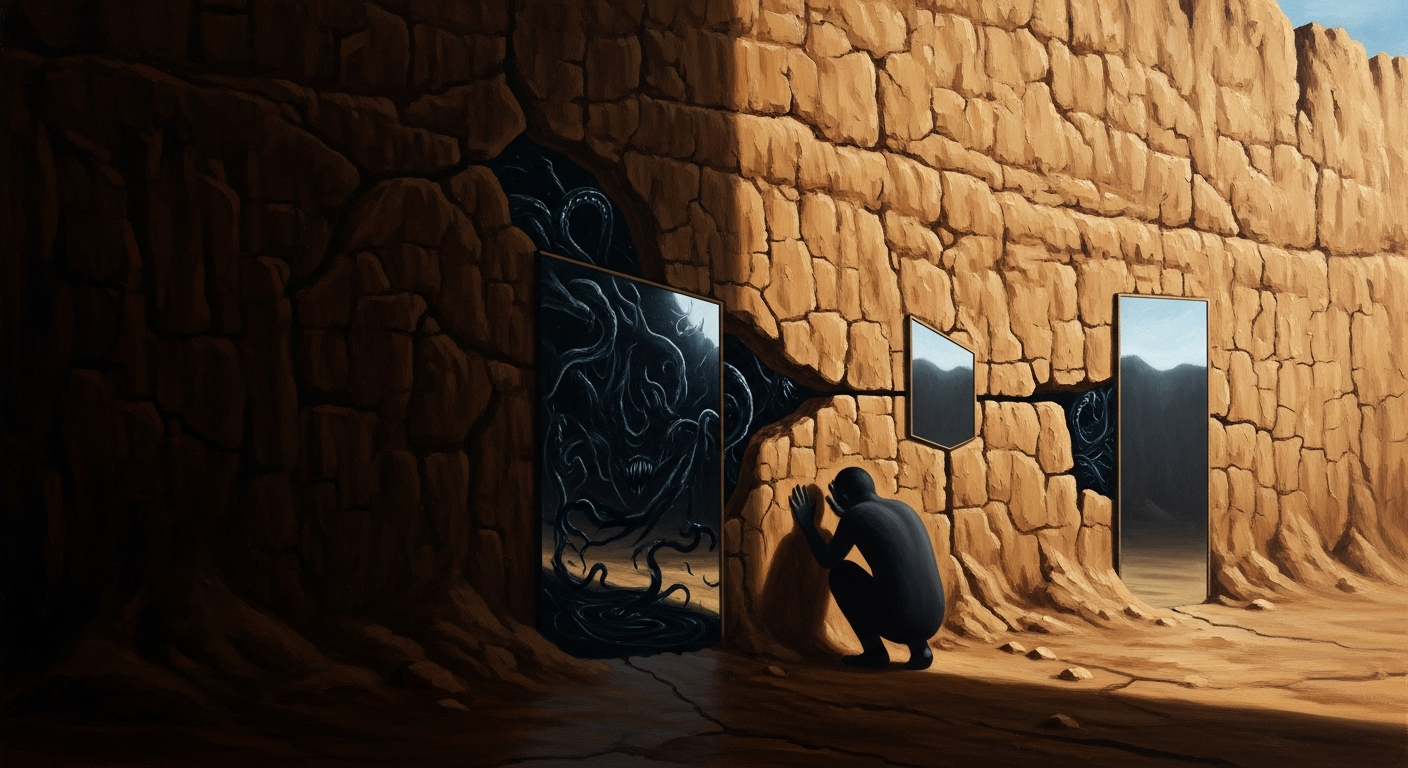
My strategy, then, could not be one of direct assault. It would need to be gentle, patient, a slow and deliberate chipping away at the reinforced concrete of her defenses. I picked up my notebook again, making a new entry: Next session: focus on safety, validate the dream’s terror without demanding further revelation. I had to reinforce the container, make it utterly impenetrable for her, so that the fragile part of her that had dared to glimpse the broken self in the mirror might feel safe enough to peek out again.
The symbolism of the dream remained a potent, unsettling image. The mirror, usually a tool for recognition, had become a portal to a nightmare. The silent scream. The twisted, ‘other’ self. These were not mere metaphors; they were the lived reality of an exiled part, a part so terrifying, so unspeakable, that it had been banished to the deepest recesses of her psyche, shielded by years of meticulous pretense. The “ceaseless performance of normalcy” was not just a coping mechanism; it was a fortress built around this screaming entity, a desperate attempt to keep the world, and herself, from seeing the profound disfigurement within.
I thought of Elara’s posture – her knees pulled to her chest, the faint tremor in her jaw, the way her violet eyes, despite their guardedness, still held a depth of ancient sorrow. These were not just physical tells; they were somatic expressions of her internal landscape. The guardedness was not just emotional; it was physical, embodied. To acknowledge this, to articulate it gently, without judgment, might be another way in. “It must be exhausting,” I murmured aloud, echoing my own earlier thought, “to hold so much within.”
My premonition of a shared unraveling pulsed beneath my professional resolve. How much of my own past did I see reflected in her desperate attempt to contain the chaos? The mirroring was not just metaphorical; it felt almost literal. The weight of her sorrow, the density of it, was a familiar pressure. It was crucial, I reminded myself, to hold the boundary, to be the Self that could guide her, not another wounded traveler lost in the same labyrinth. Yet, the awareness of my own resonance was not a weakness; it was a profound wellspring of empathy, a silent understanding that might, in time, prove to be my most potent tool.
The next steps were clear, if challenging. I would begin by validating her bravery in even speaking of the dream. I would emphasize her control over the pace, reassuring her that we would only go where she felt ready. I would gently explore the feeling of the dream, the experience of the mirror, rather than immediately demanding an interpretation of its contents. Trust, after all, was built not on immediate answers, but on consistent, unwavering presence in the face of fear. And Elara, I knew, was profoundly afraid. The soft ticking of the clock in my office continued, marking the passage of time, yes, but also the slow, deliberate pulse of a journey that was only just beginning.
I leaned back in my chair, the plush velvet offering a familiar comfort that belied the intensity of the past hour. Elara’s departure had left a palpable stillness, a vacuum in the air where her sorrow had so recently resided. The room, usually a vessel for myriad human experiences, now felt imbued with the ghostly echo of a silent scream. My initial notes were concise, almost clinical, but the deeper implications swirled beneath the surface of each word. Trauma revealed. Immediate retreat. Formidable defenses. These were not just observations; they were signposts on a treacherous path.
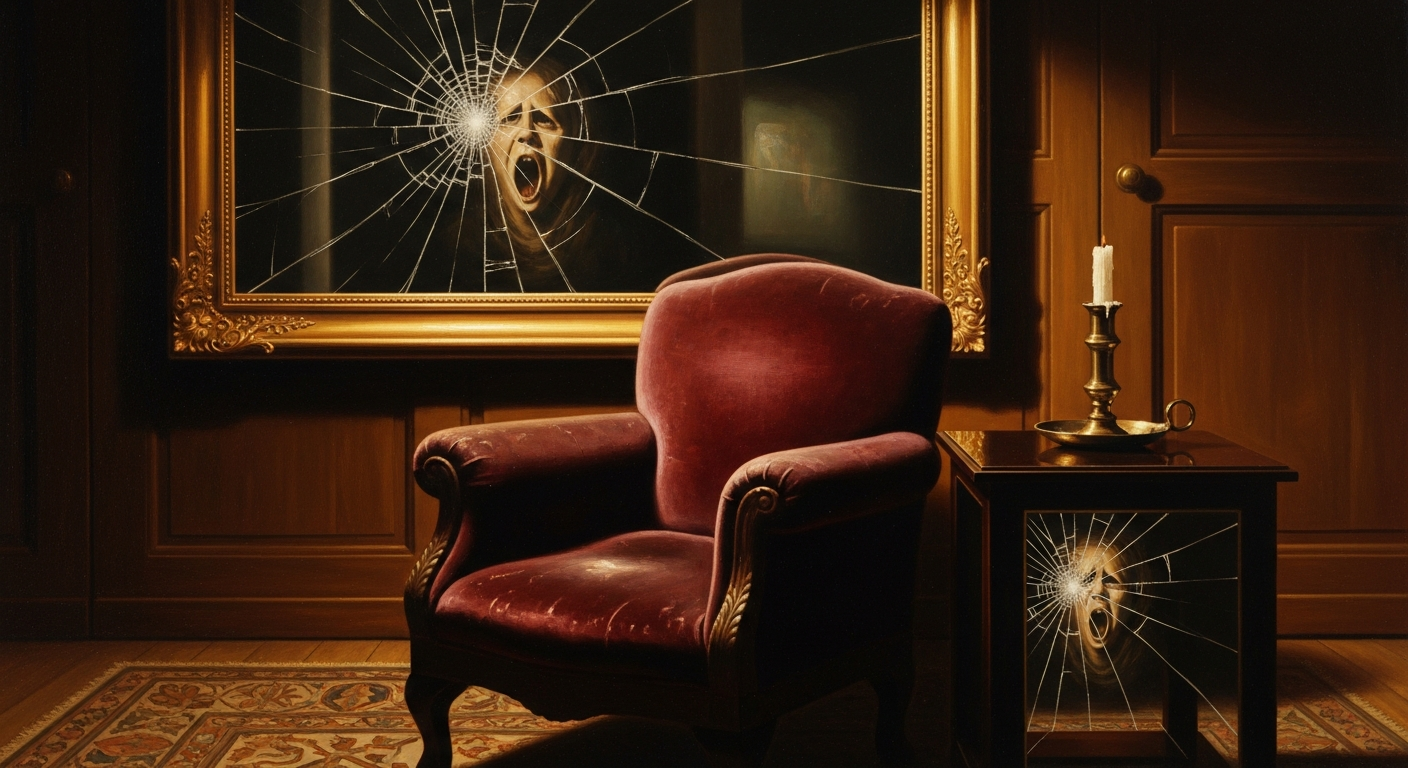
The image of her pulling her knees to her chest, a primal posture of self-protection, replayed in my mind. It spoke of a deep, instinctual need to shield herself from a perceived threat, perhaps even from the very act of revealing her vulnerability. The tremor in her jaw, the fleeting softness in her eyes before the wall rebuilt itself – these were glimpses into the profound internal struggle she waged daily. My task was not to dismantle that wall by force, but to understand its architecture, to recognize its purpose, and to offer an alternative haven that felt, eventually, safer than its confines.
I thought again of the ‘broken, twisted’ reflection, the ‘someone else’ screaming silently in the dream. The terror Elara expressed was not merely a reaction to a frightening image; it was the terror of recognition, of confronting a disfigured aspect of self so exiled, so utterly rejected, that it had become alien. This ‘other’ was not a stranger, but a part of her banished into the psychological wilderness, left to fester in darkness until it found a voice in the terrifying language of dreams. My work would be to help her reclaim that part, to integrate it, to recognize that even in its brokenness, it was still her. But that was a destination many sessions away, across fields of fear and resistance.
For now, the focus remained singular: safety. I would reiterate, perhaps not in explicit words but through my consistent presence and measured pace, that she held the reins. This journey was hers, and I was merely a guide. The art of therapy, especially in these early, delicate stages, lay in the unspoken reassurances, the patient silences, the careful attunement to micro-expressions and subtle shifts in energy. It was in validating the exhaustion of “pretending to be normal,” a phrase that resonated with such acute familiarity within my own experience. To acknowledge that burden, without prying into its specific contents, could be an offering of profound understanding.
The mirroring sensation deepened. I felt a subtle ache in my own chest, a sympathetic vibration with the density of Elara’s sorrow. It was a crucial differentiator, I reminded myself, to feel with her, not for her, and certainly not as her. My role as Self was paramount, the unshakeable core from which I could navigate the stormy seas of her inner world without being capsized by my own currents. This resonance, though unsettling, was also a gift, a compass pointing towards the deepest wounds, allowing me a unique vantage point from which to perceive the architecture of her defenses. It was a potent, albeit dangerous, wellspring of empathy that I would need to manage with utmost care.
The West Village outside my window offered its usual evening tableau – the softened glow of streetlights, the distant murmur of city life. Inside, my office remained a sanctuary, a quiet brownstone room designed for the very purpose of slow revelation. I would ensure it remained so for Elara. The next session would begin gently, perhaps with an open-ended invitation to reflect on the week, or a soft inquiry into how she felt after our last meeting. No pressure, no demands. Just an unwavering, consistent presence, an offer of a safe harbor where the broken self, screaming silently in the mirror, might one day feel brave enough to whisper its truth. Trust was a fragile, delicate thing, and with Elara, it would need to be cultivated with the precision of a master gardener tending to a rare and sensitive bloom. The journey had truly just begun, and its beginning was etched in the profound fear she carried, and in my quiet, steadfast resolve to meet it.